Essential Play for Babies: A Right, Not a Luxury (0-12 Months)
Essential play for babies is a fundamental right, not merely a pastime, profoundly shaping their cognitive, emotional, and physical development from 0-12 months. Child development experts agree that simple, everyday interactions provide the foundational building blocks for a thriving future, echoing recent messages from Unicef emphasizing 'The Right to Play' and India Today's call for play-based learning to have equal footing with nutrition.
Essential play for babies involves spontaneous, child-led activities and caregiver interactions that stimulate curiosity and exploration in their environment. This matters because it builds critical neural pathways, fosters problem-solving skills, and strengthens emotional bonds. Indian parents can empower this development by providing a safe, engaging home environment and responding to their baby's natural interests.
Baby's Right to Play: A Global and Indian Imperative
Unicef unequivocally states that play is a fundamental right for every child, a principle that resonates deeply within India’s diverse parenting landscape, from bustling urban apartments to quiet rural homes. Research consistently indicates that early investment in children, particularly through play, is the key to India’s future prosperity and societal well-being, as powerfully highlighted by reports in The Hindu.
While academic pressure often looms large in Indian families, and discussions around 'good schooling' begin early, understanding that play-based learning deserves equal footing with nutrition in child development is paramount. It’s not just about acquiring expensive toys; it's about providing the freedom to explore, interact, and learn naturally in their environment. Studies from institutions like the National Institute of Public Cooperation and Child Development (NIPCCD) consistently show that children engaged in regular, unstructured play exhibit superior problem-solving skills, enhanced creativity, and greater emotional resilience compared to their peers who lack such opportunities.
Importance of Play 0-12 Months: Building Brains Through Exploration
During the crucial first year, play is the primary mechanism through which infants make sense of their world, stimulating rapid brain growth and neural connection formation. This period, often marked by celebrating milestones like 'annaprashan' or first steps, is truly a time of profound internal development driven by playful exploration.
Maria Montessori meticulously observed that children are intrinsically driven to learn, and providing a 'prepared environment' allows them to explore safely and independently, leading to significant sensory and motor skill development. From visually tracking a parent's face as they sing a bhajan to reaching for a colourful rattle, every playful interaction hones their visual perception, refines their fine motor control, and develops crucial concepts like object permanence.
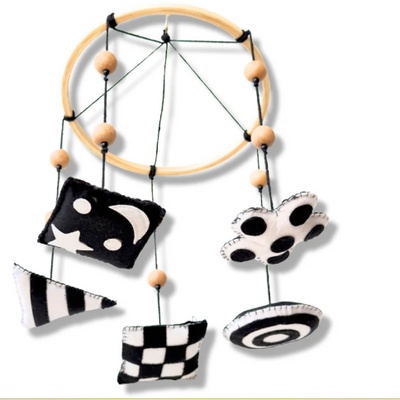
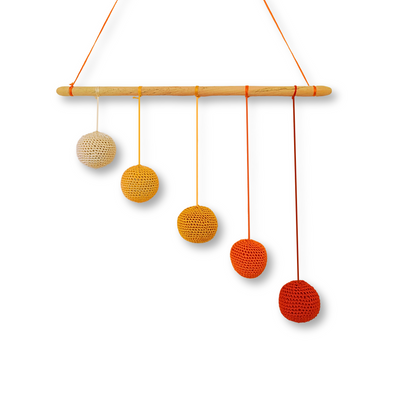
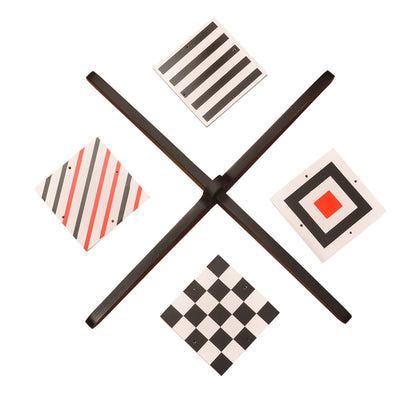
Simple activities like dedicated tummy time, allowing them to grasp safe, textured objects, and responding warmly to their babbling and coos are powerful tools for comprehensive cognitive and language development. For early visual and auditory stimulation that respects their delicate stage, consider introducing Montessori Mobiles or soft rattles that engage without overstimulation.
Simple Activities for Infant Development: Everyday Montessori at Home
You don't need elaborate setups or a room full of imported toys to foster profound infant development; the richness of everyday life within an Indian home offers countless natural opportunities. These simple interactions align perfectly with Montessori's emphasis on practical life experiences.
Engage your baby by gently narrating daily chores like making roti or folding clothes, singing traditional lullabies such as 'Chanda Mama Door Ke' or 'Nani Teri Morni,' and playing simple, joyful games like 'peek-a-boo' with a dupatta. These consistent interactions strengthen auditory processing, build early language skills, and foster deep social-emotional bonds within the family.
Crucially, allow them safe floor time to roll, crawl, and explore everyday objects like a smooth wooden spoon, a clean stainless steel bowl (under supervision), or a soft fabric swatch from a sari. This encourages independent discovery and gross motor skill development, adhering to Montessori principles of child-led exploration. Providing safe, graspable objects like natural teethers or robust Montessori Grasping Toys further encourages manipulation and refines hand-eye coordination.
Play-Based Learning Benefits India: Laying Foundations for Future Success
Investing thoughtfully in play-based learning during infancy sets an exceptionally robust foundation for future academic and life success, a critical advantage within India's highly competitive educational landscape. This early engagement helps children develop intrinsic motivation, a trait invaluable as they face increasing school pressure.
Extensive research indicates that children who consistently engage in regular, self-directed play develop stronger executive functions—a set of cognitive skills including planning, problem-solving, working memory, and self-regulation. These abilities are far more indicative of long-term success and adaptability than early rote memorisation, preparing them for complex challenges.
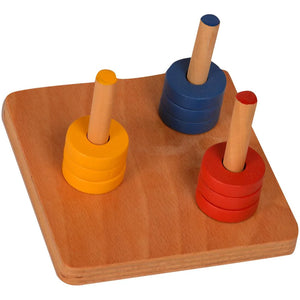
Maria Montessori championed this holistic approach, understanding that allowing children to learn through discovery and sensory experiences fosters not only intelligence but also resilience and a lifelong love of learning. This method cultivates creativity, adaptability, and independence—qualities increasingly vital in a rapidly changing global economy. Providing simple, open-ended Infant Discovery Materials like soft, sensory blocks or stacking rings can inspire hours of imaginative construction, pattern recognition, and problem-solving, all while reinforcing early mathematical concepts.
Understanding that play is an essential right for your baby, not just a frivolous activity, empowers you to nurture their growth naturally. By embracing simple, everyday interactions and providing a supportive environment, Indian parents can ensure their little ones thrive, laying a joyful and robust foundation for their entire lives.
- Play is a fundamental right for babies (0-12 months), essential for holistic development.
- Everyday, simple interactions are powerful tools for stimulating infant brain growth and neural connections.
- Maria Montessori's philosophy emphasizes child-led exploration within a safe, prepared environment.
- Play-based learning fosters crucial skills like problem-solving, creativity, and self-regulation (executive functions).
- Early investment in play reduces future academic pressure and builds a lifelong love of learning.
- Studies show children engaged in regular, unstructured play exhibit superior cognitive and emotional resilience.
Why is play considered a "right" for babies?
Play is considered a fundamental right because it is indispensable for a child's optimal physical, cognitive, emotional, and social development. Denying a child the opportunity to play can hinder their growth and ability to reach their full potential, a stance supported by global bodies like Unicef.
What simple activities count as essential play for babies 0-6 months?
For babies 0-6 months, essential play includes tummy time, talking and singing to them, making eye contact, gentle massage, and allowing them to track objects or grasp soft rattles. These activities stimulate their senses and develop early motor skills.
How can Indian joint families encourage essential play for infants?
Indian joint families can encourage essential play by engaging infants in daily routines, narrating chores, singing traditional lullabies, and allowing safe exploration of common household items under supervision. Grandparents often naturally provide rich sensory experiences through cuddles and traditional games.
Does play-based learning prepare babies for future schooling in India?
Yes, play-based learning provides a crucial foundation for future schooling by developing critical thinking, problem-solving skills, creativity, and self-regulation. These 'soft skills' are far more valuable for long-term academic success than early rote memorisation.
What types of Montessori materials are best for babies (0-12 months)?
For babies 0-12 months, Montessori materials focus on sensory exploration and fine motor development. Examples include mobiles for visual tracking, grasping rattles, wooden teethers, and soft blocks that encourage touch and manipulation.