That occasional lull when your little one declares "I'm bored!"
It's a phrase that strikes a familiar chord in almost every parent's home: the plaintive, sometimes whiny, declaration of "I'm bored!" Our immediate, instinctual response is often to leap into action – offer a toy, suggest an activity, or perhaps, in our modern world, hand over a screen. We feel a deep-seated responsibility to keep our children engaged, stimulated, and, above all, happy. Yet, what if this seemingly undesirable state of boredom isn't just an inconvenience to be swiftly remedied, but a profoundly essential catalyst for your child's developing brain, a fertile ground where true ingenuity and self-reliance take root?
The Brain's Secret Workshop: How Boredom Ignites Inner Genius
Research into child development reveals a truly fascinating truth: moments of unstructured, unguided time are not empty voids, but rather a crucial period for the brain's 'default mode network' to activate. Think of it as your child's internal supercomputer shifting from processing external data to running vital internal maintenance and creative programs. When the brain isn't actively engaged with a specific task or external stimulus, it begins to wander, to make novel connections between seemingly unrelated ideas, and to process experiences and memories. This 'mind-wandering' isn't aimless; it's a sophisticated cognitive process fundamental to problem-solving, imagination, and even empathy.
Consider the stark contrast between a child glued to an animated show, passively consuming content, and a child with nothing 'to do'. In the latter scenario, their brain, faced with a lack of external input, instinctively turns inward. It rummages through stored knowledge, memories, and sensory experiences, piecing them together in new and imaginative ways. This is where the magic truly happens, where the seeds of original thought are sown and nurtured, far from the dictates of a predefined activity or screen.
Cultivating Creativity from the Quiet
For centuries, children across India, from bustling urban neighbourhoods to tranquil village settings, have instinctively understood the art of self-entertainment born from simple surroundings. They didn't need elaborate playrooms; a handful of pebbles (kankad), a few discarded twigs, or even the colourful drapes of an old saree could transform into an entire universe. This profound ability to create narratives, build structures, and invent games from basic elements doesn't just appear out of nowhere; it is honed in those quiet, unscripted moments when a child is left to their own devices. When external entertainment is absent, their internal wellspring of creativity is forced to bubble to the surface, making them the architects of their own play, limited only by the boundless scope of their imagination.
Neuroscience supports this observation, demonstrating how unstructured play, often a direct outcome of boredom, enhances divergent thinking – the ability to generate multiple unique solutions to a problem. It's a vital skill, far removed from convergent thinking, which focuses on finding a single correct answer. Divergent thinking is the bedrock of innovation, the very skill that will empower your child to think outside the box, whether they are designing an elaborate rangoli pattern or someday conceptualizing a groundbreaking scientific theory.
Boredom's Gift: Building Resilience and Resourcefulness
Beyond sparking creativity, allowing your child to experience and navigate boredom is a powerful lesson in self-regulation and emotional resilience. When a child vocalises their boredom, they are essentially expressing a feeling of dissatisfaction or lack. Instead of instantly 'fixing' this feeling for them, providing them with the space to sit with it, acknowledge it, and then internally strategize a solution, builds incredible mental muscle. They learn to identify what they need, survey their environment for resources, and then initiate an action.
This process is foundational to developing executive functions – the higher-order cognitive skills critical for success in school and life. We're talking about planning, problem-solving, sustained attention, and cognitive flexibility. Imagine a child, initially restless, eventually deciding to build a fort out of cushions, create a story with their stuffed animals, or even invent a new game using only a broomstick and a rubber ball. Each of these self-initiated activities is a complex symphony of executive functions at play, all orchestrated by the initial, quiet prompt of boredom.
In a world that increasingly provides instant gratification and curated experiences, the ability to tolerate discomfort, wait for solutions, and generate one's own engagement is an invaluable life skill. It teaches children that they are capable, that they possess inner resources, and that their happiness isn't solely dependent on external stimuli or the constant intervention of adults. This independence fosters a robust sense of self-efficacy, boosting their confidence in their own abilities to navigate challenges, big or small.
Nurturing Productive Boredom in a Stimulus-Rich World
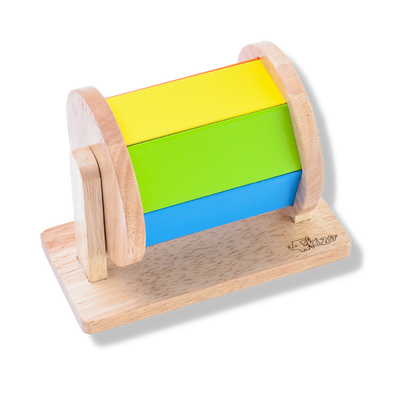
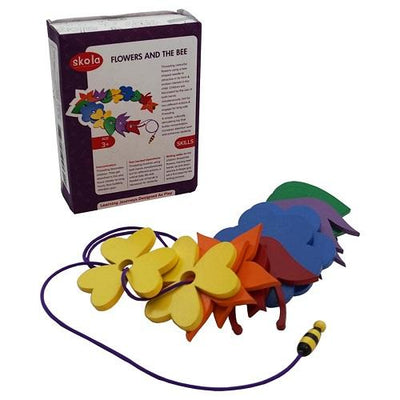
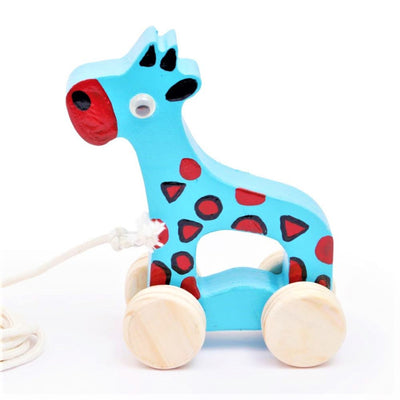
Of course, this doesn't mean parents should ignore their children or intentionally leave them feeling neglected. The goal isn't neglect, but rather intentional space. It's about providing opportunities for 'productive boredom,' where children are in a safe, stimulating environment with open-ended materials, but without a prescribed agenda. This could be simply allowing them uninterrupted time in a room with blocks, art supplies, or even just a few empty boxes. It means resisting the urge to fill every silent moment with an activity, a screen, or a directive.
For Indian families, this insight is particularly relevant in navigating the balance between traditional values of engaged parenting and the modern pull of digital entertainment. Historically, children might have spent hours observing an elder cook, engaging in simple chores like sorting rice, or playing with neighbours in unstructured games. These experiences, while seemingly mundane, were rich in learning opportunities born from self-direction. Reclaiming some of that unhurried pace, even for short bursts, can be profoundly beneficial.
So, the next time your little one announces, with a dramatic sigh, "I'm bored," take a moment. Instead of reaching for a device or offering a schedule, consider what truly lies beneath that declaration. It's not a cry for external entertainment; it's often an invitation for their own brilliant mind to step up, to create, to problem-solve, and to discover the boundless potential within themselves. Embrace these lulls, for they are the quiet architects of your child's most innovative future.
Embrace the power of unstructured play that emerges from these moments of quiet exploration. SkilloToys understands this profound link between self-directed play and holistic development, offering a curated range of safe, educational, and open-ended learning toys designed to be the perfect companions for your child's imaginative journeys and problem-solving adventures. Explore how SkilloToys.com can inspire their inner genius, one moment of creative discovery at a time.