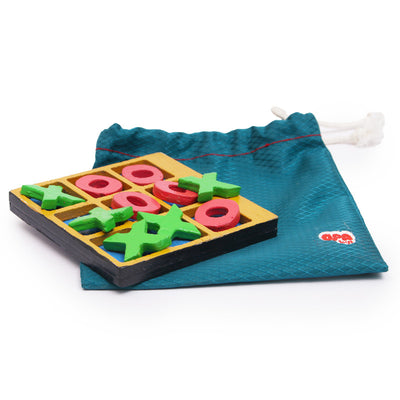
The age-old delight of playing traditional Indian board games like Pallanguzhi or Chaupar subtly hones your child's strategic thinking and numerical agility
In an age saturated with digital distractions, where glowing screens often dominate our children's attention, there's a quiet, profound wisdom waiting to be rediscovered in the nooks and crannies of our rich Indian heritage. Many parents might remember a time when summer afternoons or quiet evenings were spent gathered around a mat, intent on a game board adorned with cowrie shells, seeds, or vibrant wooden pieces. These weren't merely pastimes; they were intricate training grounds for the mind, subtly shaping generations of strategic thinkers, problem-solvers, and emotionally resilient individuals. The astonishing truth is that these traditional Indian board games, from the complex calculations of Pallanguzhi to the strategic nuances of Chaupar, are deeply ingrained in early learning science, offering unparalleled benefits for your child's developing brain.
Consider the humble yet powerful Pallanguzhi, a game popular across South India, where players meticulously move seeds or shells across a series of pits. At its surface, it appears to be simple counting. Yet, observe a child immersed in Pallanguzhi, and you'll witness a rapid-fire symphony of cognitive processes. They aren't just counting; they are mentally forecasting moves, strategizing to capture the most seeds, planning several steps ahead, and constantly re-evaluating their options based on their opponent's actions. This seemingly effortless play becomes a powerful workout for the prefrontal cortex, the brain's command centre responsible for executive functions like planning, working memory, and inhibition – all crucial for academic success and life skills.
The mathematical dexterity honed through such games is remarkable. Children engaging with Pallanguzhi naturally grasp concepts of grouping, distribution, addition, subtraction, and even rudimentary division without ever feeling like they're 'doing math.' They learn to visualise quantities, understand patterns, and develop a keen sense of numerical estimation. Imagine a child, perhaps barely old enough for formal schooling, intuitively calculating the optimal path to empty an opponent's pit or secure a bonus turn. This isn't rote memorisation; it's a deep, experiential understanding of mathematical principles, woven into the fabric of play.
Beyond numbers, the world of traditional Indian board games opens up vast landscapes for strategic foresight. Take Chaupar, the ancient ancestor of Ludo, or its cousin Pachisi, famously played by emperors. These games demand careful planning, risk assessment, and adaptability. A child learns to allocate resources (pieces), anticipate an opponent's moves, and even gracefully accept the fickle hand of fate (the roll of the dice or cowrie shells). This process builds mental flexibility and resilience, teaching them that not every plan will work out and that adapting to changing circumstances is key to success. This mirrors real-life challenges, fostering a mindset of perseverance rather than immediate gratification.
Then there's Gyan Chauper, often known as Snakes and Ladders, a game with profound philosophical roots, originally designed to teach karma and destiny. While simpler in its play, it introduces children to the concepts of cause and effect, the highs of good fortune, and the lows of setbacks. It subtly reinforces emotional regulation, as a child learns to manage the frustration of landing on a snake or the elation of climbing a ladder. These moments are invaluable for developing patience, sportsmanship, and the understanding that life's journey involves both progress and occasional retreats.
These games are also invaluable social catalysts. In an Indian family setting, they often become intergenerational bridges, with grandparents patiently teaching the nuances, parents sharing strategies, and siblings engaging in friendly rivalry. This shared experience fosters strong family bonds, enhances communication skills, and teaches children the vital lessons of turn-taking, negotiation, and respectful competition. Observing an elder's strategy or listening to their storytelling while playing infuses the game with cultural context, connecting children to their heritage in a tangible, meaningful way. It's a profound lesson in social cognition, empathy, and perspective-taking, as children learn to understand and predict their playmates' intentions.
From a neurodevelopmental perspective, the rich, tactile nature of these games – handling wooden pieces, sorting shells, tracing patterns on a cloth board – provides multi-sensory stimulation that is critical for brain development. It refines fine motor skills, enhances hand-eye coordination, and engages spatial reasoning as children navigate the board. Unlike the passive consumption of digital content, these games demand active participation, critical thinking, and constant engagement, stimulating neural pathways in a dynamic and holistic manner.
So, the next time you're thinking about enriching your child's playtime, consider dusting off those traditional Indian board games. They are not just relics of the past; they are powerful, play-based learning tools, scientifically proven to cultivate strategic minds, sharpen mathematical abilities, and build emotional resilience in a way that feels natural, joyful, and deeply connected to our cultural roots.
Ready to introduce your child to the timeless wisdom of play that builds profound cognitive skills? Explore SkilloToys.com for a curated selection of safe, educational, and engaging play-based learning toys and games, including thoughtfully designed traditional options, that will nurture your child's strategic mind and foster a love for learning through hands-on discovery.