The everyday marvel of sorting lentils and admiring rangoli secretly lays the profound groundwork for your child's mathematical mind
The human brain, from its earliest moments, possesses an almost magical capacity for pattern recognition and a deep-seated desire to make sense of its world. Long before a child utters their first number or encounters a formal arithmetic lesson, their mind is already meticulously building the foundational neural networks for mathematical and logical reasoning. And here's a fascinating insight: many Indian households, through their daily rituals and vibrant traditions, are inadvertently offering a rich, unparalleled laboratory for this very development.
Consider the rhythmic precision with which a grandmother sorts through a mound of rajma and chana, separating them into distinct piles, or the mesmerising symmetry unfolding as colours and shapes come together in a courtyard rangoli. These aren't just household chores or aesthetic expressions; they are profound, hands-on lessons in classification, seriation, patterning, and spatial reasoning—the true bedrock of early mathematics. It's a quiet symphony of learning, often overlooked, yet incredibly impactful.
What often surprises parents is that early mathematics isn't about rote counting to ten or reciting multiplication tables. Far from it. Before numbers become symbols, they represent quantities, relationships, and order. The fundamental concepts that pave the way for abstract mathematical thinking are rooted in understanding attributes: what makes things similar or different, how they can be grouped, and what sequence they naturally fall into. A child observing an elder meticulously arranging spices in a masala dabba by colour or texture is engaging in sophisticated classification, a critical pre-math skill. They are unconsciously internalising that objects have distinct properties and can be organised based on those properties.
Our vibrant Indian culture, steeped in tradition and intricate detail, provides an abundance of such learning opportunities. Imagine your little one, eyes wide with curiosity, watching you sort through a mixed bag of pulses – the dark, kidney-shaped rajma distinct from the smaller, round chana. As you talk about "big ones" and "small ones," or "red ones" and "brown ones," you're not just preparing dinner; you're subtly introducing concepts of attribute comparison and set theory. Later, perhaps they're given a small bowl of mixed dal to sort, transforming a simple task into an engaging, purposeful play. This hands-on manipulation, where they physically separate and group, solidifies their understanding in a way abstract explanation simply cannot.
Beyond the kitchen, the world of Indian crafts and festivals offers an equally rich tapestry for mathematical exploration. The creation of a rangoli, for instance, is a masterclass in geometry, symmetry, and pattern recognition. The repetitive motifs, the rotational symmetry, the careful alignment of dots and lines to form intricate designs—all these visual cues are absorbed by a child's developing brain. They learn about space, shape, proportion, and even prediction ("What comes next in the pattern?"). When they later try to mimic these patterns, perhaps with coloured sand or even pebbles, they are actively engaging their spatial reasoning and fine motor skills in a deeply mathematical pursuit.
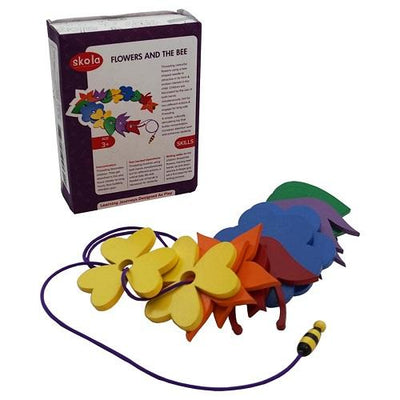
Consider the seemingly simple act of stringing beads for a mala or a decorative toran. If a specific pattern is followed – a red bead, then a gold bead, then a red bead again – the child is learning about sequencing and predicting patterns. Even if they simply string beads randomly, they are exploring concepts of colour, size, and the relationship between individual components and a whole. This hands-on engagement fosters problem-solving too; perhaps the thread is too thick for a certain bead, prompting a moment of logical deduction and adaptation.
These daily interactions are far more than mere observations; they are active engagements that light up various regions of the child's brain. When a child classifies, they are exercising their prefrontal cortex, responsible for executive functions like decision-making and problem-solving. When they recognise and extend patterns, they are strengthening connections related to logical inference and predictive thinking. The visual-spatial skills honed through observing and creating rangoli translate into better navigation, understanding maps, and even excelling in subjects like geometry and physics later in life.
Renowned educational philosophies, like Montessori, have long recognised the profound importance of such sensory and practical life activities. The Montessori classroom, with its carefully designed 'practical life' exercises involving sorting, pouring, and arranging, mirrors these natural opportunities found in Indian homes. These materials aren't just for developing fine motor skills; they are intentionally crafted to foster independence, concentration, and a concrete understanding of abstract mathematical principles, all through purposeful work.
As parents, you don't need to "teach" formal math; simply providing opportunities and narrating the process can be immensely powerful. "Look, we have big mangoes and small mangoes!" or "Let's put one roti on each plate." Asking open-ended questions like, "What do you notice about these flowers?" or "Can you find another spoon just like this one?" gently guides their attention to attributes, comparisons, and relationships. It's about cultivating an environment where math isn't a scary subject confined to textbooks, but a dynamic, engaging way to understand the world around them.
The ripple effects of these early, seemingly insignificant interactions are truly profound. Children who engage in regular classification, patterning, and spatial reasoning activities develop stronger critical thinking skills, a greater capacity for problem-solving, and a more intuitive grasp of complex mathematical concepts when they encounter them in school. They build a positive association with learning and discovery, viewing challenges not as obstacles, but as intriguing puzzles to be solved. So, the next time your little one watches you sort spices or admires a vibrant rangoli, remember: their mathematical genius is quietly taking root, nurtured by the rich tapestry of your Indian home.
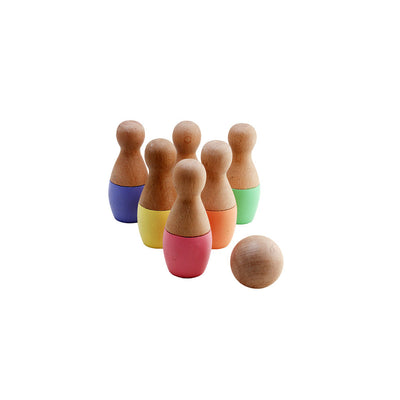
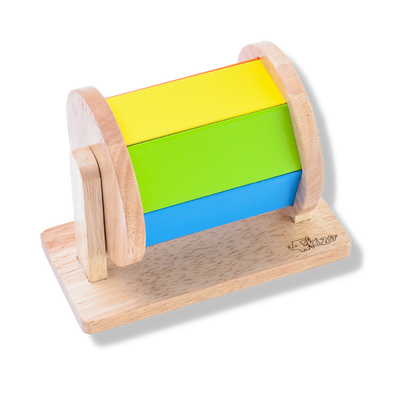
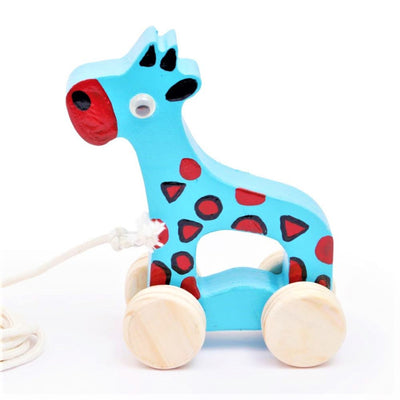
Encourage your child's innate curiosity for patterns and order with SkilloToys' range of engaging, play-based learning toys. Our carefully curated collection offers safe and educational resources designed to naturally foster early mathematical thinking and logical reasoning through joyful exploration. Discover the perfect tools to spark your child's analytical mind at SkilloToys.com.