The incessant 'why' questions from your child are secretly laying the neural foundations for remarkable critical thinking and emotional intelligence
Every parent in India, from the bustling lanes of Delhi to the serene backwaters of Kerala, knows the sound. It's an insistent, almost rhythmic refrain that can test the limits of patience: "Why, Ma?" "Why, Papa?" "Why is the sky blue?" "Why do we have to eat karela?" "Why does the dhobi uncle come only on Tuesdays?" These seemingly endless interrogations, often arriving in rapid-fire succession, might feel like a never-ending game of twenty questions, leaving us, as parents, often searching for simple answers or, let's be honest, a moment of quiet.
But what if I told you that these persistent "why" queries are not just a phase of childish curiosity, but a profound, neurologically critical process actively sculpting your child's brain for complex thought, deep understanding, and even future innovation? Research in developmental psychology and neuroscience reveals that each "why" isn't merely a request for information; it's a powerful cognitive engine driving their development in ways we are only just beginning to fully appreciate.
Beyond Mere Curiosity: The Brain's Information Highway
When a child asks "why," their brain isn't just seeking a fact to store away. Instead, it's engaging in a dynamic process of active learning, much like a tiny scientist conducting an experiment. They are trying to understand the underlying causes, the connections between events, and the rules that govern their world. This active quest for causality is a hallmark of human intelligence, distinguishing us from other species.
Neuroscientists have observed that these questions stimulate regions of the brain associated with problem-solving and reasoning. Each satisfactory answer, or even an invitation to ponder the question further, strengthens these neural pathways. It's a continuous loop of inquiry, discovery, and consolidation, laying down a robust framework for future learning.
Forging Critical Thinkers and Astute Problem-Solvers
The "why" phase is, in essence, a masterclass in critical thinking. When your child asks, "Why does the traffic light turn red?" they are not just learning about traffic rules; they are beginning to grasp the concept of systems, consequences, and safety protocols. They're developing the ability to analyze a situation, identify variables, and infer logical relationships. This foundational skill is indispensable, whether they're trying to figure out why their Lego tower keeps falling or later, why a complex mathematical equation behaves a certain way.
Each "why" prompts them to consider various possibilities and outcomes. It hones their ability to form hypotheses, test them (even if just mentally), and refine their understanding of how things work. This isn't just about accumulating knowledge; it's about developing the mental tools to acquire and apply knowledge effectively throughout their lives.
The Empathy Connection: Understanding Intent and Emotion
Remarkably, the "why" extends far beyond the tangible world of objects and phenomena. Children frequently ask "why" about human actions and emotions: "Why is Dadi crying?" "Why did my friend not share their snack?" "Why did you say that?" These questions are crucial for developing what psychologists call 'Theory of Mind' – the ability to attribute mental states, beliefs, desires, intentions, and emotions to oneself and to others.
By asking "why" in social contexts, children are actively trying to decode the complex world of human interactions. They are building an understanding of cause and effect in relationships, learning about perspectives other than their own, and developing the roots of empathy. This ability to understand why someone feels or acts a certain way is fundamental to social intelligence and forming meaningful connections.
Powering Up Executive Functions: Focus and Working Memory
Engaging with "why" questions also significantly boosts a child's executive functions, the set of mental skills that include working memory, flexible thinking, and self-control. To ask a "why" question, a child must first notice something, focus on it, and then formulate a coherent query. To process an answer, they must hold that information in their working memory, connect it to existing knowledge, and potentially formulate a follow-up question.
This sustained mental engagement strengthens their capacity for focused attention and deep processing. It teaches them to listen actively, to synthesize information, and to manage their cognitive resources. These are skills that will serve them incredibly well in academic settings and indeed, in every aspect of their adult lives.
Nurturing the Inquisitive Mind: A Parent's Role
While the incessant questioning can be draining, parents have a unique opportunity to foster this vital developmental phase. The key isn't always to have the 'right' answer, but to engage authentically. Sometimes, a simple "That's a great question! What do you think?" can be more powerful than a textbook explanation, encouraging them to think critically themselves.
In an Indian household, where narratives, traditions, and community interactions are rich, these "why" questions often delve into cultural practices. "Why do we light the diya every evening?" "Why does Maasi wear that beautiful saree for weddings?" Responding thoughtfully to these queries not only builds cognitive bridges but also strengthens their cultural identity and understanding of their heritage.
So, the next time your little one barrages you with a volley of "whys," take a deep breath and remember the incredible work their brain is doing. Each question is a tiny spark, igniting neural connections that will form the bedrock of their future intelligence, empathy, and capacity for innovation. It's a testament to their innate drive to make sense of the magnificent, often puzzling, world around them.
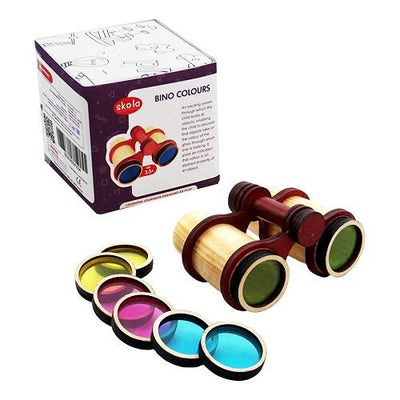
Cultivating this spirit of inquiry is paramount, and thoughtful, engaging play experiences are vital in supporting a child's natural curiosity. SkilloToys offers a curated selection of safe, educational, and play-based learning toys designed to spark wonder and encourage deep questioning, helping your child explore the "whys" of their world through hands-on discovery. Visit SkilloToys.com to find the perfect tools to fuel your child's inquisitive mind.