The meticulous focus your child brings to sorting grains
Imagine the gentle clinking of grains in an ancestral thali, perhaps your grandmother meticulously separating rajma from chana for the day's meal. Or recall the quiet concentration your child exhibits, carefully placing each marigold onto a thread, preparing a vibrant garland for the evening puja. These are not merely everyday chores or religious rituals; they are, in a profound and often unseen way, powerful architects of your child's developing brain, quietly sculpting their cognitive landscape. The seemingly mundane acts of sorting, arranging, and creating within the Indian household are, in fact, sophisticated training grounds for crucial developmental milestones.
The Intricate Ballet of Executive Functions
At the heart of these seemingly simple activities lies a complex orchestration of what developmental psychologists call executive functions. These are the higher-order cognitive processes that allow us to plan, focus attention, remember instructions, and juggle multiple tasks successfully. When a child sorts a mixed bowl of dals, their brain is engaged in a remarkable workout. They must first visually discriminate between the masoor and the toor, then inhibit the impulse to just grab a handful, and instead, carefully select and place each grain into its correct pile. This isn't just about neatness; it's about refining inhibitory control, a cornerstone of self-regulation and impulse management crucial for academic readiness and navigating social situations.
This sustained focus extends beyond simple classification. Consider the child helping arrange a puja thali, carefully placing the diya, agarbatti, and prasad in their designated spots. This requires planning, sequential thinking, and working memory – remembering where each item belongs. Such activities build mental flexibility, allowing children to adapt to changing rules or instructions, a vital skill in both formal learning environments and daily problem-solving. These moments are rich, real-world applications of cognitive skills that research consistently links to future success.
Sculpting Dexterity: The Art of Fine Motor Skills
Parallel to this cognitive ballet is the exquisite dance of fine motor skill development. The delicate pincer grasp used to pick up a single grain, the steady hand required to guide a needle through a flower stem for a fragrant gajra, or the controlled movement to sprinkle rangoli powder into an intricate design – each action refines the small muscles in their fingers and hands. This dexterity forms the bedrock for future milestones: holding a pencil with precision for writing, buttoning a kurta independently, tying shoelaces, or even manipulating complex tools later in life.
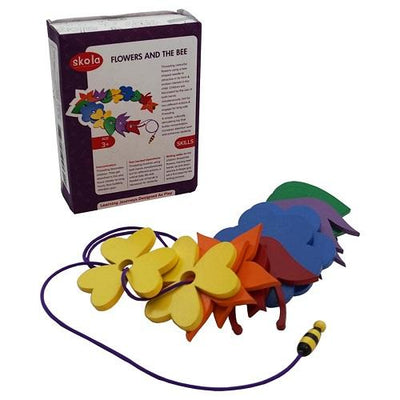
These activities provide a natural, tactile gymnasium for young hands, strengthening neural pathways connecting brain to muscle. The repetitive nature of stringing multiple flowers or meticulously shaping a rangoli pattern also enhances hand-eye coordination and spatial awareness. Far from being trivial, these engagements are foundational for independence and competence in a wide array of life skills, providing a palpable sense of accomplishment with each completed task.
A Sensory Feast and Foundational Mathematics
Beyond just focus and dexterity, these experiences are a feast for the senses and a lesson in foundational mathematics. The different textures of urad dal versus moong dal, the varying weights, the distinct colours – all contribute to rich sensory integration. As children classify, they begin to recognise patterns, understand categories, and develop early logical reasoning skills. When they arrange diyas on a thali or petals for a floral rangoli, they're not just placing objects; they're engaging in spatial reasoning, understanding symmetry, and perhaps even counting.
This hands-on exploration provides a concrete understanding of abstract concepts long before formal schooling introduces them. The sensory input from fragrant jasmine, smooth lentils, or the coarse texture of rice flour used in rangoli deepens their engagement and memory of the activity, making learning multi-dimensional and more effective. This early exposure to classification and patterning through tangible experiences builds a strong base for future mathematical and scientific thinking.
The Unseen Pedagogy of Indian Households
What's truly remarkable is how seamlessly these opportunities are woven into the fabric of Indian family life. They aren't prescribed lessons from a textbook, but rather organic invitations to participate, to contribute, to learn by doing. This approach resonates deeply with philosophies like Montessori, which champions practical life skills as a cornerstone of early childhood development. Maria Montessori herself observed that children possess an innate drive for purposeful activity, and these traditional household tasks offer exactly that – purpose, independence, and a sense of belonging to the family unit.
When a child helps grind masalas with a traditional sil-batta (under supervision, of course) or helps roll chapati dough, they are not just assisting; they are internalising complex processes, understanding cause and effect, and building a repertoire of practical knowledge that fuels confidence and a deep connection to their cultural heritage. These everyday rituals serve as a powerful, culturally embedded curriculum, fostering not just skills, but also a sense of identity and tradition.
Cultivating Character Through Contribution
Moreover, these shared activities cultivate profound social-emotional growth. The patience required to sort a large batch of grains, the perseverance to complete a garland despite clumsy fingers, the pride in contributing to a family ritual – these moments nurture invaluable character traits. Children learn the joy of collaboration, the satisfaction of a job well done, and the importance of contributing to the collective good. Sitting alongside an elder, observing their practiced movements and listening to their quiet instructions, offers a rich intergenerational learning experience, fostering respect, attentiveness, and cultural transmission.
These experiences teach children the value of their efforts and the significance of their role within the family unit. They learn to follow instructions, ask questions, and develop a sense of responsibility. This holistic development, blending cognitive and social-emotional growth, prepares them not just for school, but for a well-rounded and engaged life.
Empowering Engagement for Profound Development
As parents navigating the demands of modern life, it's easy to overlook the simple yet profound power of these traditional engagements. The next time your child shows an interest in helping prepare chai by separating cardamom pods, or wants to assist in making a rangoli for Diwali, remember that they are not just 'helping out.' They are actively engaging in brain-sculpting activities that lay crucial foundations for academic success, emotional intelligence, and life-long learning. Encourage this participation, offer age-appropriate tools, and celebrate their focused efforts. The return on this investment of time and observation is immeasurable.
From the methodical sorting of pulses for a dal tadka to the intricate weaving of a flower garland, the everyday rhythms of an Indian home are replete with unparalleled opportunities for profound child development. These moments, often taken for granted, are powerful, culturally embedded lessons in focus, precision, patience, and contribution, shaping resilient and capable young minds.
For parents eager to further nurture these foundational skills, exploring carefully curated, age-appropriate play-based learning tools can complement these rich real-world experiences. Discover how SkilloToys.com offers a range of safe, educational toys designed to engage young minds in similar hands-on, focused activities, enhancing fine motor skills and executive functions through joyful exploration.