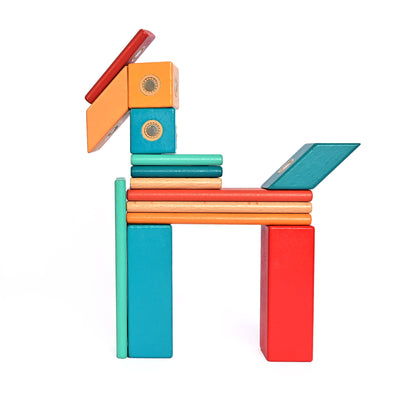
The profound genius etched into a child's persistent attempts, even when they falter, before finally mastering a task like buttoning a kurta or balancing colourful blocks, fundamentally shapes their cognitive resilience.
Observe any toddler engrossed in a new challenge, perhaps attempting to scoop a spoonful of dal into their mouth, or meticulously trying to button the first closure of a small kurta. The scene is often a dance of earnest effort, sometimes clumsy, frequently imperfect, and occasionally ending in a delightful mess. Our immediate instinct, steeped in affection and a desire for efficiency, might be to step in and complete the task for them. But what if we paused? What if we understood that within this very struggle, this relentless cycle of trying, failing, and trying again, lies an extraordinary engine for their brain's most profound development?
The Invisible Architecture of Effort
Neuroscience offers a fascinating glimpse into the child's brain during these moments of what we term 'productive struggle.' Each attempt, each small adjustment, each moment of concentration as they navigate a challenging task, is a potent stimulant for neural growth. When a child strives to fit a shape into its corresponding hole, or balance one block precariously atop another only to see it tumble, their brain isn't merely registering failure. Instead, it's firing a flurry of connections. New neural pathways are being forged, existing ones strengthened, and critical executive functions like planning, working memory, and inhibitory control are being rigorously exercised.
Consider the delicate dance of myelination, the process where nerve fibers are insulated with a fatty sheath. This 'insulation' significantly speeds up the transmission of electrical signals in the brain. Repeated, effortful actions—like trying to string beads for a necklace or carefully arranging tiny flowers for a puja thali—actively promote myelination in the areas responsible for fine motor control, hand-eye coordination, and complex problem-solving. It's not the perfect rangoli that builds the brain, but the persistent attempts to draw a straight line or symmetrical curve, erasing and redrawing, that truly sculpts cognitive abilities.
More Than Just Motor Skills: Cultivating Resilience and Innovation
The benefits of allowing children to navigate their own struggles extend far beyond physical dexterity. When a child learns to tie their shoelaces after countless fumbling attempts, or masters the art of folding a small handkerchief neatly, they're not just acquiring a practical skill. They are internalising profound lessons about perseverance and self-efficacy.
This process is foundational for developing a 'growth mindset'—the belief that abilities can be developed through dedication and hard work.