The profound way your child's simple contributions to household tasks like sifting lentils or stringing marigolds are quietly sculpting their brain for remarkable cognitive agility and inner discipline
Picture this: a bustling Indian kitchen, the aroma of spices wafting, and amidst it all, your little one, eyes wide with concentration, carefully trying to sift a handful of dal, or perhaps meticulously placing jasmine buds onto a thread for a beautiful gajra. For many of us, these moments might seem like charming, albeit sometimes messy, interruptions to our daily routine. We might see it as a chance to bond, or perhaps even a mini lesson in cultural traditions. But what if I told you that in these seemingly simple, everyday household contributions, your child's developing brain is engaged in an incredibly sophisticated dance, laying down the neural superhighways for remarkable cognitive abilities and deep-seated inner discipline?
It's true. The science of early childhood development reveals a surprising truth: involving children in purposeful, practical tasks around the home, a concept beautifully championed by the Montessori philosophy as 'Practical Life' activities, doesn't just teach them responsibility; it profoundly sculpts their brain architecture. These aren't just 'chores'; they are rich, multi-sensory learning experiences that are far more impactful than many conventional academic lessons at certain stages of development.
The Hidden Genius in Everyday Acts
Think about the sheer complexity involved in sifting lentils. A child must grasp the sifter, coordinate their hand movements to gently shake it, focus their eyes to identify and remove tiny pebbles or impurities, and regulate their force to avoid spilling. This seemingly simple act is a masterclass in developing fine motor skills, hand-eye coordination, sustained attention, and problem-solving. Each movement refines the neural pathways connecting their brain to their hands, sharpening their precision and control.
Similarly, when a child helps knead atta for rotis, their hands engage with different textures – the dry flour, the water, the forming dough. They learn about cause and effect, the perfect consistency, and the rhythmic motion required. This sensory-motor experience is crucial for building body awareness and tactile discrimination, while the repetitive nature fosters concentration and a calming sense of order. It's a foundational lesson in material science, patience, and the satisfaction of creation.
More Than Just Helping: Brain-Boosting Benefits Unveiled
The benefits extend far beyond motor skills:
- Executive Functions at Play: Practical tasks are powerful builders of executive functions – the higher-order cognitive skills critical for success in life. When a child helps arrange items for puja, they're practicing planning (what goes where?), sequencing (which step comes first?), and organization. If a small spill happens while watering plants, they learn impulse control and problem-solving by finding a cloth to clean it. These are real-world applications of skills that translate directly to academic learning and future challenges.
- Mathematical Foundations: Sorting vegetables by type, counting the number of items for a thali, or identifying patterns while threading flowers for a garland subtly introduces foundational mathematical concepts. Children learn classification, one-to-one correspondence, estimation, and logical reasoning without even realizing they're engaging with math.
- Language and Communication: Engaging in household tasks provides a natural context for language development. Parents can describe ingredients, narrate the steps, ask questions ('Which dal is this?'), and encourage the child to express their actions. This rich verbal interaction expands vocabulary, comprehension, and conversational skills in an organic, meaningful way.
- Cultivating Inner Discipline and Focus: Unlike free play, practical tasks often have a clear beginning, middle, and end, and require a certain level of precision and adherence to steps. This structure helps children develop self-discipline, the ability to concentrate for longer periods, and a profound sense of satisfaction from completing a task. This inner drive and focus are invaluable for all future learning.
- Emotional and Social Intelligence: When children contribute to the household, they feel valued, competent, and an integral part of the family unit. This fosters self-esteem, a sense of belonging, and empathy. They understand that their actions have a positive impact on others, building the bedrock of social intelligence and responsible citizenship. Sharing the work, even in small ways, connects them deeply to family rituals and traditions.
Think of a child carefully sorting through a basket of mixed spices – distinguishing between elaichi, laung, and kali mirch. This isn't just a lesson in Indian culinary essentials; it's a sensory exploration that hones discrimination skills, focus, and an understanding of categories.
Montessori at Home: An Indian Context
Maria Montessori observed that children have an innate drive to be useful and to imitate adult activities. Our Indian homes, with their rich tapestry of daily rituals and community living, offer a perfect, natural 'prepared environment' for these 'Practical Life' activities. From helping clean rice, to arranging footwear by the door, to folding small napkins, the opportunities are endless and deeply rooted in our cultural fabric. We don't need fancy equipment; everyday household items become powerful learning tools.
As parents, we might sometimes hesitate, fearing the mess or the time it might take. But consider the profound, long-term investment you're making in your child's brain development, their self-confidence, and their capacity for sustained, purposeful action. The momentary mess is a small price to pay for the incredible neural pathways being forged.
So, the next time your little one reaches out to help you sort through the vegetables, wipe a table, or even just arrange their toys neatly, remember: they're not just being 'helpful.' They are actively, profoundly, and joyfully building the very foundations of their cognitive brilliance, their inner discipline, and their future competence. Embrace these moments; they are golden opportunities for growth.
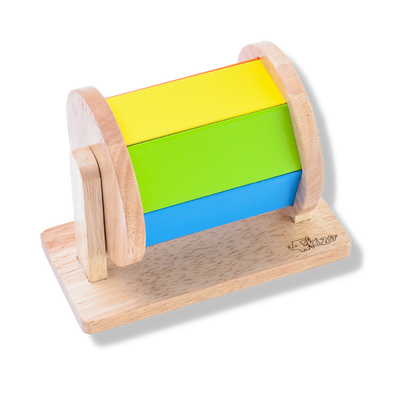
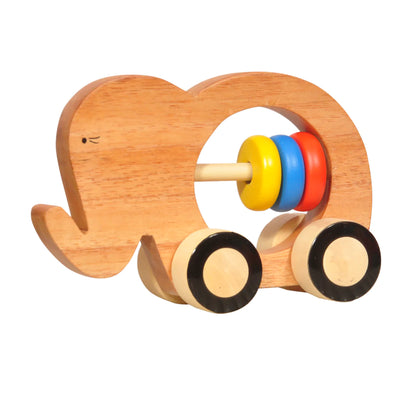
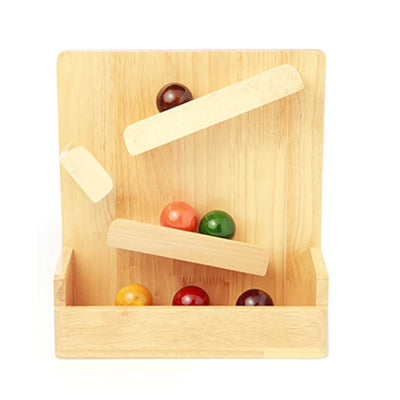
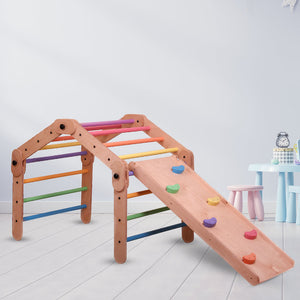
To further nurture this budding brilliance and reinforce the skills learned through practical life, explore SkilloToys.com. Our curated selection of safe, educational, and play-based learning toys are designed to complement these real-world experiences, offering engaging tools that develop fine motor skills, cognitive agility, and a lifelong love for purposeful play, perfectly aligning with the spirit of Montessori's Practical Life.