When your little one mimics your gestures or sounds, their brain is silently constructing remarkable social intelligence and deep empathy
Observe a child in an Indian home for just a few moments, and you'll witness a profound ballet of imitation. A tiny hand meticulously arranges miniature kitchen vessels exactly like their mother setting the dinner table. A little one tries to 'read' the newspaper upside down, just like their father engrossed in the morning news. Perhaps they hum along to a bhajan, perfectly mimicking the rhythm and tone of their grandmother's devotional singing. These aren't just adorable quirks; they are critical cognitive acts, foundational to how your child understands the world, connects with others, and builds their very sense of self.
It's a fact that often goes unappreciated: when your child actively imitates, they aren't merely replicating an action; they are engaging in a sophisticated form of learning that profoundly shapes their social brain. This isn't passive observation; it's an active mental simulation, a deep dive into another person's intentions and emotions. It's the original 'learning by doing,' but with an extraordinary social dimension.
More Than Just Copying: The Mirror Neuron Phenomenon
Research into child development has revealed the astonishing neural mechanisms behind this imitative drive. Scientists have discovered what are often called 'mirror neurons' – specialized brain cells that fire not only when we perform an action but also when we observe someone else performing the same action. Imagine your child watching you light a diya for Diwali; their mirror neurons are firing as if they themselves are lighting it. This isn't just about motor skills; it's about understanding the 'why' behind the action.
For a child, this mirror system is a superhighway for empathy. When they mimic the furrowed brow of a grandparent who is concentrating, or the joyful claps during a family celebration, they are quite literally experiencing a resonance within their own neural network. This internal mirroring helps them grasp the feelings and intentions of others, a cornerstone of emotional intelligence and social bonding. It's how they begin to build a 'theory of mind' – the understanding that others have their own thoughts, feelings, and perspectives, distinct from their own.
Building Social Scaffolding Through Mimicry
Consider the myriad ways imitation serves as a social glue. A toddler trying to mimic an older cousin's dance moves at a family sangeet isn't just seeking attention; they are attempting to integrate into the social fabric, to belong. When children engage in pretend play, mimicking family roles – playing 'doctor-doctor' or 'teacher-teacher' – they are rehearsing social scripts, understanding hierarchies, and learning negotiation. They learn how to take turns, how to share, and how to communicate their needs, all through the lens of imitation.
This early social learning, facilitated by mimicry, is crucial for navigating the complex social landscapes of childhood and beyond. It helps them decode non-verbal cues, understand cultural norms, and develop the flexibility needed to adapt to different social situations. Whether it's copying how adults greet guests with a 'Namaste' or sharing prasad, these small imitative acts are profoundly wiring their brains for future social competence.
The Montessori Connection and Everyday Learning
Montessori education, with its emphasis on 'practical life' activities, implicitly understands the power of imitation. Children in a Montessori environment are often given child-sized tools and real-life tasks – pouring water, buttoning clothes, sweeping – which are often initially demonstrated by an adult. The invitation is not just to perform the task, but to observe, internalize, and then imitate the movements, fostering independence, concentration, and fine motor skills, all while deepening their understanding of the adult world.
But this isn't limited to a formal classroom. In an Indian household, practical life is woven into the very fabric of daily routine. Your child watching you prepare chai, fold laundry, or even participate in a puja ceremony, and then attempting to 'help' or mimic these actions later, is engaging in their own form of practical life learning. They're not just 'playing grown-up'; they're developing crucial life skills, problem-solving abilities, and a sense of contribution.
From Simple Acts to Complex Cognition
The neural pathways strengthened by imitation extend beyond social skills. When a child mimics the sounds of animals, they're developing phonological awareness, a precursor to literacy. When they copy the rhythm of a clap, they're building a foundation for mathematical understanding and musicality. The act of imitation demands attention, memory, and motor planning – all executive functions vital for academic success and life-long learning. It's a powerful testament to the brain's innate capacity to learn from its environment and its interactions.
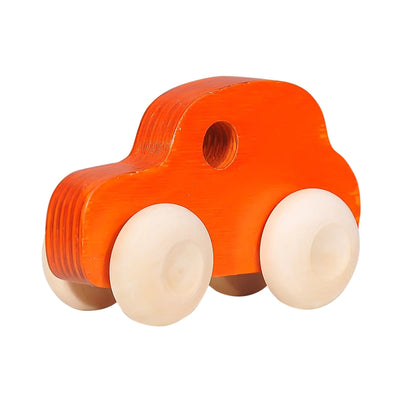
So, the next time your child tries to 'drive' their toy car just like you, or attempts to wipe a spill with a tiny cloth, remember the profound cognitive work happening beneath that innocent smile. They are not just being cute; they are actively building their social intelligence, cultivating empathy, and laying down crucial neural architecture for a lifetime of understanding and connecting with the world around them. Encourage this beautiful, natural drive to imitate – it's one of the most powerful learning tools they possess.
To further nurture your child's innate drive for imitation and social learning, explore SkilloToys.com. Our carefully curated collection of open-ended, culturally relevant toys is designed to inspire imaginative role-play and collaborative scenarios, providing the perfect environment for your child to mimic, learn, and develop deep social intelligence and empathy through joyful play.