When your little one picks up a humble stone or drapes an old sari over their head, they are actually igniting profound neural architecture for future innovation
It's a sight familiar to almost every Indian household: a toddler, surrounded by a myriad of brightly coloured, singing, flashing plastic toys, yet utterly captivated by the simplicity of a smooth river stone, a handful of dried chickpeas, or an old, discarded dupatta. Parents often marvel, sometimes with a chuckle, at this curious preference. But what if this seemingly unassuming choice is, in fact, a deeply profound and neurologically beneficial act? What if, in that moment of unadulterated focus on the mundane, your child is engaging in some of the most sophisticated brain development imaginable?
Research into early childhood learning has consistently revealed that a child's brain isn't just playing when it interacts with such 'loose parts'; it's actively building, connecting, and refining the very neural networks essential for future problem-solving, creativity, and adaptability. This isn't just cute behaviour; it's a powerful, self-directed learning mechanism at play, one that often outshines the benefits offered by many single-purpose, technologically advanced toys.
The Unspoken Language of Loose Parts
Imagine your child using a small stone not just as a stone, but as a magic bean, a tiny animal, or currency in their imaginary 'dukaan'. That old dupatta isn't merely fabric; it transforms into a superhero cape, a baby's blanket, a flowing river, or the roof of a secret fort. This concept, championed by architect Simon Nicholson as 'loose parts' theory, highlights how open-ended materials foster ingenuity because they have no predetermined use. They invite children to impose their own meaning, rules, and narratives, demanding more from their cognitive abilities than any toy designed with a single function.
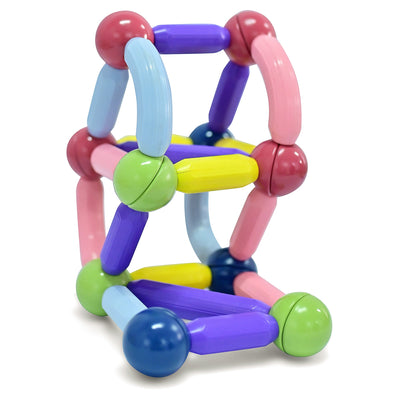
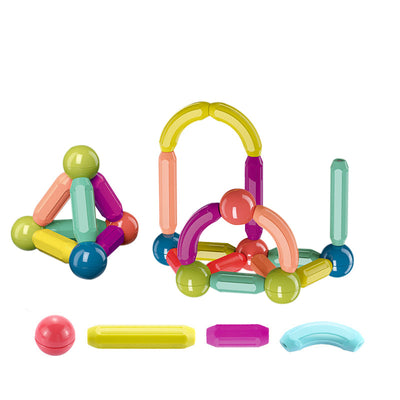
When a child manipulates a natural object, perhaps arranging pebbles into a pattern, stacking small wooden blocks, or trying to 'cook' with leaves and twigs, their brain is engaged in a complex symphony of activity. They are experimenting with physics – how high can this stack go before it topples? They are exploring mathematics – how many leaves do I need to make a full plate? They are practicing engineering – how can I connect these sticks to build a bridge? Every interaction is a mini-experiment, a hypothesis, and a conclusion, all unfolding within their own self-directed play.
Unlocking Cognitive Brilliance with Simple Materials
The beauty of these simple objects lies in their infinite possibilities. This open-endedness directly stimulates divergent thinking, a critical component of creativity. Unlike toys that guide children towards a specific outcome, loose parts demand that children generate multiple solutions, ideas, and uses. This process strengthens neural pathways associated with flexible thinking, fostering a mind that isn't just good at finding the 'right' answer, but excels at imagining new ones.
Furthermore, the sensory experience itself is invaluable. The varied textures of a rough stone, a smooth seashell, the crinkle of a dried leaf, or the softness of cotton – these stimulate a child's tactile sense in ways plastic often cannot. This rich sensory input is crucial for developing sensory integration, which is fundamental to how children understand and interact with the world around them. It builds a deeper, more nuanced perception, laying a robust foundation for all future learning.
Cultivating Resourcefulness and Resilience, the Indian Way
In the context of Indian homes, this love for simple playthings resonates deeply with our cultural ethos of resourcefulness and making do with what's available. Think of generations of children playing 'goli' with marbles or small stones, fashioning intricate dolls from scraps of fabric, or creating elaborate 'ghar-ghar' setups using old utensils, fallen flowers, and seeds. These aren't just nostalgic memories; they are powerful examples of spontaneous, child-led learning in action, deeply embedded in our heritage.
When a child is allowed to solve a problem with limited resources – for instance, figuring out how to balance two stones to create a see-saw for their toy animals – they are building resilience and developing a robust internal locus of control. They learn that they possess the agency to overcome challenges, not by being handed a ready-made solution, but by thinking creatively and persevering. This strengthens their self-efficacy and belief in their own problem-solving capabilities, qualities that are indispensable for navigating life's complexities.
Moreover, play with simple, natural elements often connects children to their immediate environment and culture. Collecting peepal leaves for 'cooking', sorting various seeds, or using coloured bangles to create patterns, all naturally integrate learning with the familiar sights, sounds, and textures of an Indian childhood. This enriches their understanding of their surroundings and fosters a sense of belonging and cultural identity.
So, the next time you see your child engrossed with a handful of stones or an old saree, resist the urge to redirect them towards a more 'educational' toy. Instead, observe the silent genius at work. They are not merely passing time; they are actively constructing a sophisticated neural architecture, honing their imagination, fostering problem-solving skills, and building a foundation for lifelong creativity and resilience. This kind of play is an essential nutrient for their developing brain, cultivating not just intelligence, but also adaptability and a profound sense of ingenuity.
To truly nurture this innate capacity for creative problem-solving and deep engagement, explore the world of open-ended, safe, and stimulating play resources. At SkilloToys.com, you'll discover a curated selection of educational toys designed to spark imagination and support your child's holistic development, empowering them to create, explore, and learn through the profound magic of play.