Your child's delight in arranging colourful rangoli or stacking building blocks is quietly laying the architectural blueprint for their future triumphs in science technology engineering and mathematics
Observe a young child meticulously placing a small block atop another, their brows furrowed in concentration as they aim for balance, or the focused dedication of a toddler attempting to fit a star-shaped peg into its corresponding hole. Perhaps you've seen a little one helping *Dadi* arrange *diyas* in a perfect semi-circle for Diwali, or thoughtfully arranging their tiny toy cars in a neat line. These aren't just moments of innocent amusement; they are, in fact, pivotal acts of profound cognitive development, secretly laying the very foundations for future brilliance in fields like science, technology, engineering, and mathematics – often referred to as STEM.
It's a truly surprising insight that the seemingly straightforward act of manipulating shapes, understanding relationships between objects, and navigating space in their immediate environment is directly wiring your child's brain for advanced problem-solving and innovation. This capability, known as spatial reasoning, is far more than just 'being good with directions.' It encompasses the ability to visualize objects from different perspectives, mentally rotate them, understand how parts fit into a whole, and comprehend distances, areas, and volumes.
The Unseen Architect of STEM Minds
Research from institutions like the University of Chicago and Vanderbilt University consistently highlights a powerful correlation between strong spatial skills in early childhood and later success in STEM disciplines. Think about it: an engineer needs to visualize a complex bridge design before it's built, a surgeon must navigate intricate bodily structures, a physicist grapples with the geometry of the universe, and a software developer designs spatial user interfaces. All these require a sophisticated understanding of space, shapes, and relationships that begins with the humble block tower.
When your child pieces together a jigsaw puzzle depicting a bustling Indian street scene, they are engaging in sophisticated mental rotation and part-to-whole analysis. Similarly, arranging the colourful petals for a *rangoli* design on the floor isn't merely artistic expression; it's an exercise in symmetry, pattern recognition, and understanding how shapes fit within a defined area. These playful explorations are silently fortifying neural pathways, building the mental muscle required for abstract mathematical concepts and complex scientific models.
More Than Just Play: A Cognitive Symphony
The beauty of early spatial development lies in its organic, play-based nature. Children aren't 'taught' spatial reasoning in a formal sense; they absorb it through interaction with their world. Every time a toddler tries to stack their *roti-dabba* inside their backpack, or when they build a fortress out of cushions and blankets, they are testing hypotheses about size, fit, stability, and structure. These hands-on experiences provide concrete data points for their developing brains to process, synthesize, and generalize into abstract spatial principles.
Consider the Montessori approach, which places a strong emphasis on sensorial materials like the Pink Tower or Brown Stair. These meticulously designed tools aren't just for aesthetic appeal; they are precisely calibrated to help children internalize concepts of dimension, sequence, and proportion through direct, tactile engagement. Similarly, the Reggio Emilia philosophy, with its focus on children's hundred languages, encourages explorations with various materials, allowing children to express their understanding of space through construction, drawing, and sculpting.
Cultivating Spatial Superpowers at Home
As Indian parents, we have a rich cultural tapestry filled with opportunities to foster these critical skills naturally. Encourage your child to help you arrange vegetables in the fridge, noting which ones fit where, or to set the table, understanding the spatial layout of plates and cutlery. When making *mithai*, let them help arrange the *ladoos* or *barfi* on a tray, discussing how many fit in a row or how to make a pattern.
Everyday Opportunities for Spatial Growth
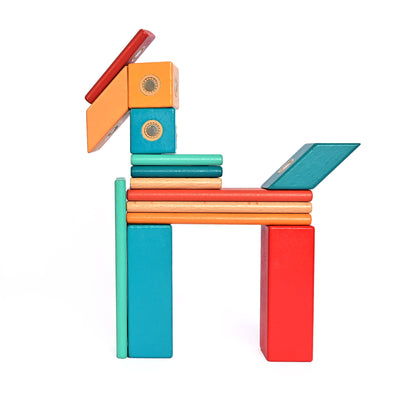
- Block Play & Construction: Provide a variety of building blocks – wooden, magnetic, or even repurposed cardboard boxes. Encourage them to build towers, bridges, or homes for their toy animals. Ask questions like, "What happens if we put this block here?" or "Can you make a tunnel big enough for this car?"
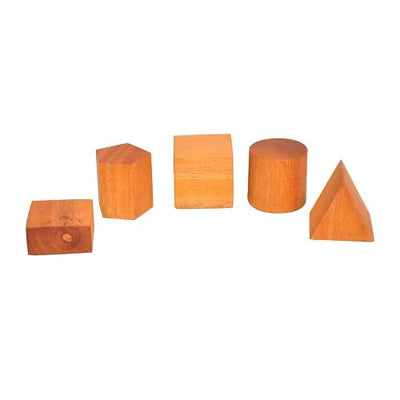
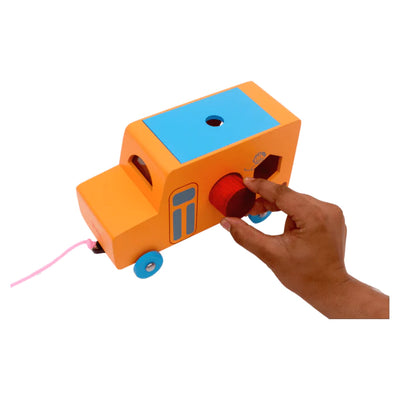
- Puzzles & Shape Sorters: These are classic tools for a reason. Jigsaw puzzles, tangrams, and shape-sorting toys directly challenge children to visualize, rotate, and fit pieces together, strengthening their spatial awareness and problem-solving.
- Art & Craft: Engaging in drawing, painting, or clay modeling allows children to translate 3D spatial ideas onto a 2D surface or create 3D forms. Making *rangoli* or decorating *torans* involves understanding symmetry, patterns, and space.
- Outdoor Exploration: Navigating a playground, climbing structures, or even playing hide-and-seek involves constant spatial calculations. Ask them to describe where things are – "Is the ball under the tree or behind the bush?"
- Practical Life Activities: Involve them in tasks like packing their school bag (fitting books and lunchboxes), arranging their shoes, or helping organize their toys. These seemingly simple chores are potent spatial lessons.
It's important to remember that this isn't about formal lessons or rote memorization. It's about creating an environment rich with opportunities for exploration and discovery. It's about empowering children to manipulate, arrange, and build, thereby allowing their minds to grasp the inherent spatial logic of the world around them. This early, playful engagement isn't just preparing them for a future career; it's nurturing a curious, analytical mind that can approach challenges with confidence and creativity.
The next time you see your little one deeply engrossed in building a magnificent fort or carefully arranging their marbles, know that they aren't just playing; they are actively designing their future, piece by spatial piece. Embrace these moments as invaluable learning opportunities, for within these simple acts lies the profound potential for groundbreaking innovation and critical thinking.
To support your child's journey in mastering spatial reasoning and igniting their STEM potential, explore SkilloToys.com. Our curated collection of safe, engaging, and thoughtfully designed play-based learning toys specifically nurtures these foundational skills, turning every playtime into an architectural marvel for their developing minds.