Your little one's precise pincer grasp on a tiny *moti* isn't just about dexterity; it's a profound prelude to their future reading and math mastery
Observe a young child intently focused on picking up a single grain of *rajma*, or perhaps attempting to arrange tiny beads for a makeshift necklace. You might smile at their earnest concentration, perhaps even marvel at their developing dexterity. What often goes unnoticed, however, is the monumental brain-building work happening behind the scenes during these seemingly simple acts. This isn't just about teaching them to use their hands; it's about laying down the foundational neural pathways for their entire academic journey and beyond.
It's a truly fascinating insight: the ability to control small muscles, particularly in the hands and fingers, is not merely a physical skill. It is intricately woven into the fabric of cognitive development, impacting everything from early literacy to complex problem-solving. These fine motor capabilities act as a silent, powerful predictor of future academic success, shaping how a child will engage with the world of learning.
The Unseen Brainwork Behind Tiny Movements
When a child attempts to thread a *moti* onto a string, their brain is engaging in a symphony of coordinated actions. The motor cortex sends signals for precise finger movements, while the visual cortex works in tandem to guide the hand. Crucially, the prefrontal cortex, responsible for executive functions like planning and problem-solving, is also actively involved. This complex interplay strengthens neural connections, building a robust network that will serve them in countless ways.
Research consistently shows a strong correlation between developed fine motor skills in early childhood and later achievements in reading, writing, and mathematics. Think about it: before a child can form letters, they need to hold a pencil correctly. Before they can read, their eyes need to track smoothly across a page, a skill deeply rooted in visual motor integration. These aren't isolated abilities; they are interconnected, with fine motor control often acting as the linchpin.
More Than Just Dexterity: A Cognitive Cornerstone
The impact of fine motor proficiency extends far beyond mere hand-eye coordination. It serves as a vital bridge to higher-order cognitive functions. Children with well-developed fine motor skills often exhibit better attention spans, enhanced problem-solving abilities, and greater independence in learning tasks. They can manipulate objects to understand concepts, a cornerstone of Piaget's sensorimotor stage and crucial for concrete operational thinking.
Consider the process of learning to write. It demands precise control over a writing implement, the ability to form shapes and lines, and the stamina to sustain these movements. Similarly, in mathematics, tasks like counting objects, manipulating abacus beads, or even drawing geometric shapes all rely heavily on fine motor precision. Even in the realm of STEM, from building intricate structures to conducting simple experiments, the careful handling of tools and materials is paramount.
Montessori and Play-Based Learning: A Natural Fit
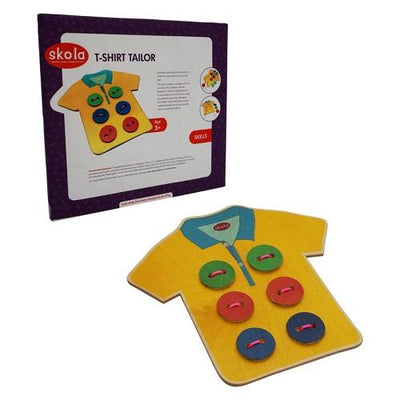
Esteemed educational philosophies, like Montessori, have long recognized the profound importance of fine motor development. Montessori classrooms are rich with 'Practical Life' activities designed specifically to refine these skills – from spooning beans between bowls to buttoning clothes and lacing frames. These activities aren't just chores; they are purposeful exercises that build concentration, independence, and the very dexterity we're discussing.
Beyond structured methodologies, play itself is the ultimate laboratory for fine motor development. Think of the joy and intense focus as a child stacks blocks, threads beads, plays with clay to make *modaks*, or attempts to cut paper with safety scissors. Each of these activities, driven by intrinsic motivation, refines their finger muscles, improves hand-eye coordination, and simultaneously sharpens their cognitive acumen.
Cultivating Precision in Our Indian Homes
Our rich Indian culture provides countless organic opportunities to foster these critical skills. Remember watching a grandparent meticulously prepare a *rangoli*? Inviting your child to participate, perhaps by using a small spoon to sprinkle colored powders or drawing simple lines with their fingers, provides incredible fine motor practice. The delicate control needed to light a *diya* or place an *agarbatti* in its stand also builds focused hand movements.
Even daily household tasks can become powerful learning moments. Sorting different types of *dal* or *chawal* from a mixed bowl, carefully peeling a small fruit like an orange, or helping to set the table by placing cutlery precisely are all fantastic ways to engage those tiny muscles. When preparing for festivals, threading flowers for a *mala* or tying a *rakhi* with care offers engaging, culturally relevant fine motor exercises. These aren't just chores; they are opportunities for growth and connection.
Empowering Little Hands for Big Futures
Encouraging fine motor development doesn't require expensive gadgets or elaborate setups. It's about providing opportunities for hands-on exploration and creation. Simple activities like playing with playdough, drawing and scribbling, tearing paper, using child-safe scissors, or engaging with puzzles can make a huge difference. Building with blocks, LEGO, or even natural materials like pebbles and twigs further refines these skills.
The cumulative effect of these seemingly small engagements is immense. By nurturing your child's fine motor skills today, you are not just helping them button their shirt or write their name; you are quite literally wiring their brain for a lifetime of successful learning, problem-solving, and independent thinking. It's an investment in their cognitive future, delivered through the joyful exploration of their own hands.
To truly support this incredible journey of brain development and skill acquisition, explore the thoughtfully curated selection of safe, educational, and play-based learning toys at SkilloToys.com. Our collection is designed to engage tiny hands and minds, fostering critical fine motor skills and laying a robust foundation for your child's academic and personal success through the power of play.