Your toddler's simple game of hiding a teddy 'behind the parda' is quietly building the foundational architecture for advanced mathematical thinking
Imagine your little one, eyes sparkling with determination, trying to fit a large toy truck into a smaller box, or perhaps meticulously arranging colourful blocks to build a miniature replica of your home. These seemingly simple actions are far more profound than mere playtime; they are the earliest, most vital architects of their future mathematical mind, silently laying the groundwork for complex cognitive abilities.
This incredible, often overlooked aspect of early learning is what researchers call spatial reasoning – the ability to understand and manipulate objects in space, to mentally rotate shapes, and to comprehend relationships like 'next to,' 'under,' 'above,' or 'inside.' For years, this foundational skill has been recognized as a powerful predictor of success in STEM fields, often even more so than early verbal abilities. It's the secret sauce behind a child's intuitive grasp of numbers and patterns.
The Unseen Blueprint of Spatial Understanding
From the moment an infant begins to reach for a colourful rattle dangling 'above' their crib, or navigates a crawl 'around' a grandparent's legs, their brain is busily mapping the world. The hippocampus, crucial for memory and navigation, and the parietal lobe, responsible for processing sensory information and spatial awareness, are intensely active during these formative years. Each successful attempt to stack *dabbas* 'on top' of each other or to find a hidden toy 'behind' the *sofa* strengthens these neural pathways, building a robust cognitive framework.
Think about the intricate patterns of a *rangoli* being designed for Diwali, where precise placement and understanding of symmetry are paramount. Or the way a child learns to identify their *chai* cup 'on the top shelf' versus 'the one in the cupboard below.' Even helping arrange groceries, understanding which fits 'inside' another, or knowing the *agarbatti* stand goes 'next to' the *murti* in the *mandir*, are rich, daily lessons in spatial logic and relative positioning that are deeply embedded in our cultural fabric.
From 'Under' to Understanding Geometry
It might seem a vast leap from finding a lost *chappal* 'under the bed' to solving complex geometry problems or mastering engineering principles, but the connection is undeniable. Research consistently shows a strong correlation between early spatial skills and later mathematical achievement, especially in areas like geometry, measurement, and even fractions. Children who can mentally manipulate shapes and visualize transformations often grasp abstract mathematical concepts more easily. They're not just memorizing formulas; they're seeing the underlying structure and relationships, literally 'picturing' the problem in their mind's eye.
A child who effortlessly navigates their way through a new environment or can accurately describe the shortest path to the *kirana* store is demonstrating advanced spatial mapping. This ability translates directly into a better understanding of maps, graphs, and even the abstract coordinate systems used in higher mathematics. They develop an intuitive sense of how things fit together, how they move, and how they relate in three dimensions.
Everyday Life: A Masterclass in Space
The beauty of nurturing spatial intelligence lies in its simplicity; it doesn't require specialized tools or classrooms. This isn't about formal lessons; it's about observation and engagement within your child's natural environment. When your child tries to fit a large toy into a small bag, they are performing an early experiment in volume and capacity. When they construct a makeshift fort with *dupattas* and pillows, they're exploring architecture, balance, and enclosed spaces.
Playing with building blocks, fitting puzzle pieces, or even navigating a crowded market *galli* while holding your hand – each instance is a masterclass in understanding spatial relationships, perspective, and problem-solving. These everyday moments, often dismissed as mere play, are actually powerful cognitive workouts, strengthening the very neural connections that will support their future academic and professional success.
Nurturing the Spatial Architect at Home
So, how can we foster this innate spatial genius that is already bubbling within our children? It begins with language. Use descriptive words as you interact: 'The ball rolled under the table,' 'Let's put the book on top of the pile,' or 'Can you find your *gudiya* behind the curtain?' This verbalisation helps them connect their physical experiences with abstract concepts, building a rich vocabulary for space.
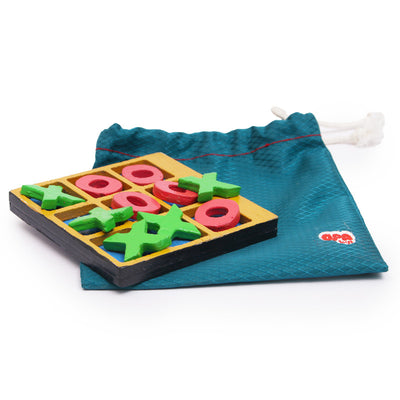
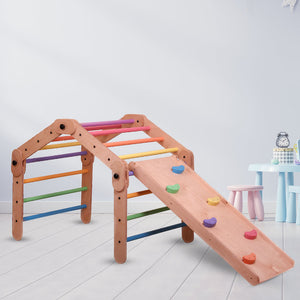
Encourage physical exploration, allowing them to climb, crawl, and navigate different spaces safely, both indoors and outdoors. Offer open-ended materials like wooden blocks, Lego, or even household items like empty boxes and clothes pegs that invite them to build, arrange, and create their own spatial challenges. Even simple tasks like helping you sort clothes by size or shape, or arranging *roti* on a plate, contribute significantly. The key is engagement and opportunity for hands-on, self-directed discovery.
Recognizing the quiet genius unfolding in these everyday interactions transforms our perception of early childhood. Your little one isn't just playing; they are building the very cognitive scaffold upon which future innovations, scientific discoveries, and mathematical breakthroughs will stand. It's a subtle yet profound superpower being honed in plain sight, right there in your living room.
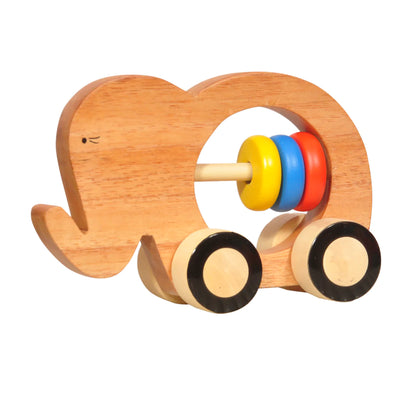
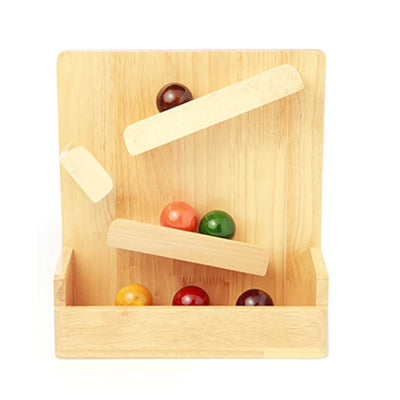
For parents eager to further ignite this incredible spatial aptitude, exploring toys that encourage building, stacking, and manipulating shapes can be wonderfully beneficial. SkilloToys.com offers a curated collection of safe, engaging, and play-based learning toys specifically designed to foster these critical early spatial reasoning skills, setting a powerful foundation for a lifetime of logical thinking and discovery.