Homeschooling Curriculum India: A Montessori Guide
For modern Indian parents exploring education beyond traditional schools, selecting the right homeschooling curriculum India offers can feel like a complex puzzle. Child development experts agree that the most effective curriculum isn't just about academics; it's about nurturing your child's innate curiosity and preparing them for life. A Montessori-inspired approach provides a powerful framework for this, empowering you to create a home learning environment that truly thrives.
A homeschooling curriculum in India refers to the structured plan, materials, and methods parents use to educate their children at home instead of enrolling them in a conventional school. This matters because it directly shapes the child's learning experience, skill development, and overall well-being. Indian parents can tailor this curriculum to their child's unique pace, interests, and family values, often integrating cultural and linguistic elements not always found in mainstream schooling.
Why Montessori Principles Matter for Homeschooling in India
As urban Indian parents, we often juggle demanding careers with the desire to provide the best for our children. The pressure to choose a 'perfect' curriculum can be immense. Montessori homeschooling in India offers a refreshing perspective: it's not just a curriculum, but a philosophy that respects the child as an individual learner. Maria Montessori, a pioneering educator, observed that children learn best in a carefully prepared environment where they can explore independently.
This child-centric approach contrasts sharply with rote learning, a common concern for parents in India. Research consistently shows that children engaged in self-directed learning develop stronger problem-solving skills and a deeper understanding of concepts. For a 3-year-old in a Bengaluru flat, this might mean choosing to work with a practical life activity kit like pouring beans, rather than being forced to sit for a worksheet.
The Prepared Environment: More Than Just Toys
Creating a Montessori at home India setup doesn't require a dedicated classroom; it's about thoughtful arrangement. Think about Rohan, a 4-year-old in Mumbai, whose parents repurposed a low bookshelf in their living room. On it, they place a limited selection of engaging, age-appropriate materials – maybe a wooden stacking puzzle, some sandpaper letters, and a set of nesting dolls. This 'prepared environment' invites exploration, reduces clutter, and minimizes decision fatigue for both child and parent.
The key is accessibility and rotation. Instead of overwhelming a child with too many options, offer a few high-quality, purposeful Montessori learning materials. When your child masters a skill or loses interest, quietly rotate new materials in. This method fosters concentration and a sense of order, allowing children to dive deep into activities without constant adult intervention. This simple act of observation and preparation can transform daily learning.
Observing Your Child: The Real Curriculum Guide
The true genius of Montessori lies in its emphasis on observation. It teaches us that the child is the guide. Before you even search for the best homeschooling curriculum India has, spend time simply watching your child. Does your 2-year-old consistently sort objects by colour? Does your 5-year-old show a keen interest in numbers or stories? These are not just quirks; they are developmental cues indicating their sensitive periods for learning.
Child development experts recommend that parents become 'scientific observers' in their own homes. For instance, if your child is constantly drawing, perhaps a curriculum rich in art and fine motor development, even a simple one, would be more beneficial than one focused solely on early reading. This unique insight — using Montessori principles to *evaluate* any curriculum rather than just picking a pre-made Montessori one — empowers you to make truly informed choices, regardless of the 'brand' of education you choose.
Evaluating Homeschooling Curricula in India: A Montessori Lens
When you start looking for homeschooling resources India-wide, you'll find a bewildering array of options. From structured academic programs to unschooling approaches, each promises different outcomes. A Montessori lens helps you cut through the noise. Ask yourself: Does this curriculum allow for hands-on exploration? Does it encourage independence and problem-solving? Does it respect my child's individual pace?
For example, while some curricula might push early formal academics, a Montessori-aligned choice for a 6-year-old might offer geography through puzzle maps and cultural studies through real-life stories and festivals, making learning tangible and meaningful. NCERT's foundational stage curriculum also emphasizes activity-based learning, which resonates well with Montessori's practical approach.
Academic Rigour vs. Child-Led Learning: Finding Your Balance
A common concern for Indian parents is balancing academic rigour with the freedom of child-led learning. Many fear that without strict academics, their child might fall behind. However, the Montessori method demonstrates that deep, self-motivated learning often leads to greater academic success in the long run. When children are truly engaged, they absorb information more effectively and retain it longer.
For a family in Hyderabad, this could mean dedicating mornings to self-chosen Montessori activities and afternoons to more structured lessons in mathematics or language arts, perhaps using open-source Indian homeschooling tips. The goal isn't to abandon academics, but to make them relevant and engaging, allowing the child to dictate the *how* and *when* of their learning within a supportive structure.
Practical Indian Homeschooling Tips for Modern Families
Homeschooling in India, especially with a Montessori touch, is about integrating learning into daily life. It's not just about textbooks; it's about conversations during dinner, exploring local markets, or helping a grandparent with a traditional recipe. These everyday experiences are rich learning opportunities, particularly for language development and cultural understanding.
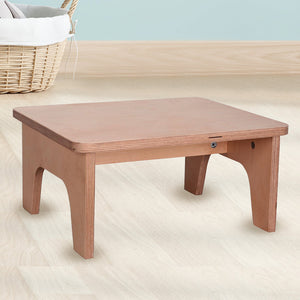
For urban families, space might be a constraint. Instead of a dedicated room, consider a 'learning corner' with a low table and a few baskets of materials. Remember the recent news about how monsoon changes care for babies; similarly, daily routines and even weather can be integrated into the learning narrative, making it authentic and connected to the child's world.
Involving the Family: Grandparents and Siblings in the Learning Journey
One of the beautiful aspects of Indian family life is the presence of grandparents and extended family. They are invaluable homeschooling resources in India. Grandparents can share stories, teach traditional crafts, or impart life wisdom, enriching the child's learning far beyond any textbook. Siblings, too, can learn from and teach each other, fostering collaboration and empathy.
Consider how a dadi teaching her grandchild to make ladoos isn't just cooking; it's a lesson in measurement, cultural heritage, and fine motor skills. This familial integration makes homeschooling a holistic, community effort, deeply rooted in Indian values. It reinforces that learning is a continuous process, happening everywhere, with everyone.