As Indian parents, we carry a unique blend of aspirations and responsibilities. We want the absolute best for our children, striving to equip them with every advantage to navigate a competitive world. This often translates into meticulously planned schedules: early morning tuitions, after-school dance classes, swimming lessons, coding workshops, art sessions – the list seems endless. We enroll them in everything from Vedic maths to robotics, all with the loving intent to polish their talents and ensure they stand out. Our hearts swell with pride when they ace exams or win competitions, and a tiny worry creeps in if we feel they're 'falling behind' their peers. It's a natural, deep-seated urge to provide, to protect, and to prepare them for success.
But amidst this whirlwind of structured learning and achievement, have we perhaps overlooked the quiet power of simply letting children be? What happens when we strip away the timelines, the instructions, and the performance goals, and allow them to explore, to imagine, to create, purely on their own terms? This is where the magic of unstructured play and even the much-maligned state of 'boredom' truly shine, acting as silent catalysts for genuine growth and innovation.
The Unsung Hero of Childhood: Unstructured Play
Think back to your own childhood, or perhaps the stories your grandparents tell. Those endless summer afternoons spent building mud forts, scaling mango trees, or turning old sarees into magnificent tents. The hours lost in gully cricket, where rules were made up on the fly and every child was a captain at some point. That, my friends, is unstructured play. It's child-led, spontaneous, and driven purely by intrinsic motivation, with no adult agenda, no predetermined outcome, and no rigid set of rules.
In a structured world, unstructured play provides a crucial counter-balance. It's the sandbox where creativity isn't taught but discovered, where problems aren't solved by following instructions but by inventing new ones. When children engage in this kind of play, they're not just 'passing time'; they are actively developing critical life skills. They learn to negotiate, to share, to resolve conflicts, to imagine new possibilities, and to persist through challenges without the fear of failure looming over them. They're building resilience, a sense of agency, and a deep well of inner resources that will serve them far beyond any academic certificate.
Embracing Boredom: The Unexpected Spark for Brilliance
The dreaded phrase, "Mummy, I'm bored!" often triggers an immediate parental reflex to fill the void. We reach for the tablet, suggest a new activity, or perhaps even sigh with exasperation. In our modern, always-on world, boredom has become almost an enemy, something to be eradicated immediately. However, for a child's developing mind, boredom isn't a void; it's a fertile ground waiting for seeds of imagination to sprout.
When children are allowed to experience boredom, their brains don't just shut down; they start to actively seek stimulation from within. They begin to notice the world around them differently – the way the light falls on the living room floor, the texture of a rug, the sound of a bird outside the window. This internal quest for engagement is where true creativity is born. Suddenly, that old cardboard box transforms into a rocket ship, a pile of pebbles becomes a bustling market, or a simple drawing turns into an elaborate story. Boredom forces them to tap into their own ingenuity, to invent, to explore their inner landscapes, and ultimately, to discover their passions.
Why This Approach is More Vital Now Than Ever
In an era of digital saturation and constant external stimulation, the capacity for self-directed engagement is a priceless skill. Our children are bombarded with information and entertainment at every turn, often passively consuming rather than actively creating. Unstructured play and the acceptance of boredom provide a much-needed antidote, allowing them to disconnect from screens and reconnect with their own thoughts, feelings, and the tangible world.
This fosters adaptability and critical thinking – skills that are far more valuable than rote memorization in a rapidly changing world. It helps them build a strong sense of self, learn emotional regulation by navigating their own play scenarios, and develop executive functions like planning, organizing, and problem-solving without explicit adult direction. These are the foundational building blocks for future success, creativity, and overall well-being.
Practical Ways to Weave in Free Play and Quiet Moments
- De-schedule Strategically: You don't have to overhaul your entire routine. Start by identifying one afternoon a week where there are absolutely no scheduled classes or activities. Let this be their 'free exploration' time.
- Create a 'Yes' Space: Designate a corner or room where a little mess is welcome. Stock it with open-ended materials: building blocks, art supplies, old clothes for dress-up, empty boxes, natural materials like leaves and stones, even kitchen utensils for imaginary cooking. The key is materials that don't dictate how they should be played with.
- Respond to 'I'm Bored' with Curiosity: Instead of offering solutions, try, "That's interesting. What do you think you could do?" or "Hmm, maybe your brain needs some quiet time to think of something new." You're empowering them to find their own solutions.
- Limit Screens as a Default Filler: While screens have their place, try not to offer them as the immediate answer to boredom. Suggest alternative activities or simply let them sit with the feeling for a while.
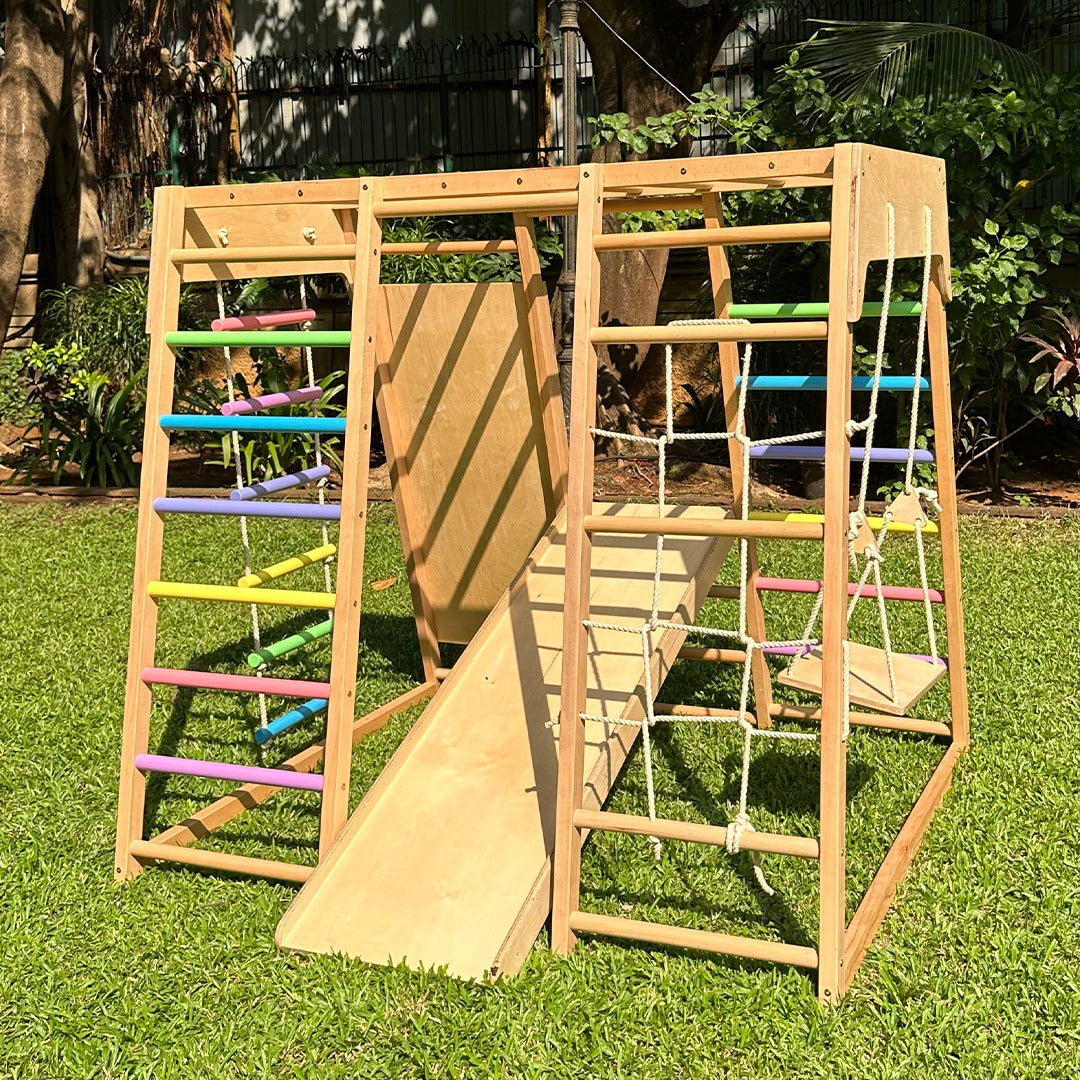
- Embrace Outdoor Exploration: A trip to the local park doesn't always need to involve structured games. Let them simply run, climb, observe insects, or make up games with other children. Even your own balcony or terrace can become an adventure zone.
It's natural for parents to worry about their child 'falling behind' or 'wasting time' if every moment isn't productive in a measurable way. But consider this: the skills nurtured through unstructured play – creativity, problem-solving, resilience, imagination, self-reliance – are not just 'soft skills'; they are the very bedrock of innovation and emotional intelligence. They are the traits that truly equip our children to thrive, not just in school, but in life.
So, the next time your child has a few empty hours stretching before them, resist the urge to fill every minute. Instead, give them the priceless gift of time, space, and a little bit of glorious boredom. Watch as their innate curiosity and incredible imagination take flight, building worlds and discovering wonders all on their own.
Nurturing this innate creativity is vital, and at SkilloToys, we understand the profound impact of play-based learning. Our range of safe, educational, and open-ended toys are designed to spark imagination and encourage children to explore, invent, and learn at their own pace, perfectly complementing those precious moments of unstructured play. Discover toys that inspire true genius at SkilloToys.com.