The Play-Brain Connection: Summer Independence for Indian Kids
As summer holidays roll in across Bengaluru, Delhi, and Mumbai, many urban Indian parents find themselves grappling with the age-old question: how to keep little ones engaged without constant screen time? The answer lies in understanding what actually happens in your child's brain during play — and how you can make every 10 minutes count. When a child engages with well-designed educational toys for kids, their brain isn't just passing time; it's actively building complex neural pathways. Each choice, each focused manipulation, strengthens executive functions like planning, attention, and problem-solving. This isn't passive entertainment; it's active brain architecture in the making, laying the groundwork for future academic success and emotional resilience.
- The Neuroscience of Independent Play: More Than Just Fun
- Montessori in the Indian Home: Age-Specific Engagement for Summer
- Combating Screen-Time Battles: The Montessori Way This Summer
- Common Misconceptions & Evidence-Based Truths
- Empowering Independence with SkilloToys: Our Recommendations
The Neuroscience of Independent Play: More Than Just Fun
Independent play is not merely a break for parents; it is a critical developmental powerhouse for children. During self-directed activities, the prefrontal cortex, responsible for executive functions like working memory, cognitive flexibility, and inhibitory control, experiences significant growth and integration. This crucial period sees rapid synaptic pruning and myelination, refining neural pathways. Children make their own choices, pursue their own interests, and problem-solve at their own pace, fostering intrinsic motivation that fuels this brain development.
Independent play is a child-led activity where the child chooses materials and directs their own engagement. This matters because it cultivates self-reliance, creativity, and focus, crucial skills for navigating both academic challenges and Indian family dynamics. Parents provide a rich environment and observe, rather than dictate.
Consider the recent discussions around "Snowplow parenting syndrome," where Indian parents are increasingly observed to prevent their children from experiencing struggle. This well-intentioned over-involvement, while aiming for comfort, inadvertently hinders the development of these crucial executive functions. When a child independently manipulates a Montessori knobbed cylinder, they are not just playing; they are engaging in a precise sensory-motor activity that refines fine motor skills and spatial reasoning. If they struggle to fit a cylinder, the process of figuring it out themselves—the repeated attempts, the subtle adjustments—is where the real neural connections are forged. It is this productive struggle, often absent in overly-curated play, that builds resilience and problem-solving circuitry in the brain, making every 10 minutes count towards vital developmental milestones.
A study published in Trends in Neuroscience and Education (2018) highlighted that self-directed learning experiences, characteristic of Montessori environments, lead to deeper neural encoding and superior problem-solving abilities compared to passive instruction. This means every focused moment spent with materials like the Pink Tower or Brown Stair is a direct investment in your child's cognitive architecture, impacting their ability to concentrate and learn effectively.
Montessori in the Indian Home: Age-Specific Engagement for Summer
Montessori principles seamlessly integrate into the vibrant tapestry of Indian family life, offering tailored engagement for every developmental stage, whether in a nuclear or joint family setup. The summer holidays, with children home all day, present a unique opportunity to cultivate this independent spirit, turning downtime into discovery.
0-18 Months: Sensory Exploration and Movement
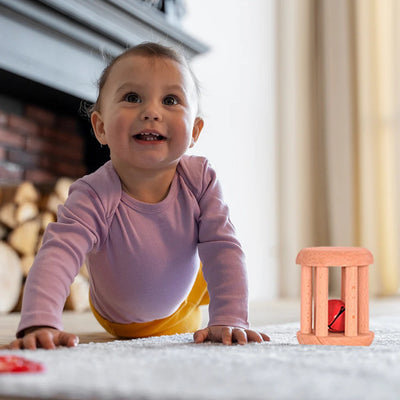
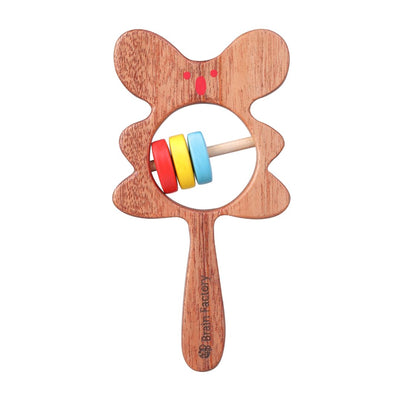
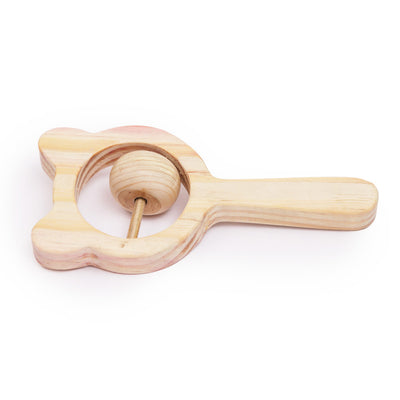
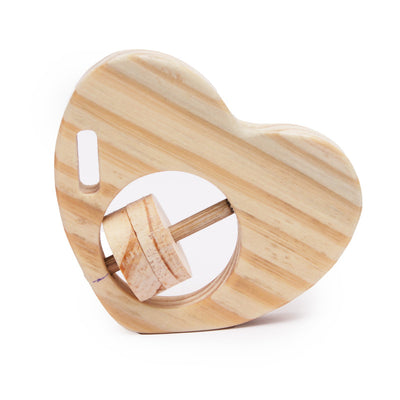
For infants and young toddlers, independent play revolves around sensory exploration. This is the period of the "absorbent mind" as described by Maria Montessori. Provide opportunities for safe exploration of textures, sounds, and simple manipulations. Think of a colourful stacker or a set of wooden rattles. In an Indian home, where extended family often surrounds the child, ensuring a dedicated "yes space" for uninterrupted exploration, away from constant hovering, is vital. This helps cultivate focus amidst a lively household.
At this age, simple, well-crafted Montessori learning materials that isolate one quality – like a set of grasping rattles or a simple wooden pull toy – are invaluable. They encourage concentration and hand-eye coordination without overstimulation, fostering early Montessori independent play.
18-36 Months: Practical Life and Fine Motor Mastery
This age group thrives on practical life activities, mirroring adult actions. Pouring water, spooning lentils, or buttoning clothes are not just chores; they are exercises in concentration, coordination, and independence. In Indian homes, these can be seamlessly integrated. A child helping their Dadi sort rice or fold small napkins is engaging in deeply meaningful practical life work. Offering a child-sized broom or dusting cloth can turn household tasks into engaging activities at home.
Consider introducing skill-building options from our skillfully designed activity kits. These kits often contain components for sorting, threading, or basic construction, directly addressing the toddler's innate drive for order and purposeful activity. Our wooden puzzles, including regional language options like Telugu letters with pictures or Malayalam alphabets, offer age-appropriate cognitive challenges that keep little hands and minds busy, fulfilling the need for Montessori toys for 2 year old India.
3-6 Years: Language, Culture, and Abstract Concepts
Preschoolers are ready for more complex concepts and culturally relevant learning. This is where Montessori materials for language, mathematics, and sensorial exploration truly shine. For Indian children, integrating elements like teaching the Hindi Varnamala with flashcards, exploring regional alphabets with wooden puzzles (like our popular Telugu alphabet boards), or using counting beads to understand numbers, makes learning both engaging and culturally grounding.
While academic pressure can be high in India, Montessori offers a joyful alternative. Children learn through hands-on discovery rather than rote memorisation. This approach allows them to grasp complex ideas like geometry with geometric solids or early literacy with sandpaper letters, making learning a deeply personal and independent journey that prepares them for formal schooling.
Combating Screen-Time Battles: The Montessori Way This Summer
The summer holidays often intensify the struggle against screen time. Parents seek screen-time alternatives summer, not just to reduce digital exposure, but to truly engage their children. The Montessori approach offers a powerful preventative strategy, fostering a deep-seated love for purposeful activity by cultivating an environment where learning is inherent in play.
An American parent living in India, as highlighted in The Times of India, often observes differences in parenting styles, including varying approaches to children's independence and daily routines. While some Indian parenting styles may lean towards greater supervision, Montessori encourages creating an environment where a child can thrive independently, reducing the perceived "need" for screens out of boredom. It’s about cultivating an inner discipline and focus, providing meaningful summer boredom solutions.
Instead of viewing independent play as merely a distraction from screens, see it as an inoculation against boredom and a builder of self-sufficiency. When children are deeply absorbed in a task—whether it's building a complex structure with blocks or carefully arranging a flower from the garden—their minds are stimulated in a way that passive screen consumption simply cannot replicate. This deep engagement is a natural deterrent to the pull of digital devices.
Recall the recent internet debate over a child's "vandalism" on an IndiGo flight. While the act itself was debated, the underlying discussion often touched on parental supervision versus allowing children to explore and express. Montessori offers a middle path: structured freedom. Children are free to choose, but within a prepared environment that guides them towards constructive, purposeful activities. This dramatically reduces the need for parents to constantly "manage" boredom, offering effective strategies for summer holidays.
Common Misconceptions & Evidence-Based Truths
Many parents believe that independent play means leaving a child alone with any toy. This is a common misconception. True Montessori independent play requires a "prepared environment" with thoughtfully selected materials. It's about quality over quantity, ensuring that the materials are purposeful and age-appropriate, fostering genuine engagement.
Another myth is that children must be constantly entertained. Research indicates the opposite: periods of unstructured, self-directed play are crucial for developing creativity and problem-solving. A meta-analysis by Dr. Peter Gray, published in the American Journal of Play (2011), demonstrated a clear correlation between increased free play and enhanced social-emotional development, alongside reduced anxiety in children. This applies universally, but especially in urban Indian settings where academic pressure often starts early, leading to less time for genuine independent exploration.
Furthermore, the idea that "educational toys" must always look academic is false. A wooden block set, a set of nesting dolls, or even a simple scoop and transfer tray can be profoundly educational, fostering concentration and fine motor skills. The key is that the toy offers a clear purpose and allows for repetition and mastery. These are the truly effective educational toys for kids, often made from natural materials like wood, offering a tactile experience that plastic alternatives cannot match.
Empowering Independence with SkilloToys: Our Recommendations
At SkilloToys, we understand the urban Indian parent's quest for meaningful engagement this summer. Our curated collection of Montessori materials is designed to foster precisely this kind of deep, independent play, turning potential screen-time into genuine learning opportunities. From foundational sensorial materials like the spindle box to practical life sets, each item is crafted to support a specific developmental need and encourage prolonged, focused engagement.
For parents in Bengaluru seeking high-quality wooden toys for kids, our selection offers durability, safety, and an authentic Montessori experience. We recommend starting with simple, single-purpose materials that encourage focus and self-correction. For instance, a knobbed cylinder set or a lacing board can captivate a child for extended periods, building concentration without digital distraction. Our wide range of Montessori materials caters to various interests, ensuring there's something to spark curiosity in every child.
Empower your child to discover the joy of independent learning. Explore our comprehensive range of Montessori educational toys for kids and transform your home into a vibrant hub of discovery this summer. Give your child the gift of focused engagement and watch their innate curiosity flourish. This summer, choose purposeful play over passive consumption and see the difference it makes in their development and your family's harmony.
From a developmental standpoint, at what age is Montessori independent play most crucial?
Montessori independent play is crucial from birth, with peak sensitive periods for order and concentration manifesting between 18 months and 6 years. During these years, children's brains are rapidly forming connections, and self-directed activity profoundly impacts executive functions and self-discipline.
How can I transition my child to Montessori educational toys if they are accustomed to screens?
Transitioning requires consistency and a prepared environment. Start by introducing one engaging Montessori educational toy at a time, modeling its use briefly, and then allowing the child to explore independently. Gradually reduce screen time while increasing access to appealing, purposeful materials, ideally during periods of calm and readiness for focus.
Is it possible to implement Montessori independent play in a joint family setting with many distractions?
Yes, it is entirely possible. Create a dedicated 'work space' or 'yes space' for your child, even a small corner, that is easily accessible and free from excessive clutter or constant interruption. Communicate with family members about the importance of allowing the child uninterrupted time with their chosen activity, respecting their concentration.
What are the key signs that my child is successfully engaging in Montessori independent play?
Key signs include sustained concentration on an activity, self-correction of errors without adult intervention, repetition of tasks until mastery, and a sense of calm satisfaction upon completion. These indicate genuine engagement and the development of internal discipline, typical for children aged 2-5 years.
How do Montessori educational toys specifically prevent summer boredom?
Montessori educational toys prevent summer boredom by providing activities with inherent purpose and a clear path to mastery. Unlike toys that offer superficial entertainment, Montessori materials engage a child's intellect and senses deeply, fostering a sense of accomplishment and sustained interest that combats the restless feeling of 'nothing to do'.
What role do parents play in fostering Montessori independent play, beyond providing toys?
Parents primarily serve as observers and guides, preparing the environment and presenting materials. Their role is to trust the child's innate drive to learn, avoid interrupting concentration, and model respect for the learning process. This support is crucial for children aged 1-6 years, allowing them to build self-confidence and initiative.
- Tonight, sit on the floor with your child for 10 minutes with no phone. That's it. Watch what they create.
- Independent play, particularly with Montessori materials, directly develops the prefrontal cortex, enhancing executive functions such as planning and problem-solving, as highlighted by a 2018 study in Trends in Neuroscience and Education.
- The "prepared environment" is paramount: offering fewer, high-quality educational toys for kids fosters deeper concentration than an abundance of options, making every play moment impactful.
- Self-directed activity, like practical life tasks (e.g., sorting lentils at 18-36 months), builds intrinsic motivation and practical skills essential for Indian children in diverse family structures, promoting crucial life skills.
- Unstructured, self-directed play reduces anxiety and improves social-emotional development, a finding corroborated by Dr. Peter Gray's 2011 meta-analysis in the American Journal of Play, proving its profound developmental benefits.