DIY Colour Sorting Activity for Toddlers at Home
As parents in India, we often seek engaging ways to nurture our little ones, especially when exploring Montessori at home. You don't always need elaborate toys to spark learning. Sometimes, the most profound educational experiences come from simple, everyday items right within your reach. Today, let's dive into a wonderful DIY colour sorting activity perfect for toddlers, transforming your home into a vibrant learning space without spending a rupee.
What exactly is colour sorting, and why is it so beneficial for young children? Colour sorting is a fundamental Montessori learning activity where children categorize objects based on their hue. This works because it naturally engages a toddler's innate curiosity and developing cognitive abilities. Parents can easily set up this activity to enhance several key developmental areas, from visual discrimination to fine motor skills, all while having fun.
The Montessori Magic of Colour Sorting
Maria Montessori, the visionary educator, understood that children learn best through hands-on exploration. Colour sorting aligns perfectly with the Montessori philosophy, fostering visual discrimination and logical thinking – crucial building blocks for future learning. This simple yet profound activity helps children classify and order their environment, a vital step in their cognitive development.
It’s an accessible entry point into Montessori learning activities for any Indian household, whether you're in a bustling city apartment or a sprawling joint family home. Such activities are not just about learning colours; they lay the groundwork for mathematical concepts, language development, and the concentration span so vital for holistic child development India focuses on.
Gathering Your Everyday Treasures for Colour Sorting
The beauty of a DIY approach is using what you already have. Your Indian home is likely brimming with colourful treasures perfect for this activity. Always ensure items are clean, safe, and appropriately sized for your child's age to avoid choking hazards.
Household Items from Your Kitchen & Pooja Room
Look around your kitchen and pooja room – they're treasure troves! Think about items with distinct colours and varied textures:
- Spices: Turmeric (yellow), paprika/chilli powder (red, in small, safe containers), green cardamom pods.
- Lentils/Dals: Toor dal (yellow), Masoor dal (red/orange), Moong dal (green).
- Vegetables/Fruits: Small tomatoes (red), lemons (yellow), green chillies, small purple brinjal, a few berries.
- Pooja items: Small coloured bindis, colourful unlit diyas, flower petals (marigold, rose, hibiscus).
- Bottle caps: Collected from various beverages – often come in different colours and are easy to handle.
Textiles and Stationery from Around the Home
Beyond the kitchen, other rooms offer endless possibilities for engaging, educational toys for toddlers:
- Dupattas/Scarves: Small scraps of colourful fabric or ribbons.
- Socks: Mismatched pairs in vibrant colours, rolled up.
- Buttons: A collection of colourful buttons (ensure they are large enough for safety).
- Craft supplies: Coloured pompoms, large beads (child-safe), construction paper scraps cut into shapes.
- Clothes pegs: Often available in plastic colours, these are great for developing pincer grasp too.
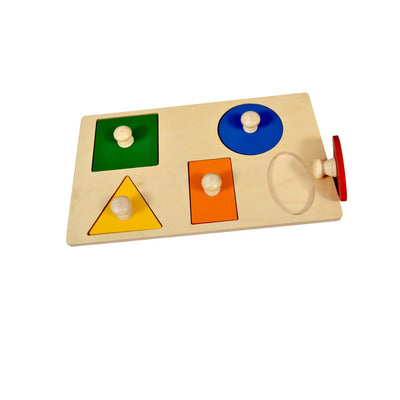
While SkilloToys offers beautiful Montessori sensorial materials for precise colour work, these DIY options are excellent starting points for introducing the concept and developing practical life skills.
Setting Up Your DIY Colour Sorting Station
A successful Montessori activity relies on a prepared environment and a clear presentation. It doesn't need to be fancy; simplicity is key.
The 'How-To' for Indian Homes
- Choose your 'sorting receptacles': Small katoris, empty dahi cups, small colourful tiffin boxes, or even sections of an old egg carton painted in different colours. Ensure they are stable and non-breakable.
- Select your items: Start with just two or three distinct colours and a manageable number of items. For example, red buttons and yellow lemon pieces. As your child masters this, gradually introduce more colours and items.
- Create a clear space: Lay out a mat or a simple cloth on the floor or a low table. This defines the 'work area,' a core Montessori principle, and is easy to do even in a small apartment.
- Demonstrate: Show your toddler how to pick up an item (using a pincer grasp, if appropriate for their age) and place it into its matching colour receptacle. Do this slowly, without talking too much, letting them observe.
- Observe and allow: Once you’ve demonstrated, invite your child to try. Resist the urge to correct immediately. Let them explore. Remember, the process is more important than perfect results at this stage. Grandparents often enjoy participating, gently guiding little hands and sharing the joy of discovery.
This activity fosters concentration, independence, and fine motor skills – all vital aspects of holistic Montessori at home India practices and overall child development India cherishes.
Expanding the Colour Sorting Fun
As your toddler grows and masters the basic colour sorting, you can make the activity more challenging and engaging:
- Introduce shades: Sort light blue from dark blue, or distinguish between various hues of red, perhaps using colourful Holi powders (supervised, of course!).
- Add tools: Use child-safe tongs, tweezers, or a small spoon to pick up items, further enhancing fine motor control and coordination.
- Nature's palette: Collect leaves, pebbles, and flowers from your garden or local park and sort them by natural hues. This connects children with nature, a lovely Indian tradition.
- Language development: Name the colours as you sort. Introduce Hindi or regional language names for colours, enriching their vocabulary.
- Shape and colour sorting: For older toddlers, combine sorting by colour and shape, using items like wooden toys or blocks. This adds another layer of cognitive challenge.
Key Takeaways for Your Home Colour Sorting
- DIY colour sorting is a simple, effective Montessori activity for toddlers using everyday items from Indian homes.
- It significantly enhances visual discrimination, cognitive development, and fine motor skills in young children.
- Accessible household materials like spices, lentils, fabrics, and pooja items are excellent for this activity.
- Setting up involves clear, child-friendly receptacles, a defined workspace, and careful item selection for safety.
- Demonstration, observation, and allowing independent exploration are crucial Montessori principles for success.
- This activity strongly supports the principles of "Montessori at home India" and promotes holistic "child development India."
At what age can my toddler start colour sorting?
Most toddlers can begin exploring colour sorting around 18 months to two years, once they show an interest in categorizing and have developed some fine motor skills. Start with just two distinct colours and gradually increase complexity as their understanding grows.
What if my child doesn't sort correctly?
It's perfectly normal for toddlers not to sort perfectly at first. The goal is engagement and exploration, not perfection. Gently redirect by re-demonstrating the activity slowly, or simply let them explore their way. The learning happens through the process itself, not just the outcome.
How can I make this activity safe with small items?
Always supervise your child during this activity, especially when using small items like beads or lentils. Choose items that are age-appropriate and not choking hazards. Large buttons, fabric scraps, or bigger vegetable pieces are safer alternatives for younger toddlers who are still exploring with their mouths.
How does colour sorting align with Montessori principles?
Colour sorting is a classic sensorial activity in Montessori, helping children refine their senses and understand their environment. It promotes concentration, independence, and order, preparing the child for more complex academic work by building a foundation of logical classification and visual discrimination.
Can I reuse materials for different activities?
Absolutely! The beauty of DIY Montessori is its versatility. Lentils used for colour sorting can later be used for scooping and pouring activities, or even for creative sensory bins. Repurposing teaches resourcefulness and sustainability, perfect for Indian homes.
Embracing Montessori at home doesn't require a complete overhaul; it’s about thoughtful engagement with what you have. This DIY colour sorting activity is a testament to how simple ideas can lead to profound learning. For more carefully curated educational toys that support your child’s journey, explore the range at SkilloToys.com.