Montessori Colour Box Activities for Toddlers at Home
In the vibrant tapestry of an Indian home, where colours burst forth from everything—from a grandmother’s saree to a child’s favourite Mithai—it's only natural for our little ones to be captivated by them. As parents navigating the beautiful journey of raising toddlers, we often seek ways to channel this natural curiosity into meaningful learning. This is where engaging Montessori colour box activities for toddlers at home truly shine, offering a structured yet joyful approach to colour recognition and visual discrimination.
Montessori Colour Boxes are a series of sensorial materials designed by Dr. Maria Montessori to refine a child's visual sense of colour. They are typically introduced after a child has developed some basic colour awareness and are ready to differentiate between hues and shades. This works because it isolates the quality of colour, allowing the child to focus solely on this attribute without other distractions. Parents can introduce these boxes to help their toddler develop colour discrimination, build a rich vocabulary, and prepare for more complex visual tasks, fostering crucial Montessori learning activities from an early age.
Bringing Colourful Learning Home: Montessori Activities
Integrating Montessori colour box activities into your home environment, especially in an Indian context, can be a delightful experience. These activities are not just about naming colours; they're about cultivating observation, precision, and an aesthetic appreciation for the world around us.
Understanding the Montessori Colour Box Sets
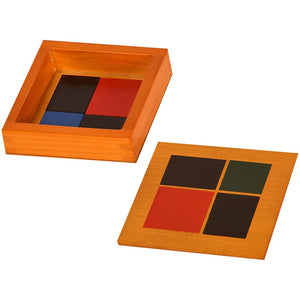
Traditionally, Montessori colour education begins with three boxes, each introducing a new level of complexity:
- Colour Box 1: Contains three pairs of primary colour tablets – red, yellow, and blue. The focus here is on matching identical colours.
- Colour Box 2: Introduces 11 pairs of colours (red, yellow, blue, orange, green, purple, pink, brown, grey, black, white). This expands the child's colour vocabulary and matching skills.
- Colour Box 3: Features various shades of one colour, presented in seven gradients. This box refines the child's ability to discriminate subtle differences in intensity, from lightest to darkest.
For toddlers, we always start with Colour Box 1. It's about building a strong foundation with the basics before moving to more nuanced explorations.
Simple Colour Matching Fun for Little Hands
Once you introduce Colour Box 1, the activities are wonderfully straightforward. Present one pair of colour tablets at a time. Lay one tablet on the mat and ask your child to find its match from the remaining pile. The beauty of this material lies in its simplicity and the child's intrinsic motivation to find the 'same'.
Beyond the formal box, you can extend this activity using everyday items found in any Indian home. Gather a red dupatta, a yellow lemon, and a blue toy. Ask your child to match the red tablet to the dupatta, reinforcing the concept. Even colourful bindis, various vegetables like tomatoes, chillies, and gourds, or flowers from your balcony garden can become exciting extensions of this matching game. You can find excellent quality Montessori sensorial materials, including colour boxes, that are durable and child-safe.
Expanding the Spectrum: Box 2 and Beyond
When your child confidently matches and names the primary colours, you can introduce Colour Box 2. Here, the challenge is to match a wider array of colours. This is a fantastic opportunity to discuss colours associated with Indian festivals and traditions. Think about the vibrant orange of marigolds during Diwali, the greens of fresh mehendi, or the riot of colours during Holi. Incorporating these real-world connections makes the learning relevant and memorable for educational toys for toddlers.
Creative Play with Colour Gradients (Box 3)
Colour Box 3 is where the magic of shades truly comes alive. Present a set of colour tablets, say, blue, in varying intensities. The activity involves arranging them from the lightest to the darkest shade. This activity hones a child’s visual perception, teaching them about subtle differences and sequences. It’s a wonderful exercise for concentration and developing an eye for detail, which is crucial for overall child development India.
Integrating Colour Learning into Daily Indian Life
Montessori isn't just about the materials; it's a way of life. Here are ways to naturally integrate colour learning:
- Meal Prep: Involve your child in sorting coloured vegetables like red tomatoes, green peas, and yellow corn.
- Laundry Day: Ask them to help sort clothes by colour – a practical life skill with a colourful twist.
- Nature Walks: Point out the colours of leaves, flowers, and fruits during your daily walks, even in a small city park.
- Festival Decorations: Engage them in choosing colours for rangolis or decorations during festivals.
Even in a small apartment, these activities can be done on a mat in a corner or at a low table. Grandparents, with their wealth of stories and gentle guidance, can also become wonderful facilitators for these simple, engaging tasks, fostering a sense of joint family involvement in a child’s early education.
Setting Up Your Montessori Colour Corner at Home
To foster a child's independence and interest, consider setting up a dedicated, accessible 'colour corner' in your home. This doesn't need to be elaborate; a low shelf or a basket with a few colour tablets or coloured objects is sufficient. Rotate the materials regularly to keep interest alive. Remember, the Montessori philosophy encourages observation – watch your child's engagement, follow their lead, and introduce new challenges when they are ready. This approach supports holistic child development India.
Key Takeaways
- Montessori Colour Box activities are excellent for developing a toddler's visual sense and colour discrimination.
- Start with Colour Box 1 (primary colours) for matching, gradually moving to Box 2 (more colours) and Box 3 (shades).
- Integrate colour learning into daily routines and cultural contexts, like Indian festivals and household chores.
- Create an accessible, rotating 'colour corner' at home to encourage independent exploration.
- These activities foster concentration, vocabulary expansion, and a love for learning in young children.
Frequently Asked Questions
How do Montessori Colour Boxes help child development?
Montessori Colour Boxes help children refine their visual sense, develop colour discrimination, expand their vocabulary, and improve concentration. They also lay a foundation for understanding order and classification, which are key cognitive skills.
At what age can I introduce colour activities to my toddler?
Typically, children show interest in colour around 18 months to 2.5 years. You can start with simple matching activities using Colour Box 1 when they demonstrate readiness to distinguish between distinct colours.
Can I make DIY colour materials at home for Montessori at home India?
Absolutely! While purpose-built Montessori materials are ideal, you can create DIY alternatives using coloured cards, fabric scraps, or even painted wooden blocks. The key is to keep them consistent in colour and size for effective learning.
What are some common mistakes to avoid with colour box activities?
Avoid rushing the child, correcting mistakes directly, or turning it into a test. The goal is exploration and discovery. Also, ensure the environment is calm and free from distractions.
How can Montessori at home India benefit my child?
Practising Montessori at home in India fosters independence, concentration, practical life skills, and a love for learning from an early age. It helps children develop self-confidence and an inquisitive mind, using familiar surroundings and cultural elements to enrich their growth.
At SkilloToys.com, we believe in nurturing every child's potential through thoughtfully designed, high-quality educational toys that resonate with the spirit of learning and discovery. Explore our range to find the perfect tools for your child's developmental journey.