Montessori Math Sequence: Concrete to Abstract at Home
Ever wondered how to make numbers less daunting and more delightful for your little one right here in your Indian home? As parents exploring homeschooling, especially with the Montessori method, you're likely curious about the best way to introduce foundational concepts. The heart of Montessori mathematics lies in its brilliant Montessori math sequence, guiding children from the concrete and tangible to the abstract and conceptual.
What exactly is this 'concrete to abstract' journey in Montessori math? It’s a beautifully structured approach where children first touch, feel, and manipulate physical objects to understand mathematical concepts. Instead of rote memorisation, they build a deep, intuitive understanding through sensory experiences. Gradually, as their understanding solidifies, these physical aids are gently removed, allowing the child to work with numbers and symbols in their mind.
The Foundation: Sensory Exploration with Early Math Concepts
Building Number Sense with Hands-On Play
Before formal counting, children naturally absorb mathematical concepts through their environment. In many Indian homes, toddlers might help sort rajma and chana, or count idlis on a plate. This natural, informal exposure builds a strong foundation. Maria Montessori recognised this innate curiosity and designed materials that isolate concepts for clearer learning.
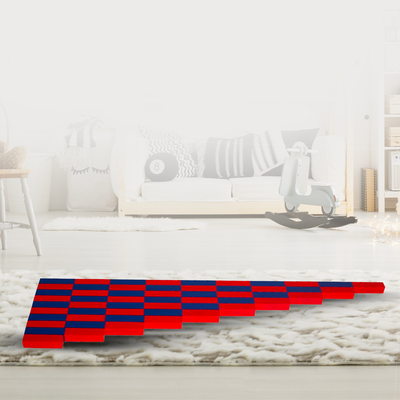
Consider the Red Rods, where children learn about length and seriation, or the Number Rods that visually represent quantities 1-10. Even simple wooden toys like stacking rings or nesting cups introduce order and comparison, making them excellent `educational toys for toddlers`. These experiences, often shared with a grandparent, are invaluable for `child development India`.
Linking Quantity to Symbol: The Sandpaper Numbers
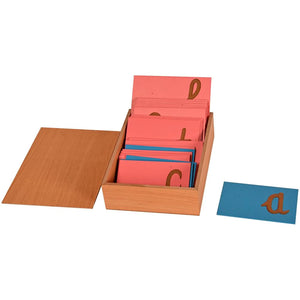
Once a child has a good grasp of quantity, the next step is to link it with its written symbol. The `Sandpaper Numbers` are a fantastic Montessori material for this. Children trace the textured numerals (1, 2, 3...) with their fingers, simultaneously hearing the name of the number. This multi-sensory experience imprints both the feel and sound of the symbol.
Imagine your child tracing '3' while simultaneously counting three gulab jamuns or three marigolds for a puja. This pairing of a concrete quantity with its abstract symbol is a cornerstone of the Montessori math sequence, making the abstract feel approachable and relevant to their everyday life.
Deepening Understanding: Operations with Concrete Materials
The Golden Bead Material: Unveiling Place Value
For understanding larger numbers and the magic of place value – units, tens, hundreds, thousands – the `Golden Bead material` is truly revolutionary. Children physically hold 1 unit bead, 1 ten bar (10 beads), 1 hundred square (100 beads), and 1 thousand cube (1000 beads). They literally 'exchange' 10 units for a ten bar, understanding regrouping by doing.
This material makes arithmetic operations like addition, subtraction, multiplication, and division not just comprehensible but exciting! Parents exploring `Montessori at home India` will find these Montessori mathematics materials indispensable for visualising abstract concepts. It's an investment in robust mathematical thinking, far beyond rote memorisation.
Beyond Golden Beads: Other Key Materials for Abstract Transition
As children gain proficiency with the Golden Beads, other materials like the Stamp Game or Bead Frame gently nudge them towards abstraction. The Stamp Game, for instance, uses small squares with '1', '10', '100', '1000' printed on them, representing values without the physical quantity of beads. It’s a brilliant step towards mental math.
This transition is gradual and child-led. A child might initially use the beads to solve 12 + 15, then move to the Stamp Game, and eventually, with practice, solve it mentally. This natural progression fosters genuine mathematical confidence, often inspiring a child to teach a younger sibling or cousin during Diwali holidays, even in a small apartment space.
The Montessori concrete-to-abstract math sequence is a pedagogical method where children first engage with tangible, physical objects to grasp mathematical ideas, gradually moving to symbolic and mental calculations. This works because it aligns with a child's natural developmental stages, where sensory exploration precedes abstract thought, ensuring deep understanding rather than superficial memorisation. Parents can foster this journey by providing age-appropriate Montessori learning activities, observing their child's readiness, and allowing them to explore at their own pace, celebrating every 'aha!' moment.
Key Takeaways
- The Montessori math sequence builds understanding from tangible experiences to abstract concepts.
- Early sensory activities and wooden toys help children develop foundational number sense.
- `Sandpaper Numbers` link physical quantity to written symbols through multi-sensory learning.
- The `Golden Bead material` provides a concrete understanding of place value and arithmetic operations.
- Materials like the `Stamp Game` gently transition children towards mental calculation.
- This child-led approach fosters a deep, intuitive love for mathematics, making it fun and accessible for all children.
Frequently Asked Questions
At what age should I introduce Montessori math materials at home?
You can begin introducing pre-math concepts as early as 18 months through practical life activities like sorting and counting. Formal `Montessori math materials` typically become engaging for children from 3 years onwards, aligning with their developing logical mind.
Can I implement the Montessori math sequence in a small apartment in India?
Absolutely! Many `Montessori at home India` families successfully adapt. Focus on one or two key materials at a time, store them neatly, and utilise common household items for practical life math, like counting vegetables in the kitchen or beads from an old necklace.
Do I need to buy all Montessori math materials at once?
No, it's not necessary or recommended. Start with foundational materials like Number Rods or Sandpaper Numbers, and gradually introduce others as your child shows readiness. Many parents also DIY simple versions or create their own `Montessori learning activities` using local resources.
How do I know when my child is ready to move from concrete to abstract?
Observe your child's engagement and understanding. When they can consistently and easily solve problems with the concrete materials, and even show signs of doing some steps mentally, they are likely ready for the next level of abstraction. The transition should always be child-led and natural.
Embarking on this Montessori math journey at home is a rewarding experience, transforming numbers from daunting tasks into delightful discoveries. At SkilloToys.com, we are committed to providing high-quality, authentic Montessori mathematics materials that support your child's natural learning progression. Explore our collection and empower your child with a lifelong love for learning.