Montessori Math Sequence for Kids at Home
For many Indian parents, the journey of homeschooling often involves seeking effective and engaging ways to introduce foundational concepts. When it comes to numbers and early mathematics, understanding the Montessori math sequence from concrete to abstract can be a game-changer. Maria Montessori, a visionary educator, observed how children naturally gravitate towards hands-on learning, especially for complex ideas. In our bustling Indian homes, whether it's a cozy apartment in Mumbai or a spacious home in Bengaluru, incorporating this structured approach can transform how your little one aged 0-6 years develops a deep, intuitive understanding of mathematics, making learning a joyous exploration rather than rote memorisation.
The Montessori math sequence is a meticulously designed progression that guides children from tangible, sensory experiences of quantity and number to abstract symbols and operations. This works because it aligns with a child's natural developmental stages, allowing them to grasp concepts through manipulation before moving to mental calculations. Parents can effectively introduce these concepts at home using specific materials and a prepared environment, fostering a love for numbers from an early age.
Building Foundations: The Sensory Introduction to Numbers
Before a child can count or add, they need to feel and see what 'one' or 'ten' truly means. The initial stage of the Montessori math sequence focuses on sensory experiences. Imagine your child exploring the Red Rods, where they physically feel the difference in length, indirectly preparing them for linear counting. Similarly, the Number Rods introduce quantities from one to ten, with alternating colours to help visually distinguish each unit. This hands-on approach is crucial for early child development in India, laying a strong foundation.
These foundational Montessori mathematics materials are designed to isolate concepts, allowing your child to focus on one aspect at a time. It’s like how we teach a child about different tastes during festivals – one flavour at a time, before combining them into a complex dish. For parents in Indian homes, even using simple, locally sourced objects like pebbles, beads, or small fruits for counting can serve as excellent concrete representations, aligning with the spirit of 'DIY Montessori at home India'.
Connecting Quantity and Symbol: Early Math Exploration
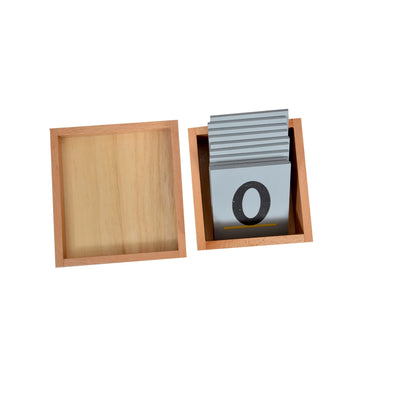
Once the child has a concrete understanding of quantity, the next step is to link these quantities with their written symbols. This is where materials like Sandpaper Numbers come into play. Your child traces the numeral, associating the tactile feel with the visual shape, while simultaneously matching it to a corresponding quantity they’ve previously explored with the Number Rods or loose counters. This multi-sensory engagement solidifies their understanding.
The Spindle Box, another brilliant Montessori tool, helps children understand the concept of zero and associate quantities (1-9) with their symbols, placing the correct number of spindles into designated compartments. This is a powerful Montessori learning activity that ensures the child isn't just reciting numbers but truly comprehending their value. Many educational toys for toddlers, especially high-quality wooden toys, are designed with similar principles, promoting hands-on learning over passive observation. You can find a wide range of these at SkilloToys, fostering a strong mathematical base.
Moving Towards Abstraction: Operations and Place Value
With a solid grasp of numbers and their symbols, children are ready to explore the decimal system and basic operations. The Golden Beads are perhaps the most iconic material for this stage. They visually and tangibly represent units, tens, hundreds, and thousands, allowing children to physically carry out addition, subtraction, multiplication, and division. A child can literally combine 4 units and 3 units to see that it makes 7 units, or exchange ten units for one ten bead. This concrete experience of place value and operations is revolutionary.
In an Indian joint family setup, involving an older sibling or even a grandparent in these activities can add a beautiful layer of social learning. They can demonstrate how to exchange, for example, ten 'laddoos' for one larger 'ladoo' representing a ten, making the abstract concept of place value relatable to everyday life. These are excellent Montessori activities for toddlers and preschoolers alike, building a strong foundation for future mathematical success.
Practical Tips for Montessori Math at Home in India
Bringing Montessori math into your Indian home doesn't require an entire classroom. Start with a dedicated, clutter-free space where materials can be easily accessed. Observation is key; watch your child's interests and readiness before introducing new concepts. Remember that repetition is how children master skills, so offer activities multiple times without pressure.
Encourage practical life activities that involve counting and measuring, like counting plates for dinner, sorting clothes, or helping to measure ingredients for a simple family recipe. These everyday interactions naturally integrate mathematical thinking. Investing in durable, open-ended Montessori method learning materials from trusted sources like SkilloToys can support this journey, providing tools that grow with your child from 0-6 years and beyond.
Key Takeaways
- Montessori math progresses from concrete (hands-on) to abstract (mental calculation).
- It builds a strong foundation by allowing children to physically manipulate quantities before learning symbols.
- Key materials like Red Rods, Sandpaper Numbers, and Golden Beads guide this sequence.
- Parents can integrate Montessori math at home using specific materials and everyday activities.
- Observation, repetition, and a prepared environment are crucial for success.
- This approach fosters an intuitive understanding and love for mathematics in young children.
Frequently Asked Questions
How early can children start Montessori math?
Children as young as 2.5 to 3 years can begin with foundational Montessori math concepts, starting with sensory exploration of quantities. The key is to follow the child's interest and readiness, introducing materials when they show curiosity.
What if I don't have all the official Montessori materials?
You don't need every official material. Many concepts can be taught using DIY alternatives like pebbles, buttons, blocks, or even locally sourced 'marbles' (goli). The principle of concrete representation is more important than the exact material itself.
How do I keep my child engaged with math activities?
Keep sessions short and engaging, following your child's lead. Present activities as invitations to explore, not as tasks. Rotate materials to maintain novelty, and always celebrate effort and concentration over just getting the "right" answer.
Is Montessori math suitable for all children?
Yes, the Montessori method is highly adaptable and benefits a wide range of learners, including those with different learning styles. Its individualized, hands-on approach allows each child to progress at their own pace, building confidence and understanding.
By embracing the Montessori math sequence, you're not just teaching numbers; you're nurturing a mathematical mind, one confident step at a time. It’s a journey that celebrates the child’s innate curiosity and capacity for discovery. Explore our curated range of Montessori mathematics materials and educational toys at SkilloToys.com to support your child's unique learning adventure.