Montessori Puzzle Maps: Geography Lessons for Young Children
As parents in bustling Indian cities or serene villages, we often dream of our children growing up with a broad understanding of the world. But how do you introduce complex concepts like continents and countries to a curious toddler or a preschooler? The answer lies in the ingenious design of Montessori puzzle maps, a cornerstone of early geography education that transforms abstract ideas into hands-on discoveries for young children.
Imagine your little one, fingers tracing the shape of Asia, perhaps even pointing out India, long before they can read a map. This is the magic of the Montessori approach: making learning tangible and inviting. For parents exploring or practising Montessori at home, these special maps offer a delightful and effective way to begin geography lessons right on your living room floor.
What Are Montessori Puzzle Maps?
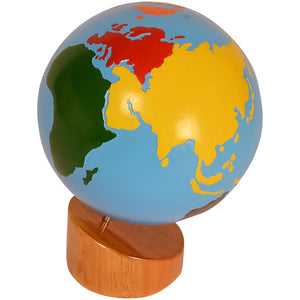
Montessori puzzle maps are not just any puzzles; they are precisely designed educational tools. Each piece of the map represents a continent or a country, crafted with a knob for easy grasping by tiny hands. They are often made from wood, painted in specific colours for each continent, following the Montessori colour code (e.g., Asia is yellow, Europe is red). This material is a key part of Montessori geography materials.
A Montessori puzzle map is a sensorial introduction to geography. This works because it allows children to physically manipulate and explore the shapes of landforms, connecting a visual image with a tactile experience. Parents can introduce the names of continents and countries as their child works with the puzzles, fostering early recognition and understanding.
Why Early Geography Matters for Child Development
Introducing geography early does more than just teach names of places. It lays the foundation for global awareness, cultural understanding, and critical thinking. For children in India, where diversity is a part of everyday life, understanding different regions and cultures from a young age can foster empathy and curiosity about the world beyond their immediate surroundings. It’s a vital aspect of holistic child development in India, preparing them for an interconnected future.
Engaging with these educational puzzles also refines fine motor skills, problem-solving abilities, and concentration. As children carefully place each piece, they are not only learning geography but also developing crucial cognitive and physical skills that support their overall learning journey.
Bringing the World Home: Using Puzzle Maps Effectively
Integrating Montessori puzzle maps into your homeschooling routine is simpler than you might think. Remember, the goal is exploration and discovery, not memorisation.
Starting Simple: The World Map
Begin with the world continent map. Invite your child to take out a piece, perhaps Asia, and trace its outline. Name it clearly and slowly. You can say, "This is Asia, and our home, India, is in Asia!" Let them explore the texture, the shape, and the weight of each piece. There’s no pressure to learn all the names at once. The first step is simply to familiarise them with the material and the idea of different landmasses.
Exploring Continents and Countries
Once comfortable with the world map, you can introduce individual continent maps, like the map of Asia or India itself. Show your child where Bengaluru is, or where their grandparents live if they are in another state. This personal connection makes the learning deeply meaningful. For instance, while learning about Africa, you might talk about the animals found there, or when discussing Europe, mention a festival your family might have seen on TV, connecting to their existing knowledge base.
Beyond Puzzles: Extensions and Activities
The puzzle map is just the beginning. You can extend the learning with various Montessori learning activities:
- Storytelling: Tell stories about children or animals from different continents.
- Matching: Create small flag cards or animal pictures and ask your child to match them to the correct continent piece.
- Sensory Exploration: Provide a bowl of sand for the desert regions or blue fabric for oceans, letting children create their own tactile maps.
- Food Fun: Prepare a simple snack from a specific region, like a South Indian dosa or a North Indian paratha, and show them where it originates on the map.
These activities are especially wonderful when shared with grandparents, who often have a treasure trove of stories about different places and cultures within India and beyond.
Tips for Indian Homes
Many Indian families live in apartments or have joint families where space might be limited. The beauty of Montessori materials like puzzle maps is their compact nature. They can be used on a mat on the floor, on a low table, or even on a spare dining table. Involve older siblings or even cousins in the activity to make it a shared learning experience, fostering cooperation and community.
Key Takeaways for Homeschooling Parents
- Montessori puzzle maps offer a hands-on, sensory way to introduce geography to young children (ages 3-6).
- They aid in developing fine motor skills, concentration, and problem-solving abilities alongside geographical knowledge.
- Start with the world map, gradually moving to individual continents and countries, making personal connections where possible.
- Extend learning through storytelling, matching activities, and cultural exploration, ideal for Montessori at home India.
- The material is adaptable for various home environments, including smaller apartments or joint family settings.
- Early geography fosters global awareness and cultural understanding, crucial for a child's holistic development.
Frequently Asked Questions About Montessori Geography
What age should I introduce Montessori puzzle maps to my child?
Montessori puzzle maps are typically introduced to children around 3 to 3.5 years of age, once they have developed sufficient fine motor skills to grasp the knobs and an interest in puzzles. However, children develop at their own pace, so observe your child's readiness.
How do Montessori puzzle maps differ from regular jigsaw puzzles?
Unlike regular jigsaw puzzles, Montessori puzzle maps are designed to isolate concepts; each piece represents a distinct geographical entity (a continent or country). They often have a single knob for grasping and are colour-coded consistently, aiding in a systematic and sensory learning experience.
Can I teach Montessori geography without expensive materials?
While authentic Montessori materials offer specific benefits, you can absolutely adapt. Parents can create DIY puzzle maps from cardboard or craft foam, use printables, or simply draw outlines of continents on paper. The key is the hands-on exploration and clear presentation, not just the material itself.
How can I integrate geography with other Montessori learning activities at home?
Geography naturally integrates with many areas. Link it with language by reading books about different cultures, or with practical life by preparing food from a specific region. You can also connect it to sensorial work by exploring textures found in different environments or to mathematics by counting countries.
Bringing the world into your child's hands is a beautiful journey, and Montessori puzzle maps are a wonderful companion for this adventure. At SkilloToys.com, we believe in providing high-quality Montessori learning materials that empower Indian parents to nurture curious, globally aware children right from their homes in India.