Montessori Puzzle Maps: Geography Lessons for Young Children
In our bustling Indian homes, amidst the aromas of filter coffee and the lively chatter of joint families, children are naturally curious about the world around them. From asking about where their grandparents live to pointing out states on a map during family trips, their young minds are primed for discovery. This inherent curiosity makes it the perfect time to introduce them to geography, and there’s no tool quite as engaging as Montessori puzzle maps.
Montessori puzzle maps are a cornerstone of early geography education, designed to make learning tactile and intuitive. Each continent or country is represented by a separate, colourful wooden piece with a knob, fitting perfectly into a control frame. This works because the child directly manipulates the shapes, feeling the distinct boundaries and developing a concrete understanding of spatial relationships and geographical names. Parents can present these maps as a puzzle, allowing their child to build and re-build the world with their own hands.
Why Geography Matters Early On (and the Montessori Way)
Geography isn't just about memorising names and places; it’s about fostering a child's understanding of their place in the world, cultivating a sense of wonder, and developing cognitive skills. For young children in India, learning about different regions can connect them to our diverse culture, festivals, and even family histories.
Maria Montessori believed in providing children with tools that ignite their natural desire to learn. By offering concrete, manipulative materials, she understood that abstract concepts like continents and oceans become tangible and accessible. This approach supports holistic child development, moving beyond rote learning to genuine comprehension.
Getting Started with Montessori Puzzle Maps at Home
Bringing Montessori geography into your homeschooling environment doesn't require a dedicated classroom. Even in a cosy Bengaluru apartment, these materials can transform a corner into a vibrant learning space. Consistency and following the child's lead are key.
Introducing the Maps: A Gentle Beginning
Start with a single continent map, perhaps Asia, which holds special relevance for us. Show your child how to carefully remove each piece, tracing its outline with their finger, and then replacing it. Name the continents or countries clearly and slowly. You might say, "This is India," while pointing to our beloved country.
Connecting to personal experiences can make it even more meaningful. "This is where our family goes for Diwali!" or "Grandpa lives in this state!" Using the Montessori geography materials this way builds bridges between the abstract map and the child's real world.
Engaging Activities Beyond the Puzzle
Once your child is comfortable assembling the maps, you can introduce extensions. Ask them to close their eyes and feel the shape of a continent, then name it. Use continent pieces as stencils to trace shapes onto paper, which they can then colour or label.
Storytelling is another wonderful way to bring maps to life. "Imagine we're taking a train from Kerala to Kashmir... what might we see?" You can also use pictures of animals, landmarks, or traditional clothing from different regions and ask your child to place them on the corresponding map piece. These Montessori learning activities foster imagination and cultural awareness.
Extending the Learning: From Maps to the World
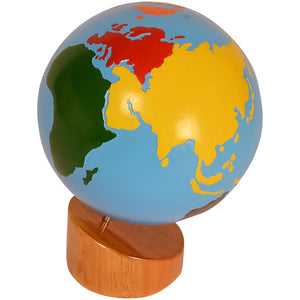
As children grow, the puzzle maps can lead to broader explorations. Introduce a globe to show the spherical nature of Earth and how the continents fit together globally. Talk about different climates, food, and people from various parts of the world.
Beyond geographical puzzles, other puzzles, such as those depicting animals or famous landmarks, can further enhance their spatial reasoning and general knowledge. Remember, the goal is to spark curiosity, not to test knowledge.
Montessori at Home: Integrating Geography Seamlessly
Incorporating geography into your daily routine is easier than you think. Point out places on a map when discussing news, family travel plans, or even where certain fruits and vegetables originate. Make it a natural part of conversation.
For parents practising Montessori at home India, the key is to create an prepared environment. Have the geography materials accessible on a low shelf, allowing the child freedom to choose when and how they engage. Observe their interests; if they are fascinated by the oceans, dive deeper into marine life. This respectful approach empowers the child's self-directed learning.
These educational toys for toddlers and preschoolers are more than just playthings; they are tools for building a foundational understanding of our incredible planet. They encourage concentration, fine motor skills, and a global perspective from a young age.
Key Takeaways
- Montessori puzzle maps are hands-on, self-correcting tools for early geography education.
- They help young children develop a concrete understanding of continents and countries through tactile exploration.
- Introduce maps gently, starting with familiar regions like India and connecting to personal experiences.
- Engage children with storytelling, tracing, and matching activities to deepen their learning.
- Integrate geography naturally into daily life and provide an accessible prepared environment at home.
- This method fosters curiosity, concentration, and a global perspective in young learners.
Frequently Asked Questions
What age is best to introduce Montessori geography maps?
Children typically show interest in Montessori puzzle maps between 2.5 and 3.5 years old, aligning with their sensitive period for order and small objects. However, observe your child for readiness, as individual development varies.
How do Montessori puzzle maps differ from regular puzzles?
Montessori puzzle maps are unique because each piece represents a complete geographical entity (continent or country) and includes a knob for precise grasping. They are also colour-coded consistently across all Montessori materials to aid recognition and categorisation.
Can I make my own geography materials at home?
While DIY materials can be a good starting point, the precision, durability, and consistent colour-coding of authentic Montessori puzzle maps offer superior learning benefits. Investing in quality Montessori learning materials ensures the child receives the full educational advantage.
How often should we use Montessori puzzle maps?
The frequency depends on your child's interest. Offer the maps as an accessible option daily, but allow your child to choose when and for how long they engage. Short, focused sessions are more effective than forced, long ones.
At SkilloToys.com, we believe in empowering Indian parents with high-quality, authentic Montessori resources to nurture their child's potential. Explore our range of educational toys and begin your child's incredible journey of discovery today.