Pretend Play Builds Mathematical Thinking: Montessori Insights
Imagine your little one meticulously arranging pebbles into a 'shop' or carefully 'serving' tea to their favourite doll. These everyday scenes, common in Indian homes, might seem like simple childhood fun. But what if we told you that this delightful engagement, known as pretend play, directly builds mathematical thinking in children? It’s a profound connection that Montessori principles have long understood, and it's happening right before your eyes.
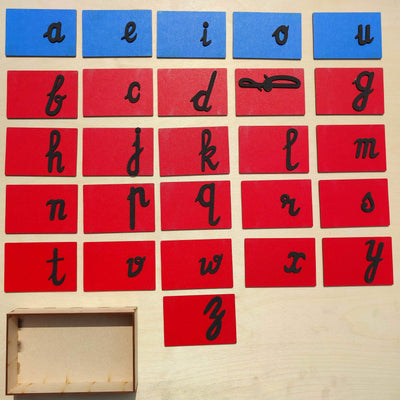
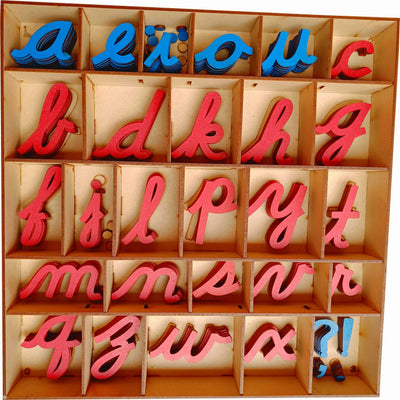
So, what exactly is mathematical thinking in the context of early childhood? It isn't about memorising formulas or complex calculations. Instead, it's about developing foundational concepts like quantity, sequencing, patterns, one-to-one correspondence, and problem-solving. This early understanding forms the bedrock for more advanced math skills later on, much like how a child first learns to use their hands before mastering the Montessori Movable Alphabet.
Pretend Play: A Natural Classroom for Math
Pretend play is where children act out roles, create imaginary scenarios, and use objects symbolically. This activity naturally encourages mathematical concepts without them even realising it. Think of a child setting up a 'vegetable stall' in your living room, perhaps using colourful local vegetables or even just blocks and leaves.
They sort items by colour or size, count out imaginary rupees for each 'customer', and understand 'more' or 'less' when bartering. This type of play, a staple in many Indian joint families, provides countless opportunities for practical application of early math concepts. It’s a hands-on, concrete experience, just as Maria Montessori advocated.
Developing Number Sense Through Role-Playing
When children engage in role-playing, they are constantly dealing with numbers and quantities. A child playing 'doctor' might count how many bandages are needed, or decide which 'patient' gets the first check-up (sequencing). A 'chef' in an imaginary kitchen measures out ingredients, understanding fractions intuitively when they say, "half a cup of sugar for the laddus!"
This active engagement builds their number sense and introduces basic arithmetic in a meaningful, contextual way. It's far more effective than rote learning, turning abstract numbers into tangible experiences. Many Montessori activity kits are designed to inspire such role-playing, fostering creativity alongside core skills.
Practical Ways to Encourage Mathematical Pretend Play at Home
Encouraging this powerful learning doesn't require elaborate setups. Simple, open-ended materials found in any Indian home can work wonders: old saris for dress-up, steel katoris and spoons for a 'kitchen', pebbles or dried beans for 'currency', or even cardboard boxes for building imaginary houses or trains.
Parents can facilitate by offering suggestions like, "Let's make a chai stall, how many cups should we prepare?" or "We need to arrange the flowers for Diwali puja, how many blue ones and how many yellow ones?" These Montessori learning activities invite children to apply mathematical thinking naturally. Remember, your role is to observe and gently guide, not to direct every step.
The Montessori Connection: Purposeful Play
Montessori education deeply values purposeful play and a prepared environment. Pretend play, when encouraged thoughtfully, aligns perfectly with these principles. It's child-led and inherently purposeful, driven by the child's own interests and curiosity. Providing access to quality Montessori mathematics materials can also enhance these experiences, allowing children to connect their imaginative play with concrete, didactic learning tools.
Maria Montessori believed that children learn best through direct experience and exploration. Pretend play is exactly this: a safe space for exploration where children can experiment with concepts like measurement, geometry (building structures), and problem-solving without fear of failure. It's a key part of holistic child development in India and globally.
Spatial Reasoning and Problem Solving
Beyond numbers, pretend play is a powerhouse for spatial reasoning and problem-solving. When children build a fort with cushions and blankets, they are intuitively exploring geometry, balance, and spatial relationships. They encounter 'problems' – how to make the roof stay up, or how to fit everyone inside – and devise creative solutions.
These experiences sharpen their critical thinking and logical reasoning skills, which are crucial components of mathematical thinking. Whether they're navigating an imaginary market or planning a pretend trip, they're constantly engaging their minds in complex ways.
Key Takeaways
- Pretend play is a natural, powerful tool for developing foundational mathematical thinking in young children.
- It builds essential skills like number sense, counting, sorting, patterning, and one-to-one correspondence.
- Montessori principles support child-led, purposeful play that integrates real-world concepts.
- Simple, open-ended materials found in Indian homes are ideal for encouraging this type of play.
- Pretend play enhances spatial reasoning, problem-solving, and critical thinking skills.
FAQ: Pretend Play and Mathematical Thinking
Does pretend play need special toys to build mathematical thinking?
No, not at all. While educational toys are beneficial, pretend play thrives on imagination and open-ended materials. Household items like clothes, kitchen utensils, pebbles, and cardboard boxes are often more effective as they allow for greater creativity and symbolic use.
How can I encourage pretend play in a small apartment in India?
Even in compact spaces, you can designate a small corner for play. Utilise vertical space with shelves for props, or use foldable play mats. The key is to provide a 'prepared environment' with a few choice materials and allow your child the freedom to create their own worlds, even within limited physical boundaries.
At what age does mathematical thinking begin through pretend play?
Mathematical thinking through pretend play begins surprisingly early, even from 18 months to 2 years, as toddlers start engaging in symbolic play. It truly flourishes during the preschool years (3-6 years) when their imagination and social skills expand rapidly, leading to more complex scenarios.
Is too much screen time affecting my child's ability to engage in pretend play?
Excessive screen time can indeed limit opportunities for imaginative play, as it often provides pre-designed scenarios rather than encouraging original thought. Balancing screen time with ample opportunities for unstructured, hands-on play is crucial for fostering creativity and the development of mathematical thinking.
The next time you see your child lost in their world of make-believe, remember they aren't just playing; they're building the vital mathematical foundations that will serve them for a lifetime. At SkilloToys.com, we believe in empowering parents with the knowledge and resources to support this incredible journey of learning through play.