Teach Reading at Home: Sandpaper Letters & Movable Alphabet
There's a special kind of joy in watching your child’s eyes light up as they recognise their first word. For many Indian parents exploring Montessori at home, the journey of literacy often begins with a tactile, multi-sensory approach. Today, let's explore how you can foster this love for language by effectively teaching reading with sandpaper letters and movable alphabet at home, creating a foundation that lasts a lifetime.
It's a common aspiration in Indian households to see our children excel, and reading is a cornerstone of that journey. With Montessori, this isn't about rote learning, but about a joyful, natural progression into the world of words, respecting your child's innate curiosity and developmental pace.
What are Montessori Sandpaper Letters and the Movable Alphabet?
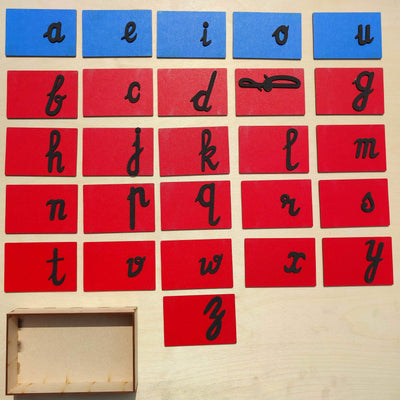
Montessori Sandpaper Letters are individual letter shapes, typically consonants on pink boards and vowels on blue boards, made from sandpaper mounted on smooth cardstock. This material is designed for children to trace the letter with their fingers, feeling its form while simultaneously hearing its sound.
This multi-sensory experience is foundational because it engages visual, auditory, and tactile senses, reinforcing the letter's shape and sound connection. Parents can introduce these letters one by one, using the classic three-period lesson, making learning interactive and memorable.
The Movable Alphabet, on the other hand, consists of individual wooden or plastic cut-out letters. After mastering the sounds and shapes with sandpaper letters, children use these movable letters to physically form words, even before they have the fine motor skills to write with a pencil. This works because it separates the act of composing words from the physical act of writing, allowing children to express their thoughts and build words independently. Parents can use it to help children spell out names of family members, everyday objects, or even simple greetings in their regional language.
The Magic of Sandpaper Letters: First Steps to Literacy
Imagine your child tracing the 'M' sound, feeling the rough texture under their tiny fingers, just like you might feel the texture of a rangoli pattern during Diwali. That's the power of sandpaper letters. Each letter offers a unique sensory input, deeply embedding its sound and shape into the child's memory.
When introducing sandpaper letters, begin with just a few letters that have distinct sounds. For example, 'm', 's', 'a', 't'. Use the three-period lesson: (1) "This is 'm'" (sound), (2) "Show me 'm'", and (3) "What is this?" (sound). Repeat this gently, ensuring your child is engaged and not overwhelmed. You can find excellent quality sandpaper letters that are durable and designed for little hands.
In an Indian home, this can be beautifully integrated into daily life. Perhaps tracing 'd' for 'Dadi' (grandmother) or 'a' for 'Amma' (mother). Grandparents often love to participate, sharing the joy of these early discoveries. It's about connecting learning to their world, making it personal and meaningful.
Moving Beyond Sounds: Embracing the Movable Alphabet
Once your child has a good grasp of several letter sounds through the sandpaper letters, they are ready for the movable alphabet. This is where the real fun of word-building begins! The movable alphabet empowers children to create words they hear and know, transforming abstract sounds into concrete symbols.
Start with simple, phonetic, three-letter words like 'cat', 'sun', 'pot'. You can say the word aloud, stretching the sounds, and ask your child to find the corresponding letters from their movable alphabet tray. Imagine them spelling out 'chai' or 'roti' – words that are deeply familiar and comforting in an Indian household.
This stage is crucial for developing phonemic awareness and a sense of accomplishment. It's not about perfect spelling initially, but about understanding that sounds combine to form words. The Montessori language materials, including the movable alphabet, are designed to build confidence in this natural progression.
Creating a Montessori-Friendly Reading Nook at Home
Even in a bustling Indian joint family or a compact apartment, you can carve out a special "reading nook." Choose a quiet corner with good natural light. A small, child-sized table and chair, or even a comfortable floor cushion, can make a huge difference.
Keep the sandpaper letters and movable alphabet accessible on a low shelf. This encourages independence and allows your child to choose when and how they want to engage with the materials. Remember, less is often more – a clutter-free space invites focus and calm.
Tips for Indian Parents: Making Montessori Reading Fun and Engaging
- Connect to Local Culture: Use the materials to explore words from Indian festivals, local foods, or family names. This makes learning deeply relevant and personal.
- Patience and Observation: Every child is unique. Observe your child's interest and energy levels. Some days they might spend hours, other days just a few minutes. Follow their lead. This aligns with core principles of child development India focuses on – holistic and individualised growth.
- Language Exposure: Read aloud regularly in English and your native language. Sing rhymes and tell stories. A rich linguistic environment supports language acquisition and Montessori learning activities.
- Integrate Play: Don't make it feel like a chore. Incorporate the materials into imaginative play. "Let's spell out what your teddy bear wants to eat!"
- Celebrate Progress: Acknowledge every effort, big or small. The joy of discovery is the biggest motivator. This positive reinforcement is key to developing a lifelong love for reading.
These educational toys for toddlers and preschoolers are not just tools; they are gateways to a world of words and stories. By integrating them thoughtfully into your home environment, you're not just teaching reading; you're nurturing a curious, confident learner.
Key Takeaways for Teaching Reading at Home
- Montessori Sandpaper Letters offer a multi-sensory approach, connecting letter shapes, sounds, and tactile experience for foundational reading skills.
- The Movable Alphabet allows children to build words independently, separating word composition from the physical act of writing.
- Both materials respect a child's developmental pace, fostering a love for language rather than rote memorization.
- Integrate Montessori reading activities into daily Indian home life, using familiar words and cultural contexts.
- Create an accessible, inviting learning space to encourage independent exploration and engagement.
- Patience, observation, and celebrating small victories are crucial for a positive learning journey in Montessori at home India.
FAQ: Teaching Reading with Montessori Materials
When is the best time to introduce sandpaper letters?
Generally, children show readiness for sandpaper letters between 3.5 to 4.5 years of age. Look for signs like an interest in letter sounds, mimicking sounds, or curiosity about written words, rather than focusing strictly on age.
Can I use these materials if my child speaks a regional Indian language?
Absolutely! The Montessori method is adaptable. While often introduced in English, you can create sandpaper letters or movable alphabet sets for regional languages like Hindi, Tamil, or Bengali, focusing on the phonetic sounds present in those languages.
How long should a reading session be with these materials?
Follow your child's lead. Sessions should be short and engaging, typically 10-15 minutes for younger children. The key is to stop before they lose interest, leaving them wanting more for the next session.
What if my child isn't interested in the materials?
Lack of interest often means your child isn't developmentally ready, or the presentation needs adjustment. Put the materials away for a few weeks and reintroduce them later, perhaps in a different context or as part of a game.
Embarking on this reading journey with your child using Montessori materials is a beautiful experience. At SkilloToys.com, we are committed to providing high-quality, authentic Montessori learning materials that support you in nurturing your child's innate potential, right here in your Indian home.