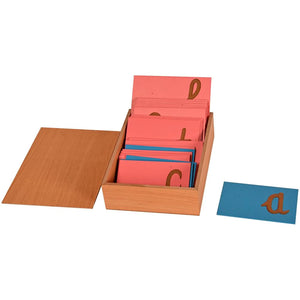
Teaching Reading at Home with Sandpaper Letters & Movable Alphabet
The first time your child reads a word, a whole new world opens up for them. It’s a moment of pure magic, often filled with a proud giggle or a wide-eyed stare of wonder. As parents in India, we often seek the best ways to nurture this crucial skill. If you're exploring Montessori at home, you'll be delighted to know there's a wonderfully tactile and intuitive method for teaching reading with sandpaper letters and movable alphabet at home.
Maria Montessori's approach to literacy is truly groundbreaking because it respects the child's natural developmental pace and love for exploration. It's not about rote memorisation but about engaging all the senses, making learning an enjoyable journey rather than a chore. Imagine your little one's delight as they discover sounds and build words, much like putting together a favourite puzzle.
What is the Montessori Approach to Early Reading?
The Montessori method for early reading is a sequential, multi-sensory approach that introduces children to the sounds of letters before their names. This process helps children decode words phonetically, laying a strong foundation for fluent reading. It focuses on the "sensitive period" for language development, typically between ages 3 and 6 years, when children are naturally eager to absorb new sounds and words.
This works because it breaks down the complex skill of reading into manageable, enjoyable steps, moving from concrete sensory experiences to abstract understanding. Parents can observe their child's readiness and introduce materials like the Sandpaper Letters and Movable Alphabet when interest sparks, making it a child-led journey.
The Magic of Sandpaper Letters
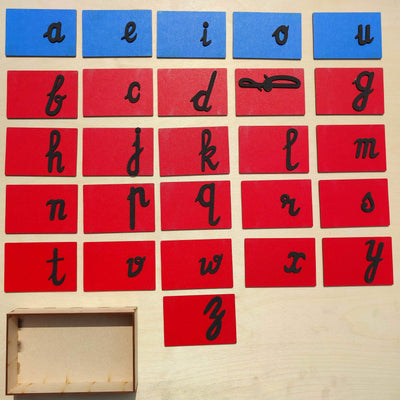
Have you ever noticed how children instinctively touch everything around them, from the rough texture of a stone to the smooth coolness of a marble? The Sandpaper Letters tap into this innate desire for tactile exploration. Sandpaper Letters are tactile learning tools where individual letter shapes, made from rough sandpaper, are mounted on smooth wooden or cardstock tablets. When children trace these letters with their fingers, they are simultaneously feeling the shape, seeing the letter, and hearing its sound (from your verbal prompt).
How to Introduce Sandpaper Letters at Home
Introducing Sandpaper Letters into your Indian home can be a beautiful experience. Start with just three or four letters that are phonetically distinct and easy to sound out, like 'm', 's', 'a', 't'. Place them on a small mat or a dedicated corner, perhaps a 'baithak' style setup, where your child can focus without distractions. Use the 'Three-Period Lesson':
- "This is /m/." (Introduce the sound)
- "Show me /m/." (Recognition)
- "What is this?" (Recall)
Always focus on the phonetic sound (e.g., /m/ as in 'mango', not 'em'). You can link it to familiar objects in your home or even family names like 'Maa' or 'Papa'. Remember, patience is key. Let your child trace the letters as many times as they wish. You can find high-quality sandpaper letters at SkilloToys.com to begin this wonderful journey.
Building Words with the Movable Alphabet
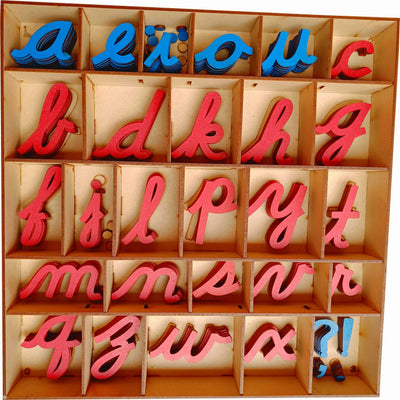
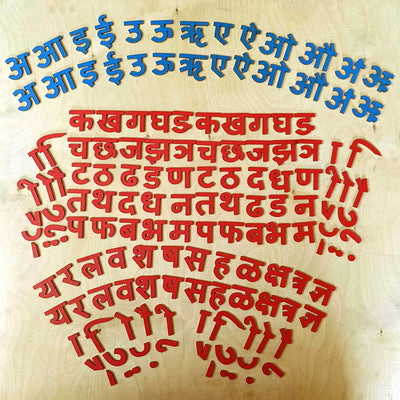
Once your child has mastered several phonetic sounds with the Sandpaper Letters, they're ready for the exciting next step: building words! The Movable Alphabet is a box filled with individual, phonetic letter cutouts (typically lowercase and colour-coded – red for vowels, blue for consonants). It allows children to physically construct words and sentences before they have the fine motor skills for writing.
The Movable Alphabet helps children connect individual sounds to form whole words, bypassing the difficulty of forming letters with a pencil. This works because it isolates the challenge of spelling from the physical act of writing, empowering children to express their thoughts and create words independently. Parents can introduce this material by asking their child to 'write' a simple word they know, like 'cat' or 'sun'.
Creative Ways to Use the Movable Alphabet in an Indian Home
In an Indian home, the Movable Alphabet can become a fantastic tool for connecting with local culture and language. Encourage your child to form names of family members like 'Dadi' or 'Nani', common food items like 'chai' or 'roti', or even simple words related to festivals. Make it a game! Ask them to build words for objects they see around the house, like 'bed' or 'cup'. This playful exploration reinforces phonetic awareness and builds their vocabulary.
It's an excellent example of Montessori language materials in action, providing a hands-on experience for children to explore the structure of words. Remember, the goal is not perfect spelling initially, but the joy of discovery and the connection between sounds and symbols. This truly enhances Montessori learning activities at home.
Creating a Montessori-Friendly Reading Nook
For successful Montessori at home India, a prepared environment is crucial. You don't need a huge space; even a small corner in your apartment can be transformed into an inviting reading nook. Think low shelves, easily accessible books, a soft rug or a traditional 'chatai', and good natural lighting. This dedicated space signals to your child that reading and language exploration are valued activities.
Providing educational toys for toddlers and preschoolers, like the Sandpaper Letters and Movable Alphabet, within this accessible environment encourages independence. Your child can choose when and how they want to engage with the materials, fostering self-motivation and concentration – key aspects of healthy child development India.
Beyond the Materials: Nurturing a Love for Reading
While the Sandpaper Letters and Movable Alphabet are fantastic tools, remember they are just that – tools. The ultimate goal is to nurture a genuine love for reading and language. Read aloud to your child regularly, share stories from Indian mythology like the Panchatantra or Jataka tales, and engage in conversations. Point out words in your environment, like on street signs or grocery labels.
Maria Montessori always emphasized observation. Watch your child's cues. Are they fascinated by letters? Or are they more interested in drawing? Follow their lead, celebrate every tiny milestone, and make the journey of learning to read a joyful, shared experience. This holistic approach supports their overall child development India.
Key Takeaways for Teaching Reading at Home:
- Sandpaper Letters introduce phonetic sounds through a multi-sensory, tactile experience.
- The Movable Alphabet empowers children to build words independently before they can write.
- Create a prepared, inviting reading nook, even in small Indian homes, to encourage engagement.
- Focus on phonetic sounds, not letter names, for early literacy.
- Observe your child's interest and follow their lead, making learning joyful and child-led.
- Read aloud regularly and engage in conversations to foster a lifelong love for language.
FAQ: Montessori Reading at Home
Can I start teaching reading with these materials if my child is very young?
For very young children (under 3), the focus is primarily on pre-reading skills like developing vocabulary, listening to sounds, and recognizing shapes. Direct work with Sandpaper Letters typically begins around 3-4 years, when a child shows interest in letters and sounds.
What's the ideal age to introduce Sandpaper Letters and the Movable Alphabet?
While readiness varies, children generally show a sensitive period for language around 3.5 to 4.5 years. Introduce Sandpaper Letters when your child shows interest in sounds, and the Movable Alphabet once they've mastered several phonetic sounds.
Do I need to be a trained Montessori teacher to use these materials effectively?
Not at all! Many parents successfully integrate Montessori principles at home. With a basic understanding of how the materials work, a spirit of observation, and a willingness to follow your child's pace, you can facilitate powerful learning experiences.
How do I choose the right letters to start with for Sandpaper Letters?
Begin with a small set of 3-4 letters that are phonetically distinct (e.g., 'm', 's', 'a', 't'). Avoid letters that look or sound very similar initially (like 'b' and 'd'). Prioritize letters that appear frequently in simple, common words.
My child isn't showing interest in these materials; what should I do?
If your child isn't interested, don't force it. Put the materials away for a while and reintroduce them later. Focus on other language-rich activities like reading stories, singing songs, or playing sound games. Children learn at their own pace, and interest will emerge when they are ready.
Embarking on the journey of teaching reading at home with Montessori materials is a rewarding experience for both parent and child. At SkilloToys.com, we are committed to providing high-quality Montessori materials that support your child's developmental journey with joy and independence.