Toddlers Learn Maths Best with Objects, Not Numbers
As Indian parents, we often find ourselves eager to introduce our little ones to the world of numbers early on. We might try flashcards, rote counting, or even simple arithmetic apps. But here's a fascinating fact from the world of child development: toddlers learn maths through physical objects, not just abstract numbers. This isn't just a theory; it's deeply rooted in how young minds perceive and understand the world around them, a principle central to the Montessori approach.
What Does 'Learning Maths Through Objects' Mean for Toddlers?
Learning maths through objects is about making abstract concepts tangible and concrete for young children. Instead of memorising the symbol '3', a child physically experiences 'three' by holding three blocks, counting three pebbles collected during a morning walk, or arranging three ladoos for a festival offering. This works because a toddler's brain is wired for sensory exploration and concrete experiences. They need to touch, manipulate, and interact with quantities to truly grasp what numbers represent. Parents can facilitate this by providing rich, hands-on experiences at home, using everyday items or specially designed educational toys.
The Montessori Way: From Concrete to Abstract
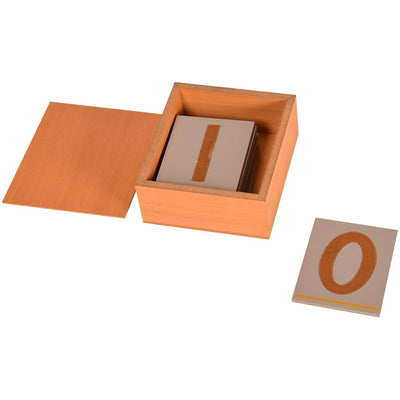
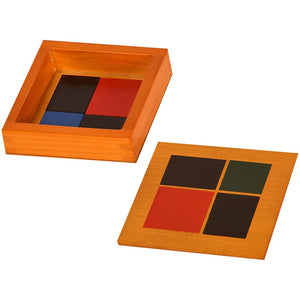
Maria Montessori observed that children have a 'mathematical mind' and a natural inclination to understand order and quantity. However, this understanding doesn't start with digits. It begins with size, shape, weight, and comparison. Think about a child stacking their grandmother's bangles or sorting different coloured dals for kitchen play – these are foundational mathematical experiences! Montessori education prioritises concrete materials like the Montessori Mathematics Materials to build this understanding before introducing number symbols.
Why Physical Objects are Crucial for Early Child Development in India
In many Indian homes, particularly in joint families or smaller apartments, space might be a constraint for elaborate setups. However, this doesn't limit the opportunities for hands-on learning. Simple, readily available items like rajma beans, small katoris, flower petals, or even small idols during pujas can become powerful learning tools. When a child sorts a handful of different coloured beads, they're not just playing; they're engaging in classification, seriation, and one-to-one correspondence – vital pre-math skills.
This approach aligns perfectly with how educational toys for toddlers, especially those made from natural materials like wood, are designed. Wooden blocks, stacking rings, or sorting games offer tactile feedback and allow children to physically experience concepts like 'more' or 'less', 'taller' or 'shorter'. These experiences lay a strong foundation for future mathematical reasoning and problem-solving, contributing significantly to overall child development in India.
Montessori Learning Activities for Home
Incorporating this object-based learning into your daily routine is simpler than you think. Here's how:
1. Counting Everyday Items
Instead of just saying 'one, two, three,' encourage your child to count things they can touch. Count the apples in the fruit basket, the shoes by the door, or the number of family members at the dinner table. This helps them link the spoken word with a tangible quantity. For Montessori at home India, this could be counting rotis or puris being made!
2. Sorting and Classifying
Offer opportunities to sort objects by colour, size, or type. A basket of mixed socks, different types of bangles, or even kitchen utensils can become a sorting activity. This develops logical thinking and the ability to categorise – a fundamental mathematical skill.
3. Building and Stacking
Building with blocks or stacking rings allows children to explore concepts of height, balance, and spatial relationships. They learn about 'bigger' and 'smaller,' 'taller' and 'shorter' through direct experience. Our range of wooden toys offers excellent options for such activities.
4. One-to-One Correspondence
This is the ability to match one item to another. For instance, setting one plate for each family member, or giving one flower to each grandparent. It's a critical pre-math skill that underpins the concept of quantity.
5. Practical Life Activities
Montessori's practical life activities are full of mathematical learning. Pouring water, spooning lentils, or washing small objects all involve estimation, measurement, and fine motor control, indirectly building mathematical understanding. These are wonderful ways to integrate Montessori learning activities into daily Indian family life.
Key Takeaways for Parents
- Toddlers primarily grasp mathematical concepts through direct, hands-on interaction with physical objects, not abstract numbers.
- The Montessori method advocates for concrete experiences using materials like counting rods and blocks to build a strong mathematical foundation.
- Everyday items in Indian homes – from vegetables to traditional toys – can be effectively used for early math exploration.
- Activities like sorting, building, counting tangible items, and practical life skills are crucial for developing a child's mathematical mind.
- Early exposure to quantity through objects fosters critical thinking and problem-solving skills, essential for holistic child development.
Frequently Asked Questions About Toddler Math Learning
Q: At what age should I introduce numbers to my child?
A: While children can learn to recite numbers by rote fairly early, a true understanding of quantity typically begins around 2.5 to 3 years. Focus on helping them understand what numbers *represent* through objects first, rather than just memorising the symbols or sequence.
Q: My child just wants to play; how can I make it educational?
A: Play *is* how children learn, especially at a young age! Instead of 'making' it educational, observe their play and subtly introduce mathematical language. For example, if they're playing with blocks, you might say, "You have two blue blocks and one red block; that's three blocks in total!" or "Can you make a tower taller than mine?"
Q: Are flashcards useful for teaching numbers to toddlers?
A: While flashcards can help with symbol recognition, they often bypass the crucial concrete understanding of quantity. For toddlers, hands-on manipulation of objects that represent the number is far more effective for building a deep, lasting comprehension of mathematical concepts.
Q: What are some simple math activities for small spaces in Indian homes?
A: Utilise kitchen items for sorting (dals, spices), count clothes while folding, use bangles for stacking and seriation, or count steps in your home. Small bowls with different numbers of pebbles or beads can also be great for one-to-one correspondence and counting exercises.
At SkilloToys.com, we understand the beauty of hands-on learning. Our curated collection of Montessori-inspired educational toys is designed to support your child's natural journey of discovery, making abstract mathematical concepts tangible and fun for their developing minds.