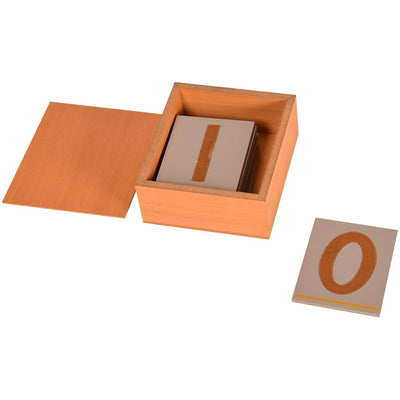
Toddlers Learn Maths with Objects, Not Just Numbers
As parents in bustling Indian homes, we often dream of our children excelling, perhaps even reciting numbers before they can properly walk! It's natural to want to introduce them to the world of arithmetic early. But here's a fascinating insight from the world of child development: did you know toddlers learn maths through physical objects, not numbers alone? Yes, those abstract symbols we call numbers don't hold much meaning to a tiny tot without a tangible connection. This isn't just a quirky observation; it's a foundational principle of the Montessori method that can transform how your child learns early math.
Concrete learning in early mathematics is the idea that toddlers grasp numerical concepts best through direct, hands-on experience with physical objects. This approach works because a young child's brain is wired for concrete reasoning, not abstract thought. They need to see, touch, and manipulate to understand. Parents can nurture this innate learning style by providing a rich environment with engaging, multi-sensory materials, turning everyday play into powerful math lessons.
Why Physical Objects are Key for Little Minds
Imagine explaining the concept of "three" to a two-year-old. Showing them the numeral '3' on a flashcard might register as a shape, but it doesn't convey the quantity. Now, imagine giving them three *ladoos*, three colourful beads, or three small blocks. Suddenly, "three" becomes a tangible experience – something they can hold, count, and even share! Maria Montessori observed that children have an absorbent mind, soaking up information from their environment. For math, this absorption happens best when concepts are presented in a concrete, rather than abstract, form.
This hands-on approach helps build strong neural pathways. When a child picks up a wooden toy block, counts it, and places it next to another, they are not just playing; they are actively constructing their understanding of number, sequence, and quantity. This is crucial for their overall child development in India, laying the groundwork for more complex mathematical reasoning later on.
Montessori at Home: Bringing Math to Life
You don't need a dedicated Montessori classroom to embrace this approach. Many everyday items in an Indian home can become powerful math tools. Think about your kitchen: lentils for sorting, *diyas* for counting during Diwali, or even *rotis* for understanding fractions (half, quarter). For those exploring Montessori at home India, the key is to present these materials invitingly and allow the child to explore freely.
Consider simple activities like sorting different coloured *bindis*, counting marigolds for a puja, or arranging clothes by size. These seemingly simple tasks are powerful Montessori learning activities that build foundational mathematical skills like classification, seriation, and one-to-one correspondence. Grandparents in joint families, with their vast experience, often naturally engage children in such practical activities, unknowingly teaching vital math concepts.
Beyond Numbers: Understanding Quantity and Sequence
Before a child understands the symbol '5', they need to understand what "five-ness" feels like. This is where Montessori mathematics materials shine. Materials like the Red Rods teach length and sequence without ever mentioning numbers. The Number Rods introduce quantity by linking a specific number of segments to a visual representation. When a child works with these materials, they internalise the concept of quantity before associating it with a numeral.
Counting with Confidence, One Object at a Time
Instead of rote counting from one to ten, encourage your toddler to count *objects*. "How many mangoes are in the basket?" "Let's count your toy cars!" As they point to each item and say a number, they connect the abstract number word to a concrete item. This one-to-one correspondence is a critical early math skill. Later, materials like spindle boxes or bead chains solidify this understanding, allowing them to truly feel the quantity of "seven" beads or "ten" spindles.
Sorting and Matching: Early Logic Builders
Sorting objects by colour, shape, or size is a fantastic pre-math activity. Whether it's separating *rajma* from *chana*, sorting clothes into piles, or matching pairs of socks, these activities develop logical thinking, pattern recognition, and classification skills. These are fundamental building blocks for geometry, algebra, and problem-solving. Look for educational toys for toddlers that encourage sorting, like shape sorters or stacking rings, which also enhance fine motor skills.
Practical Life: The Unsung Math Teacher
In Montessori, Practical Life activities are highly valued, and they are surprisingly rich in mathematical concepts. Pouring water from a small jug to a larger one teaches concepts of volume and capacity. Setting the table involves one-to-one correspondence (one plate per person, one spoon per plate). Even simple tasks like arranging books on a shelf by size or thickness introduce seriation. These activities are particularly easy to integrate into Indian households, fostering independence and mathematical understanding simultaneously.
So, the next time you see your toddler meticulously arranging their small toy cars, stacking their *katori* bowls, or carefully selecting different coloured *rangoli* powders, remember that they aren't just playing. They are building a robust foundation for mathematical understanding, one tangible experience at a time. Embrace this natural learning journey, and watch their love for numbers grow.
Key Takeaways
- Toddlers learn mathematical concepts best through direct, hands-on experience with physical objects, not just abstract numbers.
- Maria Montessori's method emphasizes concrete learning, where children see, touch, and manipulate materials to understand quantity, sequence, and numerical relationships.
- Everyday objects and activities in Indian homes – from counting *diyas* to sorting lentils – can be powerful tools for early math education.
- Montessori materials like Red Rods and Number Rods introduce concepts of length, quantity, and seriation before formal numerals.
- Developing skills like one-to-one correspondence, sorting, matching, and pattern recognition are crucial pre-math abilities fostered through practical activities.
Frequently Asked Questions About Toddler Math Learning
Why can't I just teach my toddler numbers from flashcards?
While flashcards can help with numeral recognition, they don't convey the concept of quantity. Toddlers need to physically interact with groups of objects (e.g., three blocks) to understand what "three" truly means, rather than just memorising the shape '3'.
What are some simple Montessori math activities I can do at home in India?
You can count *diyas* during festivals, sort different types of pulses (like *rajma* and *chana*), arrange spices by size, or use marbles/beads for one-to-one counting. Simple tasks like setting the table also teach counting and correspondence.
At what age should I introduce formal math concepts?
Formal, abstract math (like solving equations) is typically introduced much later. For toddlers (0-3 years), the focus should be on building concrete foundations – understanding quantity, comparison, patterns, and sorting – through play and manipulation of objects, rather than memorising symbols.
How do Montessori materials help with math?
Montessori mathematics materials are designed to isolate concepts and provide a concrete representation of abstract ideas. For example, the Number Rods physically show quantities, allowing children to see and feel the difference between "one" and "ten," making numerical understanding intuitive and self-correcting.
At SkilloToys.com, we understand this natural learning process. Explore our range of carefully curated educational toys and Montessori materials designed to support your child's innate mathematical abilities, turning every play moment into a step towards confident learning.