Child's Right to Play: Fueling Motor Skills with Montessori
Every child, from the bustling lanes of Bengaluru to the quiet villages of India, holds an inherent child's right to play – a fundamental principle recently highlighted by UNICEF. This right is not merely about leisure; it is a critical foundation for holistic development, profoundly impacting a child's motor skills. Recognizing and actively supporting this right empowers parents to foster robust physical growth and cognitive abilities in their children.
The child's right to play is the recognition that every young individual is entitled to engage in free, self-directed play and recreational activities. This matters profoundly because play is the primary engine of development, especially for motor skills, enabling children to explore, experiment, and build strength. Indian parents can actively uphold this right by providing ample opportunities for unstructured play and age-appropriate learning materials.
The Child's Right to Play: A Global Mandate for Every Indian Child
The recent UNICEF article 'It’s Right to Play' provides a timely reminder of a universal truth: play is non-negotiable for a child's well-being. Article 31 of the UN Convention on the Rights of the Child explicitly states this, yet in India, our children often face immense academic pressure, with 'padhai' taking precedence. This global mandate serves as a crucial counterpoint, emphasizing that play is not a distraction from learning, but rather its most effective catalyst, essential for 'Viksit Bharat 2047' and closing the school-readiness gap.
Child development experts agree that unstructured play fosters creativity, problem-solving, and crucial physical coordination. It allows children to experiment with their bodies, understand cause and effect, and develop resilience. By embracing the child's right to play, we ensure our little ones are not just academically prepared, but also physically robust and emotionally balanced, ready for all of life's challenges.
Why the Importance of Play for Motor Skills Cannot Be Overstated
Play is the foundational training ground for motor skills, both fine and gross. Through various play activities, children naturally refine their movements, strengthen their muscles, and improve coordination. Research shows that children who engage in regular, varied play develop better spatial awareness, balance, and agility, directly contributing to their ability to perform daily tasks and participate in physical activities.
For instance, simple activities like climbing trees or playing kho-kho contribute significantly to gross motor skills like running, jumping, and balancing. Simultaneously, intricate tasks such as threading beads or manipulating building blocks hone fine motor skills, including hand-eye coordination and pincer grasp. This dual development is vital for everything from self-feeding to writing, as highlighted in articles like '5 fun tricks to supercharge fine motor skills in your child' from The Times of India.
Fine Motor Skills: Precision in Every Playful Act
Fine motor skills involve the coordinated use of small muscles, primarily in the hands and fingers, often in conjunction with the eyes. These skills are meticulously developed through play activities that demand precision and control. For toddlers (18-24 months), stacking blocks or turning pages are foundational, while older preschoolers benefit from cutting with child-safe scissors, drawing, or working with intricate puzzles.
Montessori education, with its focus on purposeful manipulation of materials, intrinsically supports this development. Tools like the Pink Tower encourage grading by size, while Sandpaper Letters refine the pincer grasp and prepare for writing. These experiences are not merely 'play' but concentrated, self-directed learning that builds the neural pathways necessary for complex tasks.
Gross Motor Skills: Building Strength and Coordination Through Movement
Gross motor skills involve the larger muscles of the body for movements like walking, running, jumping, and balancing. These are honed through active, often outdoor, play. Children learn to control their bodies, navigate their environment, and develop strength and endurance. From playing 'catch-catch' in the park to dancing at a family wedding, every movement is a learning opportunity.
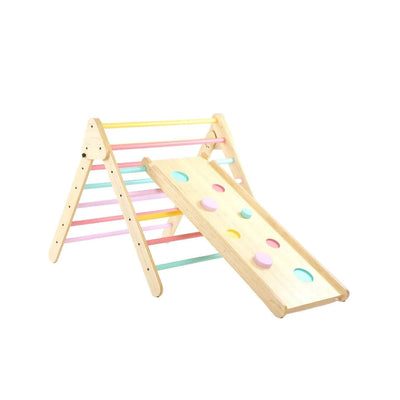
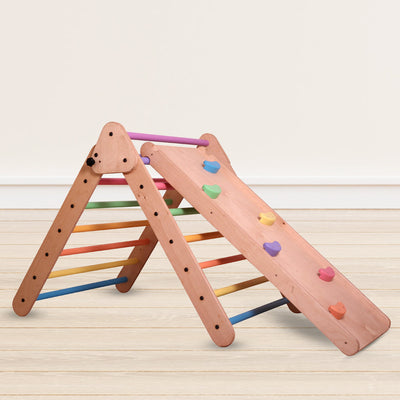
Allowing children ample space and time for unrestricted movement is crucial. Montessori environments provide freedom of movement, encouraging children to choose activities that involve gross motor skills, such as carrying trays or walking on a line. This independence in movement builds confidence and body awareness, which are critical for overall physical competence.
Montessori Play for Child Development: Fueling Potential Naturally
Maria Montessori's philosophy is inherently aligned with the child's right to play, viewing it as purposeful 'work.' The Montessori method emphasizes a 'prepared environment' where children are free to choose activities that naturally draw their interest and developmental needs. This self-directed engagement, or what we term 'Montessori play,' is foundational for holistic child development, including motor skills.
Within this framework, children engage with specifically designed materials that promote exploration and mastery, often without direct instruction. This approach allows them to develop at their own pace, fostering independence, concentration, and fine-tuning motor skills through repeated, self-chosen actions. Discover more about this enriching approach in our Montessori learning materials collection.
Play-Based Learning Benefits: More Than Just Fun for Our Children
The benefits of play-based learning extend far beyond motor skill development, encompassing cognitive, social, and emotional growth. Studies indicate that children who engage in rich play experiences demonstrate superior problem-solving abilities, enhanced creativity, and better language development. Play is a child's natural way of making sense of the world, fostering resilience and adaptability.
As India Today rightly points out, 'Why play-based learning deserves equal footing with nutrition in child development,' it’s clear that structured academics alone cannot provide the comprehensive development children need. Play nurtures crucial executive functions, such as planning and self-regulation, which are vital for academic success and life skills. It prepares them not just for school, but for a thriving future as responsible citizens of 'Viksit Bharat'.
- The child's right to play is a fundamental human right, recognized globally by UNICEF, essential for holistic development.
- Play is the primary mechanism through which children develop and refine both fine and gross motor skills.
- Montessori principles naturally align with the right to play, offering a prepared environment for self-directed, purposeful learning.
- Engaging in varied play activities significantly enhances hand-eye coordination, balance, strength, and dexterity.
- Play-based learning fosters crucial cognitive, social, and emotional skills, providing comprehensive benefits beyond physical development.
- Prioritizing play ensures children are physically capable, mentally agile, and emotionally resilient for their future.
As parents in India, embracing the child's right to play means actively valuing and integrating it into our children's daily lives. It means providing opportunities for free exploration, whether through traditional games with grandparents or with thoughtfully designed Montessori materials. By doing so, we not only honour their fundamental right but also lay a robust foundation for their physical, mental, and emotional well-being, empowering them to reach their full potential. Let's make play a priority, not a privilege.
What is the child's right to play according to UNICEF?
UNICEF advocates that every child has a fundamental right to play, as enshrined in Article 31 of the UN Convention on the Rights of the Child. This right recognizes play as essential for their holistic development, including physical, cognitive, social, and emotional growth, and not merely as leisure.
How does play specifically help develop motor skills?
Play is the primary vehicle for motor skill development, allowing children to naturally practice movements. Activities like running, jumping, building, and manipulating objects strengthen muscles, improve coordination, balance, and dexterity, laying the foundation for complex physical tasks.
Are Montessori principles compatible with a child's right to play?
Absolutely. Montessori principles deeply align with the child's right to play by emphasizing self-directed activity within a prepared environment. Children freely choose engaging materials that promote exploration and skill mastery, embodying play as purposeful work and essential learning.
What are the long-term benefits of play-based learning for Indian children?
Play-based learning fosters critical thinking, problem-solving, creativity, and resilience crucial for future success. It also enhances social skills and emotional regulation, preparing children for academic challenges and contributing to a well-rounded foundation for 'Viksit Bharat 2047' by closing the school-readiness gap.
How can parents in India ensure their child has adequate play opportunities?
Indian parents can prioritize unstructured playtime, both indoors and outdoors, by dedicating specific times daily. Offer age-appropriate Montessori-inspired materials that encourage exploration and movement, and resist the pressure to over-schedule with purely academic activities, valuing play as equally important.