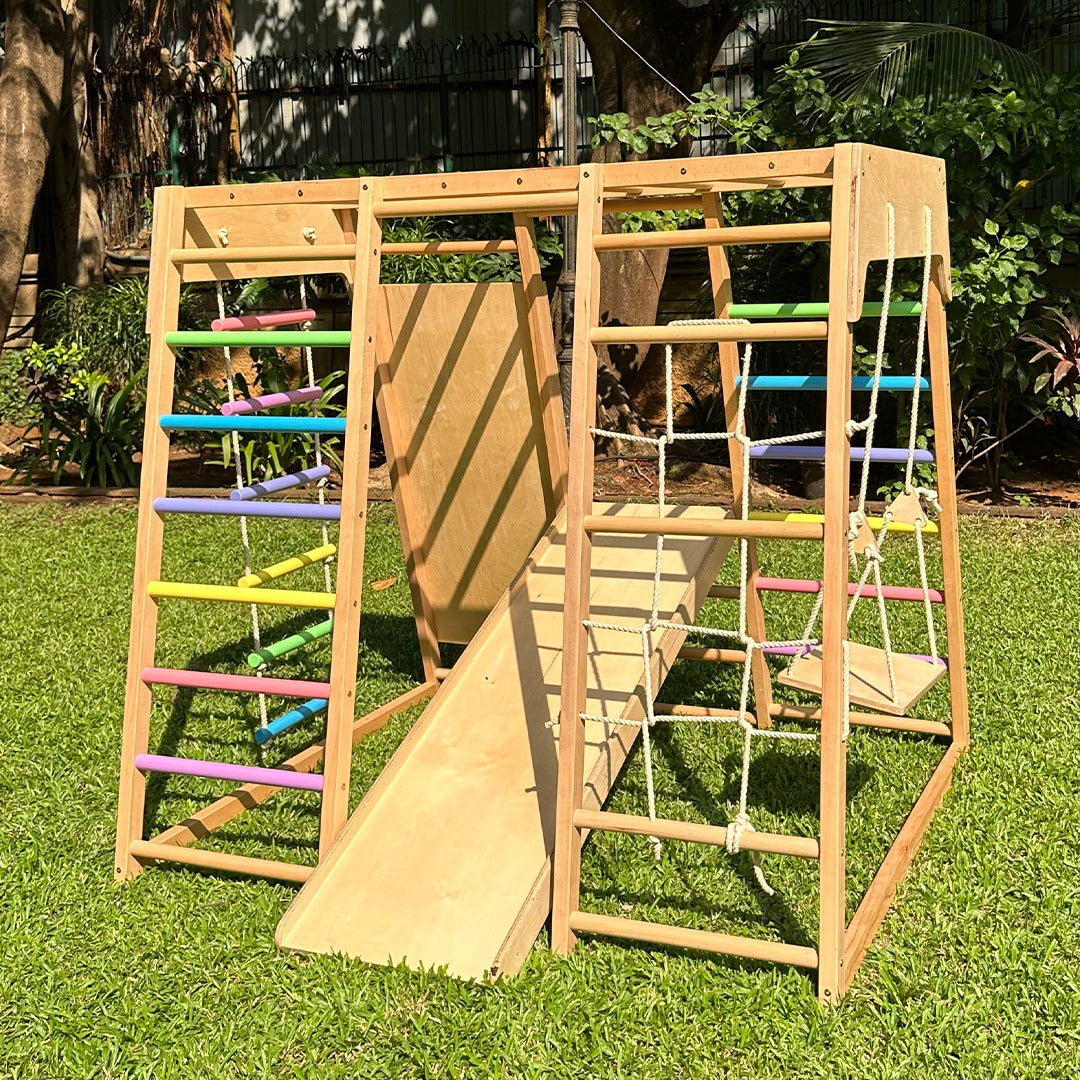
Educational toys are definitively transforming India's early learning landscape, empowering children with essential skills for school readiness and future success. This revolution, gaining significant momentum across our nation, is powered by innovative tools that align perfectly with national educational reforms and the aspirations of Indian families.
What is India's Early Learning Revolution?
India's Early Learning Revolution is a nationwide movement, significantly accelerated by the National Education Policy (NEP) 2020, focusing on strengthening foundational literacy and numeracy from preschool onwards. This matters because robust early childhood education (ECE) ensures children develop a lifelong love for learning and essential school-ready skills. Indian parents can actively participate by integrating quality educational toys and a stimulating home environment.
Early Learning Revolution India: The NEP 2020 Vision
The National Education Policy (NEP) 2020 marks a pivotal shift, placing "Foundations First" by prioritizing Early Childhood Care and Education (ECCE) for children aged 3-8 years. This strategic emphasis recognizes that over 85% of a child's brain development occurs before the age of six, making these formative years critically important for future learning outcomes. As reported by orfonline.org and ET Education, this focus on ECE is seen as an invaluable opportunity every child deserves, moving beyond traditional rote learning towards holistic development.
This national mandate translates into a greater need for engaging, developmental resources at home, especially for parents in Bengaluru and across India anxiously preparing their children for LKG and UKG. The policy encourages a rich, stimulating environment where children can learn through discovery and play. Educational toys are no longer just playthings; they are becoming indispensable tools for fostering cognitive, social, emotional, and physical growth, directly supporting the NEP's vision of a strong, well-rounded foundation for every child, right in the comfort of their homes.
Foundational Learning Toys: Building Blocks for Success
Child development experts agree that purposeful play with foundational learning toys is key to developing crucial pre-academic skills. These materials provide concrete, hands-on experiences that make abstract concepts tangible and understandable. For instance, Montessori educational toys like the Pink Tower help children grasp concepts of size, sequence, and visual discrimination, laying critical pre-math foundations. Similarly, Sandpaper Letters introduce phonetic sounds and letter recognition through touch, which is crucial for early literacy development.
Research consistently shows that children engaged with quality early learning materials demonstrate enhanced problem-solving abilities, improved concentration, and a deeper understanding of complex ideas. These foundational learning toys, often inspired by Maria Montessori's pedagogical principles, encourage self-correction, independent thought, and a genuine love for learning. These attributes are vital for navigating the Indian schooling system, fostering a proactive rather than reactive approach to education from an early age.
Educational Toys for Kids: More Than Just Play
Educational toys for kids offer far more than simple entertainment; they are meticulously designed to stimulate specific developmental areas, translating into measurable benefits for school readiness. This aligns with the understanding that learning should be an enjoyable, interactive process, not merely a chore. In a bustling Indian household, where learning can often be intertwined with family life and the joyful chaos of joint families, these toys provide structured yet playful learning opportunities.
Fostering Cognitive Growth with Educational Toys
Cognitive development, encompassing memory, attention, reasoning, and problem-solving, is significantly bolstered by interactive educational toys. Materials such as shape sorters, puzzles, and pattern blocks challenge children to think critically, strategize, and understand cause and effect. Studies indicate that early exposure to such stimuli can dramatically improve a child's ability to absorb new information and adapt to academic tasks. For example, by the age of five, 90% of a child's brain has developed, underscoring the profound impact of rich early learning environments on neural pathways and cognitive functions.
Developing Social-Emotional Skills for School Readiness India
Beyond academics, school readiness in India also demands strong social-emotional skills – the ability to share, cooperate, communicate effectively, and manage emotions. Role-playing sets, building blocks for collaborative projects, and even simple board games can teach invaluable lessons in turn-taking, empathy, and negotiation. In many Indian homes, these toys provide excellent opportunities for children to interact meaningfully with siblings, cousins, and even grandparents, naturally fostering these crucial interpersonal skills before they step into a formal classroom setting, making the transition smoother and more confident.
Choosing the Right Educational Toys for Your Child
Selecting the ideal educational toys for your child involves considering their age, developmental stage, and individual interests. Focus on open-ended toys that encourage creativity, critical thinking, and allow for multiple ways of play. Toys that grow with your child and can be used in various scenarios offer long-term value and sustained engagement. Safety and durability are paramount, especially for active young children who love to explore with all their senses.
Opt for materials that promote active engagement rather than passive observation. For instance, while some screen time may have educational value, tactile Montessori materials and wooden puzzles offer unparalleled sensory and motor skill development, which are foundational. Early Childhood Education (ECE) research consistently demonstrates that high-quality, play-based learning experiences significantly predict later academic success, reducing the pressure on parents to 'coach' children for school entries. This proactive and engaging approach fosters a natural curiosity and resilience that will serve children well through their schooling years in India, building genuine confidence.
- Educational toys are pivotal in India's Early Learning Revolution, aligning with NEP 2020's "Foundations First" approach for children aged 3-8.
- Over 85% of brain development occurs before age six, highlighting the critical role of early childhood learning environments and materials.
- Montessori educational toys, like the Pink Tower and Sandpaper Letters, provide concrete, hands-on experiences for pre-math and pre-literacy skills.
- Purposeful play with educational toys significantly enhances cognitive, social-emotional, and fine motor skills essential for holistic school readiness.
- High-quality, play-based early learning experiences significantly improve a child's academic adaptability, fostering a lifelong love for learning and reducing future school pressure for Indian families.
What are the key benefits of educational toys for school readiness?
Educational toys provide children with essential cognitive, social, emotional, and motor skills crucial for school readiness. They foster problem-solving, creativity, language development, and self-regulation, preparing young minds for the academic and social demands of formal schooling.
How do educational toys align with NEP 2020?
NEP 2020 emphasizes foundational learning, experiential education, and holistic development in early childhood. Educational toys, particularly Montessori materials, directly support these goals by offering hands-on, child-led learning experiences that build strong literacy and numeracy skills through play.
At what age should I introduce educational toys to my child?
Child development experts recommend introducing age-appropriate educational toys from infancy, even 0-12 months, with materials that stimulate senses and encourage exploration. As children grow, the complexity and purpose of toys should evolve to support their developing skills, ideally starting focused educational play by 18-24 months.
Are Montessori toys considered educational toys?
Yes, Montessori toys are considered highly effective educational toys, specifically designed to foster independent learning, concentration, and practical life skills. Rooted in the philosophy of Maria Montessori, these materials allow children to learn at their own pace, making them foundational tools for early childhood development and school readiness.
How can educational toys reduce school pressure for Indian parents?
By building strong foundational skills through play, educational toys empower children with confidence and competence before formal schooling begins. This proactive approach helps reduce anxiety about academic performance, allowing children to transition into LKG or UKG with a solid base, alleviating common parental pressures in India.