Nurturing Little Eco-Warriors: Making Environmental Learning Fun for Toddlers
As parents, we dream of raising compassionate, responsible individuals who care about the world around them. But how do you introduce complex ideas like environmental conservation to a curious toddler? It might seem daunting, but with the right tools, it becomes an exciting journey of discovery. This is where engaging educational activities truly shine, transforming big concepts into manageable, playful lessons.
Why Early Environmental Education Matters So Much
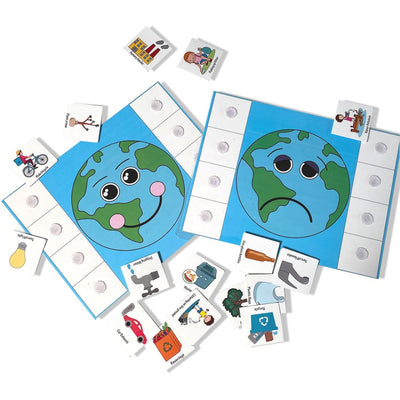
Starting early is key when it comes to instilling values. Toddlers are naturally curious and absorb information like sponges, making it the perfect age to introduce them to the concept of caring for our planet. This Happy Earth Sad Earth Sorting Activity For Kids helps lay a foundation for responsible habits and a lifelong appreciation for nature. It's about empowering them to become little eco-warriors from the start.
Integrating environmental themes into play supports holistic early development skills. It's not just about learning facts; it's about developing empathy, understanding cause and effect, and recognizing their role in the bigger picture. This kind of thoughtful engagement aligns well with Montessori learning principles, encouraging child-led exploration and understanding.
What Skills Does This Educational Toy Develop?
Beyond its core environmental message, the Happy Earth Sad Earth Sorting Activity is a powerhouse for various developmental skills, making it one of the best toys for toddlers in India. Through interactive play, children enhance crucial cognitive and physical abilities:
- Environmental Knowledge: Kids learn to differentiate between activities that help (happy earth) and harm (sad earth) our environment, fostering an early understanding of conservation.
- Fine Motor Skills & Hand-Eye Coordination: Picking up and placing the elements on the mats refines their dexterity and precision.
- Visual Skills: Identifying and matching images improves visual discrimination and recognition.
- Cognitive Development: Sorting requires logical thinking, problem-solving, and categorization skills.
- Language Development: Discussing the different scenarios (e.g., "Why does saving water make our Earth happy?") expands vocabulary and communication skills.
- Empathy & Responsibility: Children develop a deeper love for conserving Earth by understanding the impact of actions.
How Does Happy Earth Sad Earth Sorting Activity Teach Conservation?
The beauty of this sorting activity lies in its simplicity and effectiveness. Children actively sort various elements onto two distinct mats: a "Happy Earth" mat for eco-friendly actions and a "Sad Earth" mat for harmful ones. This hands-on method allows them to visualize consequences directly.
For example, they'll learn that planting trees makes the Earth happy, while littering makes it sad. The activity also includes a habit tracker on the reverse side, gently encouraging the adoption of environmentally friendly routines. Plus, a fun i-spy activity adds another layer of engagement, making learning even more enjoyable.
Making Learning Fun: Tips for Parents at Home
To maximize the learning potential of this wonderful activity, here are a few tips for parents:
- Narrate and Discuss: As your child sorts, talk about each item. "Why does saving water make our Earth happy?" or "What happens if we waste food?"
- Connect to Real Life: Point out real-world examples. "Remember when we recycled that bottle? That makes the Earth happy!"
- Role-Play: Act out some of the scenarios. Pretend to water a plant or turn off a light switch, reinforcing the habits.
- Be Patient & Positive: Encourage exploration and praise effort, focusing on the joy of learning rather than perfect sorting.
This innovative sorting activity is more than just a toy; it’s a powerful tool for instilling crucial values in your little one. For this and many other engaging flashcards and Montessori-inspired toys that foster holistic development, visit SkilloToys.com to explore our full collection.