Early Childhood Science Education: Boost Indian Kids' Minds
Emerging research in fields like developmental psychology, as highlighted recently by Nature, confirms a profound and growing interest in the critical role of early childhood science education. This isn't just a trend; it's a foundational shift in how we approach child development, particularly for curious, research-oriented Indian parents keen on equipping their children with essential skills from the earliest years. Fostering a scientific mindset in young children cultivates not only curiosity but also vital critical thinking abilities.
Early childhood science education involves engaging young children (typically ages 0-8) in active exploration and discovery of the natural world through observation, experimentation, and questioning. This matters because it lays the groundwork for logical reasoning and problem-solving, which are crucial for future academic success and navigating life's complexities. Indian parents can integrate simple scientific activities into daily routines, transforming everyday moments into learning opportunities.
The Scientific Imperative: Why Early Science Matters for Indian Minds
Studies indicate that children are born scientists, brimming with innate curiosity. Providing structured opportunities for early science learning capitalizes on this natural inclination, transforming it into tangible cognitive benefits. Research shows that engaging with scientific concepts from a young age significantly boosts a child's observational skills, logical reasoning, and ability to make connections.
For Indian children, who often face immense academic pressure later in life, a strong foundation in science from preschool can alleviate stress by making complex subjects intuitive. It’s not about memorizing facts but understanding processes. This approach is vital for building a generation of innovative thinkers, ready to contribute meaningfully to India's future.
Fostering Scientific Thinking in Kids: Beyond Rote Learning
Fostering scientific thinking in kids moves far beyond the traditional rote memorization sometimes prevalent in Indian education. Instead, it emphasizes active engagement with phenomena, encouraging children to ask 'why' and 'how.' This involves observing patterns, forming hypotheses, and testing ideas—skills that are transferable across all aspects of learning and life.
Child development experts agree that children who are encouraged to explore and question develop stronger critical thinking abilities. This translates into better problem-solving skills, enhanced creativity, and an increased capacity for independent thought. These are the qualities that help children excel, not just in school, but in facing real-world challenges.
Montessori's Blueprint for Science for Young Children
Maria Montessori's philosophy, deeply rooted in observation and hands-on discovery, provides an ideal framework for science for young children. Montessori classrooms, and homes adopting these principles, are rich with Montessori learning materials that naturally facilitate scientific exploration. Children learn through direct experience, whether classifying leaves, experimenting with water displacement, or observing the life cycle of an insect.
For instance, activities involving sensory bottles, sorting different natural objects like pebbles or seeds, and exploring cause-and-effect with simple machines are core to Montessori science. These experiences are concrete, allowing children aged 18-24 months and beyond to grasp abstract scientific concepts through their senses, making learning meaningful and lasting.
Hands-On Exploration: The Cornerstone of Early Science
Engaging children in hands-on exploration at home is straightforward and incredibly impactful. Indian families, especially in joint family setups, have unique opportunities for this. Grandparents can involve children in gardening, explaining plant growth, or cooking, where chemistry and measurement come alive. Simple experiments with household items, like observing how different liquids mix or dissolve, can spark immense curiosity.
Encouraging children to collect and observe natural items—leaves, flowers, stones—and then discuss their properties fosters keen observation skills. These everyday activities build a powerful foundation for scientific inquiry, making learning a joyful and integrated part of family life.
STEM for Preschoolers India: Building Tomorrow's Innovators Today
The global emphasis on STEM (Science, Technology, Engineering, and Mathematics) education begins long before formal schooling. Introducing STEM for preschoolers in India is about nurturing skills like problem-solving, logical reasoning, and innovative thinking. This prepares them not just for future careers but for understanding and shaping a technology-driven world.
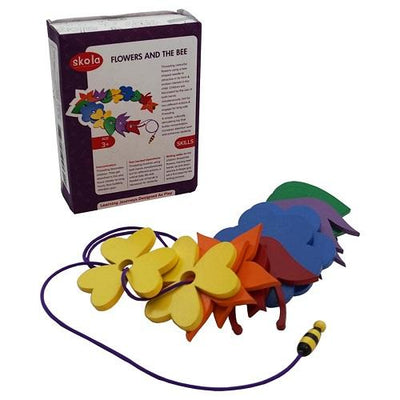
At SkilloToys, our curated range includes specific Montessori botany puzzles and animal life cycle sets that serve as excellent STEM tools. These materials allow children to explore biological classification, understand sequences, and develop an early appreciation for the natural sciences through direct, manipulative engagement.
Addressing Modern Challenges: Air Pollution and Critical Thinking
The alarming news regarding air pollution's threat to child brain development, as highlighted by NDTV, underscores the urgent need for critical thinking. Early childhood science education equips children with the tools to understand complex environmental issues, encouraging them to question, analyze data, and seek solutions. This scientific literacy is crucial for navigating a world grappling with challenges like climate change and public health.
By understanding cause-and-effect from a young age, children can grow into informed citizens who think critically about their environment and make responsible choices. This surprising connection between early science and real-world problems demonstrates the profound, far-reaching impact of fostering a scientific mindset in our youngest learners.
- Early childhood science education is crucial for developing critical thinking and problem-solving skills in young Indian children.
- Research, including findings in Nature, confirms the growing interest and effectiveness of early science learning.
- Montessori principles offer a natural, hands-on approach to fostering scientific curiosity and exploration from an early age.
- Fostering scientific thinking moves beyond rote learning, emphasizing observation, experimentation, and questioning.
- Engaging in everyday activities like cooking or gardening provides invaluable opportunities for scientific discovery at home.
- Introducing STEM concepts early prepares Indian preschoolers for future academic success and innovation.
Investing in early childhood science education is an investment in your child's future, equipping them with a curious mind and the tools to understand and interact with the world around them. At SkilloToys, we believe every child deserves the opportunity to explore, discover, and develop their innate scientific genius. Explore our collection of Montessori practical life materials and other educational toys designed to spark wonder and critical thinking in your little scientist, setting them on a path of lifelong learning and discovery.
Why is early childhood science education crucial for Indian children?
Early childhood science education is crucial because it develops foundational cognitive skills like observation, critical thinking, and problem-solving, which are essential for academic success and navigating a complex world. It also nurtures innate curiosity, preparing children to become lifelong learners and innovators.
How do Montessori principles support science for young children?
Montessori principles inherently support science for young children by providing hands-on, self-directed exploration with concrete materials that demonstrate scientific concepts. Activities like classifying objects, observing nature, and practical life exercises lay a strong foundation for understanding the natural world and scientific inquiry.
What are the benefits of early science learning for preschoolers in India?
Benefits of early science learning include enhanced problem-solving abilities, improved observation skills, development of logical reasoning, and a strong foundation for STEM subjects. It also fosters a sense of wonder and encourages children to question, experiment, and understand the world around them from a young age.
How can parents foster scientific thinking in kids at home?
Parents can foster scientific thinking in kids by encouraging open-ended play, asking 'why' and 'how' questions, exploring nature together, and providing simple materials for experimentation. Engaging in activities like cooking, gardening, or observing weather patterns turns everyday experiences into scientific discoveries.
Are there specific Montessori science activities suitable for toddlers?
Yes, many Montessori science activities are perfect for toddlers, focusing on sensory exploration and classification. Examples include sorting objects by color or texture, observing plants and animals, pouring and scooping exercises, and using puzzles that teach parts of a whole, building early scientific understanding.