Educational Toys: Science of Age-Appropriate Milestones
Educational toys, when carefully selected for a child's age, are not just playthings but powerful scientific instruments that foster specific neural connections and developmental milestones. Research consistently shows that engaging with age-appropriate learning tools directly correlates with enhanced cognitive abilities, motor skills, and socio-emotional growth in children across India. Understanding this science helps Indian parents, especially in Bengaluru, make informed choices that truly nurture their child's potential from infancy through early childhood.
Age-appropriate educational toys are those designed to align precisely with a child's current cognitive, physical, and socio-emotional capabilities, offering optimal challenge and engagement. This matters because a toy too simple bores, while one too complex frustrates, hindering effective learning. Indian parents can use this understanding to select toys that truly support their child's unique developmental pace.
Infancy (0-12 Months): Building Sensory Foundations with Kids Learning Toys
The first year of life is a period of astounding brain development, where an infant's world is primarily experienced through their senses. Research shows that sensory experiences in infancy are crucial for neural pathway development, a period that neuroscientists often describe as a 'seven-point IQ opportunity' for Indian children, emphasizing the profound impact of early stimulation. High-contrast mobiles, rattles that produce varied sounds, and soft fabric books are essential kids learning toys during this phase.
These simple, yet scientifically potent, tools help babies develop object permanence, refine their visual tracking, and strengthen grasping reflexes. Such engagements lay the foundational wiring for future cognitive processes, enabling infants to make sense of their environment, whether it's the vibrant colours of a Rangoli during Diwali or the familiar lullabies sung by a grandparent. Early, targeted sensory input is a direct investment in their developing intellect.
Toddlerhood (1-3 Years): Mastering Motor Skills and Language with Age-Appropriate Toys
As children transition into toddlerhood, their desire for independence blossoms, accompanied by rapid advancements in both gross and fine motor skills. This stage is characterized by intense brain plasticity, making it a critical window for language acquisition and problem-solving. Selecting age-appropriate toys that challenge their newfound mobility and curiosity is paramount.
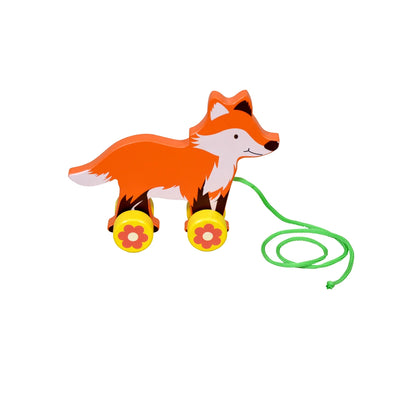
Push-and-pull toys encourage walking and balance, while shape sorters and simple interlocking puzzles refine fine motor skills and introduce basic concepts of classification. Montessori practical life tools, such as pouring sets or buttoning frames, allow toddlers to mimic daily activities seen in Indian homes, fostering self-reliance and coordination. Studies indicate that children engaged with such purposeful play exhibit stronger pre-academic skills and enhanced self-regulation by the time they enter playschool.
Preschool (3-6 Years): Cognitive Growth and Social Understanding with Montessori Toys Age
The preschool years are a fascinating period where imagination takes flight, and children begin to grasp more abstract concepts, setting the stage for formal schooling. This phase sees significant development in executive functions—skills like planning, memory, and attention—which are crucial for academic success and social interactions within a joint family setting. Montessori toys age-specifically cater to these evolving needs.
Sensorial materials like the Pink Tower or Brown Stair introduce precise mathematical concepts and spatial reasoning, while Sandpaper Letters lay a strong foundation for literacy. Role-playing sets, often reflecting scenarios like a market visit or a doctor's clinic, encourage social understanding, empathy, and language development. Maria Montessori's philosophy emphasizes a prepared environment, ensuring that toys at this age are not just fun, but scientifically designed for maximum cognitive stimulation.
Early Childhood (6-9 Years): Problem-Solving and Creativity
As children enter early childhood, typically navigating primary school, their cognitive abilities mature to encompass more complex logical reasoning and abstract thought. This stage is crucial for developing critical thinking and creativity, preparing them for academic challenges and a rapidly changing world. It’s when their innate interest in 'how things work' truly flourishes, aligning with the emerging interest in science during early childhood highlighted by research in Nature.
Science kits, intricate building sets, and strategy board games become invaluable, fostering sustained attention, analytical skills, and collaborative play. These educational toys challenge them to hypothesize, experiment, and solve multi-step problems, developing the frontal lobe functions essential for higher-order thinking. In the competitive Indian educational landscape, such structured yet open-ended play ensures children build a robust foundation beyond rote learning.
The Impact of Age-Appropriate Play on Overall Development
Child development experts agree that the consistent provision of age-appropriate educational toys has a profound, cascading effect on a child's holistic growth. This deliberate matching of play to developmental stage not only boosts academic readiness but also nurtures emotional intelligence and social competence. For instance, collaborative play with age-appropriate board games teaches patience, negotiation, and sharing – skills invaluable in navigating school and family dynamics.
Furthermore, early exposure to stimulating, relevant play can mitigate some external environmental stressors. While doctors warn about air pollution's emerging threat to child brain development, creating a rich, engaging home learning environment with the right toys provides crucial cognitive support and resilience. It's about empowering children to thrive amidst modern challenges.
- Age-appropriate educational toys align precisely with specific brain development stages and neural growth.
- Early sensory play significantly impacts future cognitive abilities, laying the groundwork for higher IQ opportunities.
- Montessori principles offer a structured, scientific approach to age-appropriate learning for every developmental phase.
- Mismatching toys can lead to boredom or frustration, scientifically proven to hinder effective learning and engagement.
- Choosing the right educational toys is a science-backed investment in a child's holistic development, fostering critical skills.
- Parents in India can leverage scientific insights to foster adaptability, problem-solving, and enhanced cognitive function in their children.
Why are age-appropriate educational toys so important?
Age-appropriate educational toys are crucial because they perfectly match a child's current cognitive and physical capabilities, providing optimal challenge without frustration. This scientific alignment ensures that play effectively stimulates specific brain development and skill acquisition at the right time.
How can I tell if a toy is truly age-appropriate for my child?
A toy is truly age-appropriate if it engages your child without being too easy or too challenging, supporting their current developmental stage. Observe if your child can interact with it independently for a sustained period, showing curiosity and problem-solving, rather than boredom or overwhelm.
What are the risks of giving a child toys meant for an older age group?
Giving a child toys meant for an older age group can lead to frustration, disinterest, and even feelings of inadequacy. Scientifically, it can bypass crucial foundational learning, as the child isn't ready for the complex cognitive demands, potentially hindering genuine skill development.
Do Montessori toys always align with age-appropriateness?
Yes, Montessori toys are inherently designed with age-appropriateness and specific developmental stages in mind, following Maria Montessori's meticulous observations of children. Each material is crafted to isolate a single concept or skill, making it perfect for targeted learning at the optimal time for a child's brain.
How does screen time compare to physical educational toys for development?
Physical educational toys offer crucial multi-sensory, hands-on engagement vital for developing fine motor skills, spatial reasoning, and real-world problem-solving, which screen time often lacks. Research indicates that excessive screen time, particularly in early childhood, can hinder crucial brain development pathways, unlike tactile play.
Can grandparents or other family members help choose age-appropriate toys?
Absolutely, involving grandparents and family members in choosing age-appropriate toys fosters stronger family bonds and enriches a child's learning environment. Sharing insights about a child's developmental stage ensures that thoughtful gift choices contribute positively to their growth, especially cherished in Indian joint families.