Fine Motor Skills Brain Development: The Science of Dexterity
Robust fine motor skills brain development is intrinsically linked to a child's cognitive capabilities, laying the groundwork for complex thinking, problem-solving, and future academic success. This intricate connection empowers children to navigate their world with precision, fostering independence and self-reliance from their early years. For Indian parents, understanding this science means empowering their children for school readiness and daily tasks like buttoning a uniform or managing small puja items.
Fine motor skills are the coordination of small muscles, typically in the hands and fingers, with the eyes. This matters because it enables precise movements essential for tasks like writing, drawing, and self-care. Indian parents can proactively support this by providing age-appropriate activities and observing their child’s engagement.
The Science of Fine Motor Skills: Wiring the Brain for Brilliance
Research shows that the intricate process of developing fine motor skills isn't merely about muscular strength; it's a profound exercise in neural pathway formation. Each time a child grasps a bead or pinches a piece of playdough, millions of neurons in their brain connect and strengthen, particularly in areas responsible for cognitive control and executive functions.
Neuroscientific studies highlight that engaging fine motor skills stimulates the growth of myelin, a fatty sheath around nerve fibers, which dramatically speeds up neural communication. This improved connectivity directly supports cognitive functions vital for academic learning. Child development experts agree that early and consistent engagement in fine motor activities enhances overall brain architecture, setting a robust foundation for learning.
This constant practice significantly boosts the prefrontal cortex, which is vital for attention, memory, and problem-solving abilities. By age five, a child's brain has reached approximately 90% of its adult size, and the quality of these early connections dictates future learning capacity. The sophisticated interplay between hand and eye coordination directly correlates with advancements in language development and spatial reasoning, both crucial for reading and mathematics.
Importance of Fine Motor Skills: Beyond Just Holding a Pencil
The significance of strong fine motor skills extends far beyond the classroom, impacting a child's autonomy and confidence in daily life. From buttoning a traditional kurta, tying shoelaces for school, to carefully holding a diya during Diwali, these skills enable children to perform self-care tasks independently, fostering a sense of accomplishment.
Studies indicate that children with well-developed fine motor skills often exhibit greater self-esteem and reduced frustration when tackling new challenges. This emotional regulation is key in navigating the pressures of school and social interactions, whether it's sharing a crayon or completing a complex art project.
Furthermore, these skills are foundational for literacy and numeracy. The ability to manipulate small objects, draw shapes, and eventually write letters and numbers directly correlates with a child's readiness for formal education. It's not just about legible handwriting; it's about the cognitive processes involved in forming letters and understanding their symbolic meaning.
Fine Motor Skills for Toddlers: Crucial Milestones and Development
For toddlers between 12-36 months, the world becomes a laboratory for fine motor exploration. Key milestones include developing the pincer grasp (using thumb and forefinger), stacking blocks, turning pages of a board book, and experimenting with scribbling. Each of these actions refines muscle control and hand-eye coordination.
Parents in Indian households often witness their toddlers engaging in practical life skills, such as helping with roti-making by kneading dough, or carefully transferring small dals with their fingers during meal preparations. These seemingly simple tasks are powerful fine motor exercises.
Providing opportunities for toddlers to engage with varied textures and manipulatives is crucial. Simple activities like playing with sand, water, or even threading large beads on a string, all contribute significantly. These experiences build dexterity and prepare their tiny hands for more intricate tasks ahead.
Educational Toys for Fine Motor Skills: The Montessori Advantage
Maria Montessori famously observed that the "hands are the instruments of man's intelligence," emphasizing the direct link between manual activity and cognitive growth. Montessori fine motor activities are specifically designed to isolate skills and encourage independent, purposeful work, making them exceptionally effective.
Materials like the Pink Tower, Knobbed Cylinders, and various practical life activities (pouring, scooping, dressing frames) at SkilloToys.com are not just toys; they are tools engineered for precision and repetition. These materials systematically refine the pincer grasp, hand strength, and eye-hand coordination.
Explore Montessori Method Learning Materials & Toys for dedicated fine motor skill development.
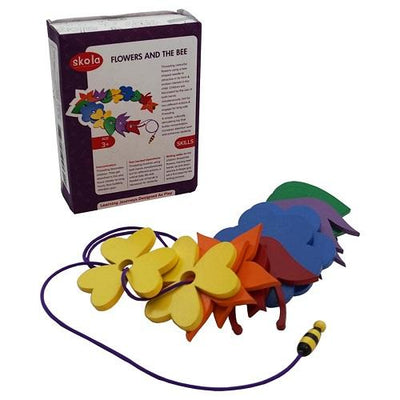
When selecting educational toys for fine motor skills, look for items that require manipulation, such as puzzles with varying knob sizes, lacing beads, or building blocks that demand precise placement. These provide concrete, multi-sensory experiences that directly stimulate brain development.
Another excellent category is puzzles and games, which challenge children to grasp, turn, and fit pieces, enhancing their dexterity and problem-solving skills simultaneously. Similarly, building blocks and construction sets require delicate handling and spatial reasoning, offering endless possibilities for fine motor practice.
Nurturing your child’s fine motor skills is a profound investment in their overall cognitive development and future success. By understanding the science behind dexterity, Indian parents can consciously integrate enriching activities into their children’s daily routines, whether through traditional household tasks or specially designed educational toys.
SkilloToys.com is committed to providing resources that empower this vital development, ensuring every child in Bengaluru and across India has the tools to build a foundation of brilliance. Embrace the science, observe your child’s innate curiosity, and watch their potential unfold with every precise movement.
- Fine motor skills brain development is crucial for cognitive growth, attention, and problem-solving abilities.
- The coordination of small muscles and eyes directly strengthens neural pathways in the prefrontal cortex.
- Neuroscientific studies show fine motor engagement stimulates myelin growth, speeding up neural communication.
- Strong fine motor skills foster independence in daily tasks, from self-care to engaging in cultural practices.
- Maria Montessori emphasized hands as "instruments of intelligence," highlighting practical, purposeful activities.
- Educational toys and Montessori materials are designed to systematically refine dexterity and hand-eye coordination.
How do fine motor skills impact a child's brain development?
Fine motor skills directly impact brain development by strengthening neural pathways, particularly in the prefrontal cortex, which is responsible for executive functions like attention, memory, and problem-solving. Each precise movement helps wire the brain for more complex cognitive tasks.
What are some easy fine motor activities for toddlers at home in India?
Easy fine motor activities for toddlers at home in India include helping with kitchen tasks like kneading small amounts of dough for rotis, transferring dals or rice with fingers, stringing large beads for traditional decorations, or simply playing with water and small containers. These activities build dexterity through everyday engagement.
Why are Montessori toys effective for fine motor skill development?
Montessori toys are effective because they are designed to isolate specific skills, encourage repetition, and provide multi-sensory experiences. Materials like knobbed cylinders and dressing frames offer purposeful activities that systematically refine grip, hand strength, and hand-eye coordination, aligning with a child's natural developmental stages.
Can poor fine motor skills affect a child's academic performance?
Yes, poor fine motor skills can significantly affect a child's academic performance. Difficulties with writing, drawing, cutting, and manipulating classroom materials can lead to frustration, slower task completion, and impact overall learning readiness in subjects like literacy and mathematics.
At what age should parents start focusing on fine motor skill development?
Parents should start focusing on fine motor skill development from infancy, with activities like reaching and grasping, and intensify efforts during the toddler years (12-36 months). Providing varied opportunities for manipulation, exploration, and purposeful play is beneficial from the earliest stages of development.