NEP 2020 Montessori at Home: Foundational Learning Guide
Implementing NEP 2020 Montessori at home effectively bridges national education goals with child-centric learning, empowering children with foundational skills. Research definitively shows that a blended approach combining the National Education Policy's focus on experiential learning with Montessori's structured methodology profoundly impacts early brain development. This strategy ensures a holistic early education experience right within the familiar Indian home environment, setting children up for lifelong success.
Bridging NEP 2020 and Montessori involves integrating the policy's emphasis on experiential, play-based learning with Montessori's structured, self-directed methodology. This matters because it creates a robust framework for developing foundational literacy and numeracy, crucial for a child's cognitive future. Indian parents can adapt Montessori principles to align with NEP 2020's goals, fostering deep, meaningful learning at home.
The Synergistic Core: Montessori Principles & NEP 2020 Alignment
Child development experts agree that Maria Montessori's principles naturally align with the National Education Policy 2020's vision for early childhood care and education. Both frameworks champion a holistic, child-centric approach, emphasizing active learning, critical thinking, and a prepared environment. For instance, NEP 2020 stresses the importance of learning through play, a cornerstone of Montessori pedagogy where children freely choose activities from a curated selection of materials.
This alignment extends to the policy's focus on the "3 H's" – Head, Heart, Hand – mirroring Montessori's emphasis on cognitive, emotional, and practical skill development. By allowing children to explore Montessori Method Learning Materials at their own pace, parents foster intrinsic motivation and concentration, directly supporting NEP 2020's goal of joyful and engaging learning. Such self-directed exploration builds resilience, a vital trait for navigating a complex world.
Studies indicate that children engaged in environments supporting self-directed learning demonstrate higher levels of executive function and problem-solving abilities. Applying Montessori principles like respect for the child, observation, and freedom within limits transforms the home into a dynamic learning laboratory. This approach actively counters concerns about external stressors, like air pollution impacting brain development, by ensuring a stimulating and nurturing indoor learning ecosystem.
Actionable Strategies for Foundational Literacy & Numeracy Activities
To effectively implement NEP 2020 early learning strategies at home, Indian parents can integrate specific Montessori activities for foundational literacy numeracy activities. For literacy, introduce children to sandpaper letters around 3-4 years, allowing them to trace letter shapes and associate sounds, building phonetic awareness. This sensory engagement is far more effective than rote memorization, as research shows multi-sensory learning solidifies neural pathways.
Numeracy development can begin with number rods or spindle boxes, helping children grasp quantity and one-to-one correspondence. Montessori practical life materials, such as pouring water or buttoning frames, enhance fine motor skills crucial for writing, while also teaching independence and order. These activities, often found in Montessori classrooms, are easily replicable at home with everyday objects or specialized materials from SkilloToys.com.
Establishing a dedicated "work cycle" – a period where children choose and engage with an activity without interruption – is a powerful technique. This structured freedom allows for deep concentration and mastery, aligning with NEP 2020's push for conceptual understanding over surface-level knowledge. It's about empowering the child to be the architect of their own learning, guided by their innate curiosity.
Cultivating Experiential Learning for Holistic Growth in India
Experiential learning in India is not confined to textbooks; it thrives through cultural immersion and sensory exploration, aligning perfectly with NEP 2020's holistic vision. Integrating elements of music, art, and dance—hailed by The Times of India as "secret brain growth hacks"—into daily routines naturally boosts cognitive development. Providing art supplies or simple musical instruments allows children to express themselves creatively, enhancing emotional intelligence and spatial reasoning.
The home environment itself becomes a rich learning resource. Engaging children in everyday tasks like helping prepare meals, sorting clothes, or tending to a small home garden offers invaluable practical life skills and a sense of responsibility. These real-world experiences build a strong foundation for understanding scientific concepts and mathematics naturally, fostering a genuine love for learning.
Grandparents, integral to many Indian joint families, play a crucial role in fostering this experiential learning. Their stories, traditional games, and participation in festivals provide rich cultural context and intergenerational learning, connecting children to their heritage. This blend of structured Montessori activities and authentic cultural experiences ensures a truly comprehensive and joyful early education, especially vital in urban areas where outdoor play might be limited due to concerns like air pollution.
Implementing NEP 2020 Montessori at home is a profoundly effective strategy for nurturing well-rounded, capable children ready for India's future. By embracing these research-backed principles, parents are not just educating; they are inspiring a lifelong love for learning, critical thinking, and independent exploration. The synergy between NEP 2020's progressive vision and Montessori's timeless methods offers a clear, actionable path to foundational excellence.
Key Takeaways
- NEP 2020 and Montessori share a core philosophy of child-centric, experiential, and holistic learning.
- Implementing Montessori principles at home effectively supports NEP 2020's foundational literacy and numeracy goals.
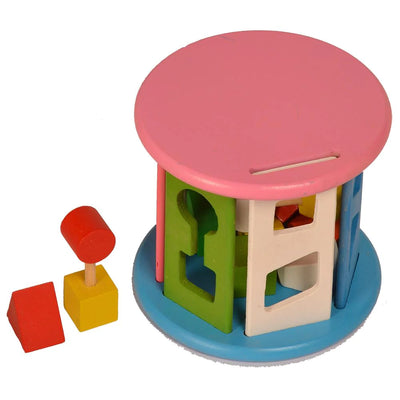
- A prepared environment with self-correcting Montessori sensorial materials fosters deep concentration and self-directed learning.
- Multi-sensory engagement, such as tracing language materials like sandpaper letters, significantly enhances early literacy.
- Integrating practical life activities and cultural experiences, often facilitated by family, promotes holistic development and life skills.
- Research indicates early childhood environments that promote active, independent learning lead to stronger cognitive abilities.
How does NEP 2020 specifically align with Montessori education?
NEP 2020 aligns with Montessori by advocating for experiential, play-based learning, holistic development across cognitive, emotional, and physical domains, and a flexible curriculum. Both frameworks prioritize the child's active participation and self-paced discovery in a prepared learning environment.
What are foundational literacy and numeracy activities for home?
Foundational literacy activities include tracing sandpaper letters, storytelling, and matching phonics. Numeracy activities involve using number rods to understand quantity, counting everyday objects, and sorting by size or color to build mathematical concepts.
Can Montessori materials be used effectively for NEP 2020 goals at home?
Yes, Montessori Method Learning Materials are highly effective for NEP 2020 goals at home because they are designed for hands-on, self-correcting learning. These materials directly support the development of fine motor skills, concentration, and conceptual understanding in literacy and numeracy.
How can Indian parents create a Montessori-inspired learning environment?
Indian parents can create a Montessori-inspired environment by ensuring materials are accessible on low shelves, organizing a dedicated learning space, and allowing children freedom of choice within limits. Focus on order, simplicity, and natural materials to foster independence and concentration.
What role do experiential learning and cultural context play in this blend?
Experiential learning and cultural context are crucial, enriching the blend by connecting academic concepts to real-world Indian experiences and traditions. Engaging in family chores, celebrating festivals, and traditional arts fosters holistic development, social skills, and a strong cultural identity as emphasized by NEP 2020.