Doll House for Kids: Nurturing Imagination & Skills
In an age increasingly dominated by screens, the simple yet profound impact of a doll house for kids often goes unnoticed. As the Deccan Chronicle highlighted in its piece, "Why Play Still Matters in a Screen-Filled Childhood," hands-on, imaginative play is more critical than ever for our children's development. A doll house offers a rich, tactile experience that digital interfaces simply cannot replicate, nurturing crucial skills in young minds.
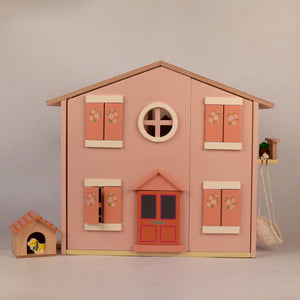
A doll house for kids is a miniature representation of a home, providing a stage for children to enact real-world scenarios and imaginative narratives. This matters because it offers a safe, controlled environment for processing experiences, developing social understanding, and fostering boundless creativity. Indian parents can leverage this powerful tool to nurture crucial developmental skills in their children, balancing screen time with rich, hands-on play.
The Miniature World: A Canvas for Limitless Imagination
Child development experts agree that imaginative play is the bedrock of creative thinking. When a child engages with a doll house, they're not just moving figures around; they're constructing entire worlds, inventing dialogues, and solving miniature problems. This type of imaginative play benefits a child by stimulating the frontal lobe, responsible for planning and decision-making.
Consider a child, perhaps 4-year-old Anya in her Bengaluru apartment, arranging tiny furniture. She might decide her doll family is celebrating Diwali, preparing imaginary ladoos and diyas. This seemingly simple act is a complex exercise in sequencing, spatial reasoning, and cultural storytelling. The doll house becomes a safe space to explore and internalise family traditions, school routines, or even the bustling chaos of a local market, all within the bounds of her creative control.
Building Minds: Cognitive & Problem-Solving Skills
The beauty of Montessori doll house play lies in its open-ended nature. Unlike prescriptive toys, a doll house doesn't tell a child what to do; it invites them to discover. Maria Montessori herself observed that children learn best through self-directed activity within a prepared environment. A doll house, particularly one without overly specific features, becomes such an environment.
Research from institutions like the Harvard Center on the Developing Child consistently points to the importance of complex play for cognitive growth. When a child decides where the kitchen goes, who sits at the dining table, or how to resolve a minor domestic 'crisis' among the dolls, they are actively engaging in problem-solving, planning, and abstract thinking. These seemingly mundane acts of setting up and re-enacting daily life within a doll house are profound exercises in executive function, preparing them for real-world challenges.
Manipulating the small figures and furniture also hones fine motor skills, which are essential for tasks like writing and self-care. It's the same concentration seen when a child works on a challenging puzzle or a detailed activity kit, but with an added layer of narrative depth.
More Than Play: Nurturing Social-Emotional Growth
Doll houses are exceptional role-playing toys that provide a fertile ground for social-emotional development. Children use the dolls to act out scenarios they observe in their own lives—family gatherings, sibling squabbles, or even the arrival of grandparents. This allows them to explore complex emotions, practice empathy, and understand different social roles from a safe distance.
For children in joint families, playing with a doll house can be particularly therapeutic. They can process the dynamics of many people living together, experimenting with how to share, resolve conflicts, and express affection. The American Academy of Pediatrics (AAP) stresses the vital role of play in helping children regulate emotions and develop social competence. When a child narrates a doll's feelings or acts out a comforting scene, they are developing their own emotional literacy and building foundational skills for future friendships and relationships.
Choosing the Right Doll House: A Montessori Approach
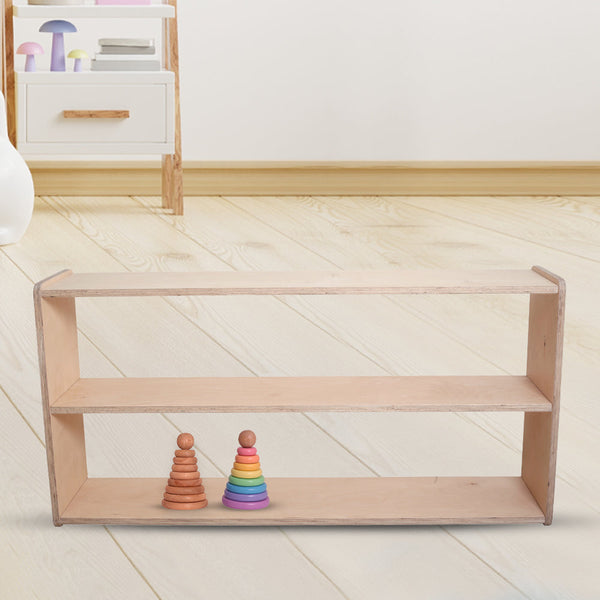
When selecting a doll house for kids, consider options that promote open-ended play over highly structured ones. Look for doll houses made from natural materials like wood, with simple designs that invite imagination rather than dictating it. The absence of excessive detail or electronic components means the child's mind does the heavy lifting, leading to more profound learning.
Think about scale and accessibility. Can your child easily reach all areas of the house? Are the figures and furniture manageable for small hands? SkilloToys offers a range of Montessori-inspired toys, including doll houses, that prioritize child-led exploration and durable, non-toxic materials, ensuring they are not just fun but truly educational.
Bringing Doll House Play to Life in Indian Homes
Integrating doll house play into an Indian household can be wonderfully enriching. Encourage your child to enact scenes inspired by daily life—preparing for a family pooja, a bustling morning routine, or welcoming relatives during a festival. Even school pressure can be playfully explored, with dolls 'studying' or taking 'exams' in a way that helps your child process their own experiences.
Grandparents often play a significant role in nurturing creativity. A dadi or nani sitting alongside a child, asking open-ended questions like, "What are the dolls doing today?" or "How do they solve this problem?" can greatly deepen the play experience. This interaction not only strengthens bonds but also models language and storytelling, reinforcing the value of hands-on creativity that brands like Luxor Crayola aim to foster.
The power of a doll house lies in its simplicity and its ability to reflect the richness of a child's world. By providing this canvas for creative play for kids, we equip them with the imagination, resilience, and social skills necessary to thrive, even in our screen-saturated world. Encourage this essential form of play; watch as their little worlds grow, and with them, their magnificent minds. For more Montessori-aligned options, explore our main Montessori learning materials collection.