DIY Educational Activities: Fun Learning with Homemade Toys
Crafting DIY educational activities at home offers Indian parents a powerful and cost-effective way to foster their children's development, turning everyday items into impactful learning tools. Research shows that engaging with educational toys that children create themselves significantly enhances their problem-solving skills and independence, preparing them for future academic success. With winter setting in across India, and children spending more time indoors, these creative activities become invaluable.
DIY educational activities are child-led learning experiences created from readily available household materials, designed to stimulate cognitive, motor, and sensory development. This approach matters because it makes learning accessible, affordable, and deeply personal. Indian parents can empower their children by transforming simple household items into engaging learning adventures.
The Montessori Advantage in Homemade Learning
The spirit of Montessori, championed by Dr. Maria Montessori, resonates deeply with the DIY approach, particularly in Indian homes. It advocates for a prepared environment where children can explore and learn independently using simple, self-correcting materials. Child development experts globally emphasize that hands-on exploration builds robust neural pathways. Often, grandmothers (dadis and nanis) instinctively practice Montessori-like methods, engaging children in tasks like sorting pulses or kneading atta, fostering practical life skills and deep learning.
By adapting Montessori principles to homemade learning games, you're not just creating a toy; you're nurturing a child's innate curiosity and independence. This is especially relevant when considering reports like those from The Economic Times, highlighting the rising costs of child enrichment. DIY options offer a smart, sustainable path to quality education right in your living room.
Simple & Engaging DIY Educational Activities for Every Home
No need for expensive purchases to provide rich learning experiences. Your home is a treasure trove of potential. Here are some achievable DIY educational activities:
Busy Bags and Activity Boxes for Focus
For toddlers and preschoolers, busy bags or activity boxes are fantastic for developing concentration and fine motor skills. Fill small pouches or shoeboxes with various simple tasks: pipe cleaners to thread through colander holes, clothes pegs to clip onto cardboard, or buttons to sort by colour into small bowls. These self-contained activity kits can be rotated to keep interest fresh, offering a dedicated space for quiet, independent work.
Consider a 'Diya Decorating' busy box around festivals. Provide plain terracotta diyas, non-toxic paints, cotton swabs, and some glitter. Children practice fine motor control, explore colours, and engage culturally, all while developing a sense of accomplishment. This kind of activity fosters both skill development and appreciation for Indian traditions.
Kitchen Creations: Learning Through Everyday Play
Your kitchen is a sensory wonderland for homemade learning games. Pouring and scooping activities with lentils, rice, or semolina in large trays teach volume, measurement, and cause-and-effect. Provide different sized cups, spoons, and funnels. NCERT's foundational learning framework emphasizes sensory exploration as critical for early cognitive development.
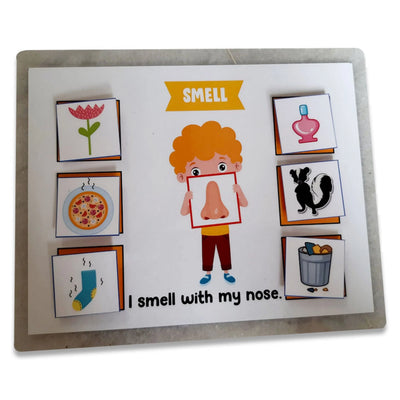
For older children, involve them in simple cooking tasks like rolling rotis (which builds hand strength and coordination) or sorting spices. These activities not only teach practical life skills but also integrate maths, science, and cultural knowledge naturally. The feel of the dough, the smell of the spices – these sensory inputs create lasting learning memories.
Crafting Cognitive Skills with Fine Motor Fun
Activities that involve precise hand movements are crucial for developing learning toys for kids that support pre-writing skills and overall dexterity. A simple 'Bindi Sorting' activity, where children sort different coloured bindis onto paper circles, hones colour recognition and fine motor skills. You can also use old newspapers for tearing, crumbling, and pasting, fostering creativity and hand-eye coordination.
Create a 'Shape Rangoli' by drawing various geometric shapes on the floor with chalk or tape. Have your child fill them with coloured rice or sand using their fingers. This activity teaches shapes, colours, and patterns, mimicking traditional Indian art forms while enhancing grip and control. The beautiful visual outcome adds to the child's joy.
Cultivating Curiosity: More Than Just Activities
The true magic of DIY educational activities isn't in their cost or complexity, but in how they empower the child's natural curiosity and independence. Simple, open-ended materials often promote deeper imaginative play and problem-solving than complex, pre-programmed toys because they require the child to do the imagining and creating. This approach complements purpose-designed Montessori learning materials by fostering a mindset of active exploration.
Ultimately, the most enriching experience comes from your presence and engagement. As the winter chill settles in, making indoor time meaningful with these homemade wonders can transform your home into a dynamic learning lab. You're not just occupying time; you're building foundational skills and creating cherished memories with your little ones.