Toys for 4 Year Old Boys: Montessori for Problem-Solving
When it comes to selecting the best toys for 4 year old boys, especially in today's competitive urban Indian landscape, parents are increasingly looking for more than just entertainment. They seek tools that cultivate sharp minds. Montessori educational toys excel at precisely this, offering a unique pathway to developing crucial problem-solving skills and critical thinking from an early age.
Montessori for critical thinking is a hands-on approach where children learn by doing, exploring, and self-correcting. This educational philosophy, developed by Dr. Maria Montessori, asserts that a child's natural curiosity is the engine of learning. Instead of being told answers, children are presented with materials that allow them to discover solutions independently, a cornerstone of cognitive development.
Why 4-Year-Old Boys Need Targeted Problem-Solving Toys Now
At four years old, a child's brain is a hive of activity, making rapid connections and developing more sophisticated thought processes. Child development experts agree that this is a critical window for fostering logical reasoning and the ability to test hypotheses. As highlighted in discussions around developmental milestones, children at this age are moving beyond simple cause-and-effect to understanding more complex sequences and relationships. This cognitive leap demands engagement with purposeful toys.
For many Indian parents, the pressure of future schooling and entrance exams is very real, even for a four-year-old. This often leads to a desire to 'help' children quickly solve challenges to avoid frustration. However, research consistently shows that allowing a child to grapple with a problem, to experience that 'productive struggle,' is precisely how their brain builds robust pathways for resilience and true problem-solving. When a 4-year-old boy in a Bengaluru apartment tries to fit a block into a specific slot and fails, then tries again differently, he's not just playing; he's actively constructing his cognitive architecture.
Montessori Toys for Critical Thinking: More Than Just Play
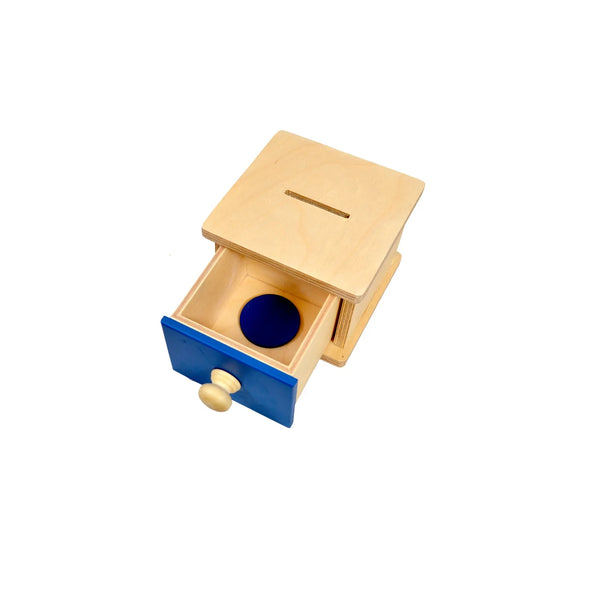
Unlike many passive toys, Montessori problem-solving toys are designed to engage a child's intellect deeply. They are not flashy or noisy; their beauty lies in their simplicity and purposeful design. Each material has a specific learning objective, often with a built-in 'control of error' that allows the child to see if they've made a mistake and correct it themselves, fostering independence.
Consider the classic Knobbed Cylinders, a cornerstone of Montessori materials. A child must discern subtle differences in height and diameter, making judgments and refining their spatial reasoning. This isn't about memorizing; it's about actively comparing, contrasting, and problem-solving through trial and error. Similarly, Montessori Method Learning Materials, including geometric puzzles and constructive triangles, encourage spatial awareness, pattern recognition, and the ability to break down complex shapes into simpler components – all vital critical thinking skills.
Building Logic & Resilience: Key Problem-Solving Toys for 4-Year-Old Boys
When selecting educational toys for 4 year olds with a focus on problem-solving, look for materials that invite sustained concentration and logical thought. These are the tools that will prepare your child not just for school, but for navigating the complexities of life in a fast-evolving world.
- Geometric Puzzles: These go beyond simple jigsaw puzzles. They require understanding how shapes fit together to form a larger whole, promoting spatial reasoning and visual discrimination.
- Stacking & Nesting Materials: From simple rings to complex towers, these toys challenge a child to order by size, quantity, or colour, enhancing logical sequencing and numerical understanding.
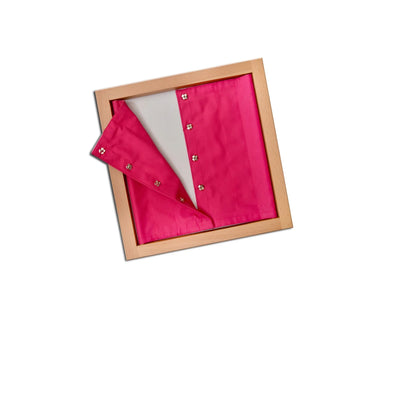
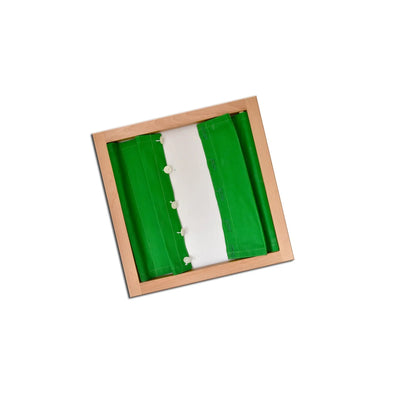
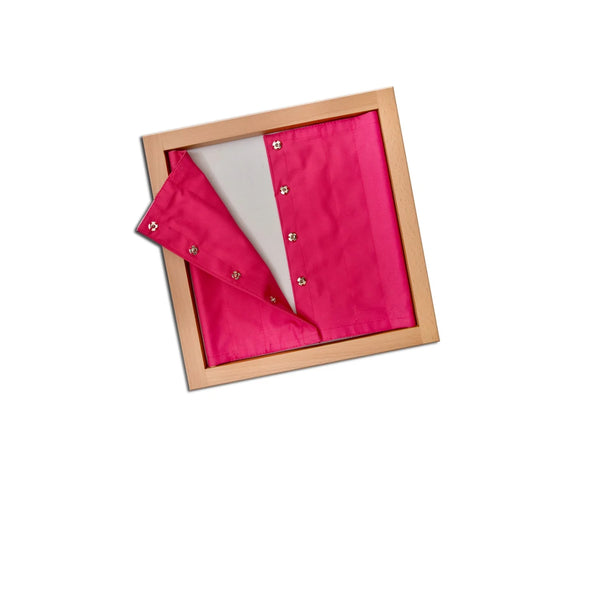
- Practical Life Activity Kits: Beyond traditional toys, Montessori practical life activities, often found in activity kits, involve real-world tasks like pouring, transferring, or buttoning. These activities, though seemingly simple, require sequencing, precision, and problem-solving to complete successfully, building focus and coordination.
- Constructive Triangles: These sensorial materials allow children to explore geometric relationships by combining triangles to form various polygons, laying a strong foundation for mathematical and spatial thinking.
Daily Montessori Activities for Critical Thinking at Home
Integrating Montessori activities for critical thinking into your daily routine doesn't require a dedicated classroom. It's about a shift in approach, even in a busy Indian household with grandparents and extended family.
For instance, involve your child in simple kitchen tasks like sorting lentils or arranging cutlery. Ask them open-ended questions: "Which spoon is longest?" or "How can we make sure all the rotis fit on the plate?" Encourage them to find their own solutions. If a tower of blocks falls, resist the urge to rebuild it for them; instead, ask, "What made it fall? How could you try building it differently next time?" This empowers them to think critically and learn from experience.
Remember, the goal isn't just to find the right Indian kids learning toys, but to create an environment where a 4-year-old boy feels empowered to explore, question, and solve problems independently. This foundational work in problem-solving and critical thinking will serve him well, whether he's navigating a crowded Diwali celebration or tackling complex challenges in school years later.