Children Absorb Language Fastest Before Age 3
Imagine a tiny sponge, soaking up every drop of water effortlessly. That's precisely what your child's mind is like during their early years, especially when it comes to language. Did you know children absorb language fastest before age 3? This isn't just a fascinating fact; it's a profound insight that Montessori education embraces, highlighting a golden window of opportunity for your little one's linguistic journey.
This remarkable capacity is what Dr. Maria Montessori termed the "absorbent mind." The absorbent mind is a unique period from birth to age six where children learn unconsciously and effortlessly, internalizing everything from their environment. This works because their brains are highly plastic, forming countless neural connections at an astonishing rate. Parents can consciously prepare a rich environment that caters to this natural drive, especially for language.
The Power of the Absorbent Mind in Early Language
Why Age 0-3 is a Linguistic Superpower Window
From the moment they are born, babies are tuned into the sounds around them, discerning patterns and attempting to mimic them. This period before age three is not merely about learning words; it's about grasping the entire structure of language – grammar, syntax, pronunciation, and even intonation. Think of how a child in an Indian home naturally picks up phrases in Hindi, Kannada, or Tamil, along with English, often without explicit lessons. Their brain is wired for this rapid acquisition.
Montessori education recognizes this innate drive, encouraging adults to provide rich, meaningful language experiences. It's about respecting the child's inner teacher and offering them the tools and environment to explore language at their own pace. This critical period allows children to build a robust linguistic foundation that supports all future learning and cognitive development.
Montessori at Home: Fostering Language Development in India
Everyday Language Richness in Indian Homes
Indian homes are often a vibrant tapestry of languages, stories, and sounds. Whether it's the comforting lullabies (loris) sung by grandparents, the chatter of a joint family during a festival, or the simple naming of vegetables at the local market, our children are constantly immersed in a linguistic feast. Embrace this natural richness! Talk to your child in your mother tongue, share traditional stories, and describe the world around them.
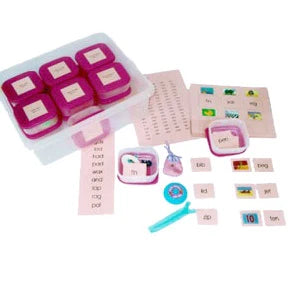
Creating a language-rich environment doesn't require elaborate setups. It means engaging your child in conversations, even when they can only babble back. Point out the 'aloo' and 'pyaz' in the kitchen, narrate your daily activities, and involve them in simple routines like sorting clothes by colour. For structured support, explore our range of Montessori language materials designed to enhance vocabulary and phonetic awareness.
Simple Montessori Learning Activities for Toddlers
Creating a Language-Rich Environment with Educational Toys
Montessori principles emphasize hands-on, concrete learning. For toddlers, this translates into activities that link objects with their names. Simple nomenclature cards, showing a picture with its corresponding word, are excellent for building vocabulary. When you introduce a new fruit, show them the real fruit, let them touch and feel it, and then say its name clearly.
Reading aloud is one of the most powerful activities. Snuggle up with a book every day, pointing to pictures and asking questions. Even if they don't understand all the words, they absorb the rhythm of language and associate reading with warmth and connection. SkilloToys offers a variety of educational toys for toddlers that subtly promote language development through play, from puzzles that teach object names to nesting toys that introduce concepts like 'big' and 'small'.
Supporting Child Development in India Through Language
Beyond Words: The Impact of Early Language on Cognitive Growth
The ability to communicate effectively is fundamental to a child's overall development. Early language skills are not just about speaking; they are deeply intertwined with cognitive development, problem-solving abilities, and even emotional regulation. A child who can articulate their needs and feelings is better equipped to navigate their world.
By investing in your child's early language development, you are nurturing their ability to think, reason, and understand complex concepts. Montessori learning activities provide a structured yet child-led approach to this crucial journey, ensuring that every interaction and material supports their natural developmental trajectory. Discover how our Montessori learning activities can enrich your child's formative years.
Embrace this incredible period when your child's mind is a vibrant sponge, eager to soak up every word, story, and song. By being present, engaging, and offering thoughtful materials, you're not just teaching language; you're unlocking a world of potential. Explore SkilloToys.com for resources that honour your child's natural capacity to learn and thrive.