DIY Montessori Continent Box for Geography Learning
As parents, we constantly seek meaningful ways to engage our little ones, especially when it comes to understanding the vast world around them. What if we told you that teaching geography could be as simple and fun as a treasure hunt right in your living room? This is where the magic of a DIY Montessori continent box comes in, offering a wonderful, tactile way for children to explore the globe from the comfort of their Indian homes.
A Montessori continent box is a hands-on geography material designed to introduce children to the seven continents. Typically, it involves a box divided into compartments, with each compartment representing a continent and containing small, representative items from that region. This works because it taps into a child's natural curiosity and provides a concrete, sensorial experience of abstract concepts, aligning perfectly with Maria Montessori's philosophy of learning through doing. Parents can create their own version at home using readily available materials, transforming geography lessons into an exciting discovery game.
Why a DIY Continent Box for Your Indian Home?
In many Indian homes, especially in bustling cities like Bengaluru, space can be a premium. A DIY continent box is incredibly adaptable, fitting into small apartments or a dedicated learning corner. It's also a fantastic way to involve the whole family – grandparents can share stories of their travels, older siblings can help gather items, making it a true joint family activity. This approach embodies Montessori at home India, showing that effective learning doesn't require elaborate setups but rather thoughtful engagement and practical life skills.
Gathering Your Materials: A Local Scavenger Hunt
Creating your DIY continent box can be an adventure in itself. You don't need expensive imported items; instead, look around your home or local markets. For the box itself, a simple shoe box, a sturdy cardboard box, or even a repurposed sweet box (mithai ka dibba!) can work beautifully. Divide it into seven sections using cardboard dividers or small containers.
Now for the fun part: collecting items! Think about what each continent represents culturally and geographically. For Asia, think about the rich tapestry of Indian culture – a miniature chai cup, a small sari border fabric, or even a tiny wooden elephant can represent our diverse continent. Africa might be represented by a toy safari animal, a piece of colourful printed fabric (like a small bandhani swatch for comparison), or a few pebbles collected from a local park to represent its vast landscapes. Europe could feature a miniature replica of a famous landmark (like a tiny Eiffel Tower charm) or a small coin from a European country if you have one. For North America, perhaps a small toy car or a miniature flag, while South America could have a tiny coffee bean sachet or a colourful feather. Australia could host a toy kangaroo or a boomerang-shaped cookie cutter, and Antarctica, a piece of white cotton wool or a small ice cube (if you're brave!). The beauty of this DIY Montessori continent box is its flexibility; it's about the conceptual representation, not perfection.
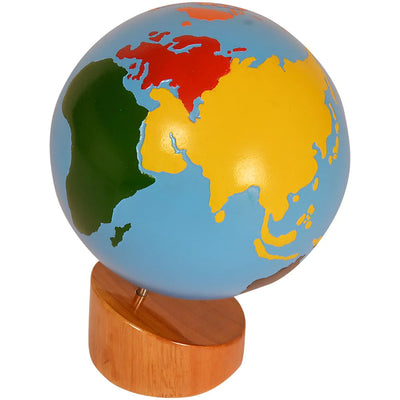
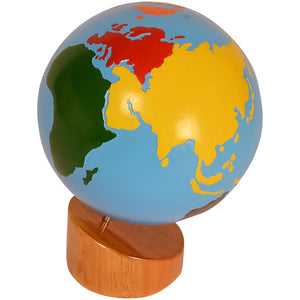
While DIY is fantastic, for those looking for curated, high-quality resources, SkilloToys offers a range of Montessori geography materials that beautifully complement home learning and can be introduced as your child's interest grows.
Setting Up Your Continent Box: Invitation to Learn
Once your box is assembled and items gathered, the presentation is key. Place the box on a low shelf or mat where your child (from toddlerhood to early school years) can easily access it. Introduce one continent at a time, or present the whole box as a 'mystery box' for them to explore. Remember, the Montessori approach emphasizes child-led discovery. Let your child touch, examine, and ask questions about each item. You can introduce the name of the continent and point it out on a simple world map or globe.
Activities and Extensions: Beyond the Box
The continent box isn't just about identifying items; it's a springboard for countless educational toys for toddlers and preschoolers, encouraging deep exploration and cognitive development. After exploring the items, you can:
- Storytelling and Cultural Immersion: Weave tales around the items. 'This little elephant reminds us of the majestic animals in Africa, where the sun shines bright.' Or, 'This piece of silk from Asia tells us about weavers with nimble fingers creating beautiful fabrics.' Encourage your child to share their own imaginative stories, fostering language development and creativity.
- Matching Games and Classification: Create small picture cards of items from each continent or even flags and landmarks. Have your child match these to the physical objects in the box, reinforcing visual recognition and classification skills. This helps develop early logical thinking, a core aspect of child development India.
- Map Work and Spatial Reasoning: Introduce a simple world map or a Montessori puzzle map (available at SkilloToys.com) alongside the box. Ask your child to place the items onto the correct continent on the map, helping them connect the concrete object to its geographical location. This builds spatial reasoning and a foundational understanding of global geography.
- Creative Play and Role-Playing: Encourage your child to use the items to create their own 'journeys' or 'adventures' across the continents. They might imagine taking a toy animal to its home continent or sending a tiny 'letter' from one continent to another. This imaginative play is vital for social-emotional growth and problem-solving. Many of our activity kits are designed to extend such exploration, from crafting to fine motor skill development.
Fostering a Global Perspective from an Early Age
Introducing geography through a DIY Montessori continent box does more than just teach names and places. It cultivates a sense of wonder, respect for diversity, and an understanding that our world is interconnected. By experiencing different cultures through tangible objects, children develop empathy and a broader worldview – invaluable traits in our increasingly global society. This foundational understanding can be further nurtured with a wide range of Montessori learning materials that support holistic development and cater to various developmental milestones.
Key Takeaways for Your DIY Montessori Continent Box:
- A DIY Montessori continent box offers an accessible, hands-on way for young children (0-6 years) to learn geography at home.
- It utilizes everyday or locally sourced materials, making it ideal for Indian homes and promoting sustainable practices.
- The activity fosters child-led discovery, sensorial learning, and a concrete understanding of abstract global concepts.
- Engaging in this activity supports key developmental milestones, including cognitive growth, fine motor skills, and cultural awareness.
- It encourages family involvement and helps cultivate a global perspective and respect for diversity from an early age.
What age is appropriate for a Montessori continent box?
A Montessori continent box is generally suitable for children aged 3-6 years, as they begin to develop an interest in the world beyond their immediate surroundings. Younger children (toddlers) can also explore the items with supervision, focusing on sensorial exploration rather than specific continent identification.
How can I make the continent box relevant to Indian culture?
Incorporate items representing India within the Asia section, such as miniature cultural symbols, spices, or small pieces of traditional fabric. You can also discuss how India connects to other continents through trade, festivals, and global events, making the learning deeply personal and culturally relevant.
What if I don't have many small items for each continent?
Don't worry! You can start with just one or two representative items per continent. Alternatively, use laminated pictures of famous landmarks, animals, or cultural artifacts from each region. The key is to provide a concrete representation that sparks curiosity and discussion.
How often should we use the DIY continent box?
Introduce the continent box when your child shows interest, and allow them to engage with it at their own pace. Regular, short engagements are more effective than long, forced sessions. You can revisit it weekly or whenever your child expresses curiosity about different places.
Creating a DIY Montessori continent box is a beautiful journey that brings the world closer to your child. It's about fostering curiosity, respect, and a love for learning that lasts a lifetime. At SkilloToys.com, we believe in empowering parents with tools and knowledge to nurture bright, engaged minds, right here in India.