Raising Bilingual Children the Montessori Way in India
In the vibrant tapestry of Indian homes, where often multiple languages are spoken daily, the prospect of raising bilingual children the Montessori way in India feels wonderfully intuitive. Imagine your little one, a tiny sponge, soaking up the melodies and meanings of Hindi, Kannada, English, or their mother tongue, all with the gentle, respectful guidance that Dr. Maria Montessori advocated. It’s not just about speaking two languages; it’s about opening up entire worlds of culture, connection, and cognitive development for your child.
Bilingualism, in the Montessori context, is the natural acquisition of two or more languages, often simultaneously, through rich exposure and interaction within the child's environment. This works because young children, especially during the 0-6 age range, possess an 'absorbent mind' – an extraordinary capacity to effortlessly absorb information from their surroundings, including language. Parents can intentionally create a language-rich environment at home, providing consistent exposure and encouraging active engagement in each language, rather than formal lessons.
The Montessori Approach to Language Development
Dr. Maria Montessori observed that children have sensitive periods for language acquisition, most profoundly between birth and six years. During this time, they are innately driven to communicate and understand. In India, this natural drive is often amplified by the linguistic diversity present in most families, whether it's grandparents speaking a regional language, parents conversing in English, or the vibrant sounds of the neighbourhood.
The Montessori philosophy trusts the child's inner guide. It’s not about pushing language, but presenting it in an inviting way. Our goal is to create an environment where the child can spontaneously discover and internalise the structures and vocabulary of different languages, just as they learn to walk or explore their surroundings.
Creating a Language-Rich Prepared Environment at Home
A 'prepared environment' is key to Montessori at home India. This doesn't require a large space or fancy setups. In a typical Indian apartment or joint family home, it means making conscious choices about language exposure. Talk to your child constantly in different languages – narrate your daily activities, describe objects, sing traditional lullabies or bhajans, and tell stories about Indian festivals. Encourage grandparents to speak in their mother tongue, offering a precious linguistic link to their heritage.
Provide access to good quality children's books in each target language. Reading aloud is one of the most powerful tools for language development. Furthermore, incorporating Montessori language materials can significantly enrich this environment, offering tactile and visual pathways to understanding words and sounds.
The Power of One Person, One Language (OPOL) – Or Not!
The One Person, One Language (OPOL) strategy, where each parent consistently speaks a different language to the child, is a well-known method. For instance, Papa speaks Kannada and Mama speaks English. While effective, it's not the only way, especially in complex Indian family structures. What matters most is consistent exposure and genuine interaction in each language.
If a strict OPOL isn't feasible, consider a 'Time and Place' approach (e.g., one language at home, another at school, or one language for specific activities). The key is clarity and consistency, ensuring the child receives regular, meaningful input in each language without confusion. Don't worry about 'mixing' languages initially; it's a natural stage in bilingual acquisition and not a sign of confusion.
Engaging with Montessori Materials for Bilingual Learning
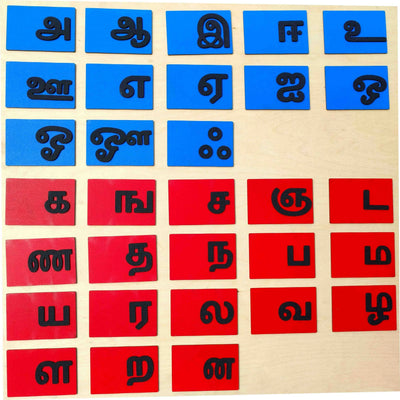
Montessori educational toys for toddlers are designed to appeal to their senses and foster independent learning, making them perfect for bilingual development. For instance, sandpaper letters can be introduced in English, Hindi (Devanagari script), or even regional scripts like Kannada or Tamil. The child traces the letter, hears its sound, and connects it to a word, building a strong multi-sensory foundation.
The Movable Alphabet allows children to construct words and sentences before they can physically write. This can be done in multiple languages, helping them explore phonetic sounds and word formation. Practical life activities, like pouring rice or sweeping a small area, can be accompanied by instructions and vocabulary in both languages, expanding their functional understanding. These Montessori learning activities are incredibly adaptable.
Embracing Cultural Nuances and Indian Festivals
Language is deeply intertwined with culture. In India, festivals like Diwali, Holi, or Pongal offer fantastic opportunities for language immersion. Narrate the stories behind the festivals in different languages, teach songs associated with them, or cook traditional dishes while naming ingredients and steps in both languages. This holistic approach connects language to real-life experiences, fostering a richer child development India.
Introduce traditional stories, rhymes, and art forms from different regions of India in their native languages. This not only enhances linguistic skills but also instils a sense of pride in their diverse heritage, making language learning a joyful journey of discovery.
Nurturing Your Child's Natural Curiosity
At the heart of Montessori is respect for the child's individuality and their innate capacity to learn. Trust that your child is perfectly capable of absorbing multiple languages without being overwhelmed. Observe their interests, follow their lead, and provide opportunities for genuine interaction rather than drilling vocabulary. The goal is to cultivate a love for language and communication, allowing them to naturally gravitate towards expressing themselves in whichever language feels most comfortable at that moment.
Your role is to be a facilitator, a gentle guide, and a rich source of linguistic input. By consistently offering a respectful and stimulating environment, you’re laying the foundation for a lifetime of articulate expression and cultural appreciation.
Key Takeaways for Raising Bilingual Children the Montessori Way:
- **Embrace the Absorbent Mind (0-6 years):** Children naturally soak up languages during this sensitive period for language acquisition.
- **Create a Language-Rich Prepared Environment:** Consistent exposure through conversation, reading, and cultural activities is crucial for Montessori at home.
- **Flexibility with Language Strategies:** While OPOL is an option, consistent and meaningful exposure is paramount, adapting to diverse Indian family structures.
- **Utilise Montessori Language Materials:** Tools like Sandpaper Letters and the Movable Alphabet support multi-sensory learning for various scripts and phonics.
- **Integrate Language with Culture:** Connect language learning to Indian festivals, traditional stories, and daily life for deeper understanding and appreciation.
- **Trust the Child's Inner Guide:** Observe, follow their lead, and provide authentic opportunities for communication in all languages, fostering overall child development.
FAQ: Raising Bilingual Children the Montessori Way
Is it confusing for children to learn two languages at once?
No, extensive research shows that children are not confused by learning multiple languages simultaneously. Mixing languages is a normal and temporary stage in bilingual development, indicating their brain is actively sorting and processing linguistic information.
What if I'm not fluent in all languages I want my child to learn?
You don't need to be perfectly fluent in every language. Focus on your strongest language and create opportunities for your child to interact with others who are fluent, like grandparents, family members, or caregivers. Resources like books, songs, and age-appropriate media can also supplement.
When should I start teaching my child a second language?
The earlier, the better, ideally from birth. Children have an incredible capacity for language acquisition during their first six years. Early exposure allows them to absorb languages with native-like pronunciation and grammar.
How does Montessori handle different scripts (e.g., Devanagari, Kannada, English)?
Montessori materials like Sandpaper Letters and the Movable Alphabet can be adapted for different scripts. The multi-sensory approach (tracing, sounding out) helps children connect the visual form of the script to its phonetic sound, regardless of the language.
Nurturing bilingualism through the Montessori lens is a gift of connection and cognitive richness you can offer your child. Explore our wide range of Montessori method learning materials and educational toys at SkilloToys.com to support your child's remarkable language journey right here in India.