Toddlers Learn Math with Objects, Not Just Numbers
As Indian parents, we often start teaching our little ones to count 'one, two, three' from a very young age, perhaps even before they can properly say the words. But here's a fascinating Montessori insight: **toddlers learn maths through physical objects**, not just by memorising abstract numbers. This approach understands that for children aged 0-6, especially toddlers, their hands are their best teachers, and concrete experiences lay the strongest foundation for future mathematical understanding.
What does it truly mean that toddlers learn maths through physical objects? This approach champions hands-on exploration where children interact with tangible items to grasp concepts like quantity, size, sequence, and comparison. This works because a young child's brain is wired for sensory input and concrete thinking; abstract symbols like '1' or '2' hold little meaning until they can associate them with something they can see, touch, and manipulate. Parents can foster this by providing a rich environment with everyday objects and purposeful educational toys that invite such exploration.
Why Concrete Experiences Are Key for Early Math
Think about a toddler exploring a pile of colourful bangles or lining up their toy cars. They aren't just playing; they're intuitively sorting, comparing, and ordering – all fundamental mathematical concepts. Maria Montessori observed that children have an absorbent mind, soaking up knowledge from their environment. When this environment offers concrete materials, the learning is deep and meaningful, leading to genuine understanding rather than superficial memorisation.
This method respects the natural trajectory of child development in India, moving from the known to the unknown, from the concrete to the abstract. Instead of simply reciting numbers, children learn that 'three' isn't just a word, but a specific quantity they can hold, stack, or count. This foundation makes later abstract mathematical concepts much easier to grasp, reducing frustration and building confidence.
From Rajma to Rods: Montessori Math in Your Indian Home
You don't need a fancy classroom to introduce Montessori math at home in India. Our homes are already brimming with materials! Consider a bowl of rajma beans, chickpeas, or even a collection of colourful beads from a broken necklace. These can be used for counting, sorting by size or colour, and even simple addition and subtraction as your child grows. Imagine little hands carefully placing three kumkum bindis into a small box – they are learning quantity through action.
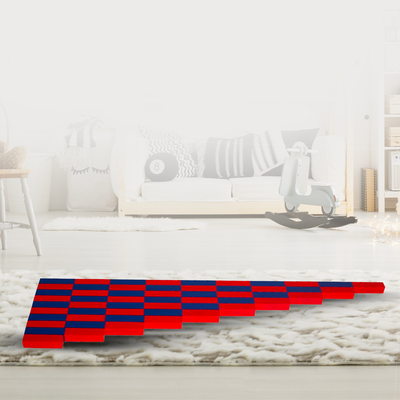
For a more structured approach, Montessori materials like the Number Rods or the Spindle Box are brilliant. The Number Rods, for instance, are a set of ten wooden rods, varying in length, each divided into red and blue segments. Children not only learn to count but also visually and physically experience the quantities from one to ten, understanding that 'three' is shorter than 'five', and 'ten' is the longest. This kind of Montessori learning activities is far more impactful than just seeing a numeral on a flashcard.
Beyond Counting: Building Number Sense with Educational Toys
Early math isn't just about counting; it's about developing 'number sense' – an intuitive understanding of numbers and their relationships. This includes recognising patterns, understanding one-to-one correspondence, and grasping concepts like 'more than' or 'less than'. High-quality educational toys for toddlers, especially those made from natural materials like wood, are perfect for this.
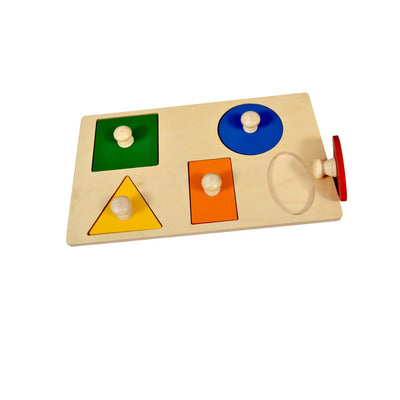
Blocks, nesting cups, or even simple puzzles encourage children to compare sizes, match shapes, and understand spatial relationships. When a child stacks blocks from largest to smallest, they're engaging in seriation, a key pre-math skill. These aren't just playtime activities; they are critical hands-on experiences that build a robust mathematical foundation without the pressure of formal lessons.
The Montessori Approach to Early Math Learning
Maria Montessori believed in a prepared environment that allows children to explore and discover at their own pace. In a Montessori setup, math materials are designed to isolate concepts, allowing the child to focus on one idea at a time. For example, the Pink Tower teaches size differentiation, indirectly preparing the child for decimal system concepts, while the Broad Stair teaches thickness and sequence.
This self-correcting nature of many Montessori materials means children can discover their own errors and correct them independently, fostering problem-solving skills and self-reliance. This is particularly valuable in busy Indian homes, perhaps with joint families or limited space, where independent play allows parents to manage other responsibilities while knowing their child is engaged in meaningful learning.
Practical Tips for Parents: Encouraging Math Exploration
- Use Everyday Objects: Involve your child in sorting lentils, pairing socks, or arranging vegetables by size during meal prep.
- Count Everything: Count the steps to the kitchen, the spoons on the table, or the number of rotis for dinner.
- Play with Quantity: Ask, “Do you want two biscuits or three?” and let them choose and count.
- Introduce Montessori-Inspired Toys: Look for quality materials like stacking rings, counting frames, or size-sorting puzzles that offer concrete experiences.
- Focus on Language: Use descriptive words like 'more', 'less', 'taller', 'shorter', 'heavy', 'light' in everyday conversations.
Key Takeaways
- Toddlers develop mathematical understanding through physical interaction with objects, not abstract numbers.
- Concrete experiences lay the foundation for future abstract math concepts.
- Everyday items in Indian homes can be powerful tools for early math learning.
- Montessori materials are designed to isolate math concepts and provide self-correcting learning.
- Encouraging hands-on play and using mathematical language are crucial for developing number sense.
Frequently Asked Questions About Early Math Learning
At what age should I introduce numbers to my child?
While children may start reciting numbers around 2-3 years, a true understanding of quantity typically begins to develop between 3-6 years through consistent, concrete experiences. Focus on connecting numbers to quantities they can see and touch first.
Can my toddler learn math without formal teaching?
Absolutely! Toddlers are naturally curious mathematicians. By providing a rich, stimulating environment with opportunities for hands-on exploration and play, they will naturally develop foundational math skills long before formal schooling.
What Montessori materials help with early math?
Key Montessori materials for early math include Number Rods, Spindle Box, Golden Beads for larger quantities, and even the Pink Tower and Broad Stair for indirect preparation of mathematical concepts like grading and sequencing.
How is this different from traditional learning methods?
Traditional methods often introduce numbers and operations abstractly (e.g., flashcards, rote memorisation). The Montessori way, however, ensures children first grasp concepts concretely using tangible materials, moving to abstraction only once a solid understanding is formed.
Embracing this understanding means giving our children the gift of a solid mathematical foundation rooted in real-world experiences. At SkilloToys.com, we are passionate about providing educational toys that support this journey, helping your child explore the magic of math through their own hands.