Cognitive Skills for LKG Readiness: Early Advantage
Developing essential cognitive skills for LKG readiness is crucial for giving Indian children an early learning advantage that profoundly impacts their future academic success. Child development experts agree that foundational cognitive abilities, such as attention, memory, and problem-solving, are vital for navigating the demands of primary schooling in India.
This early advantage not only eases the transition into LKG but also sets the stage for a lifelong love of learning, as highlighted by recent discussions in Indian media about improving learning levels in Grade 1.
What are Cognitive Skills for LKG Readiness?
Cognitive skills for LKG readiness are the mental abilities that enable a child to process information, think, reason, and remember. This matters because these skills are fundamental for academic learning, social interaction, and adapting to new environments. Indian parents can proactively foster these skills through purposeful play and a stimulating home environment.
As Indian parents, the journey to prepare your little one for LKG and UKG can feel like a significant milestone, often accompanied by anxieties about academic readiness for preschool India. Recent Google News headlines, like 'The early advantage: Learning levels in grade 1' and articles from ET Education, clearly reflect the growing national conversation around foundational learning. This guide aims to reassure and empower you by breaking down the key cognitive skills that truly matter, showing how Montessori principles offer a powerful, child-centric approach.
Focus and Attention: The Foundation of Early Learning Advantage
Sustained attention and concentration are paramount for any child entering LKG. The ability to focus on a task, listen to instructions from teachers, and engage with learning materials without constant distraction forms the bedrock of all other learning. Without this, even the most brilliant child can struggle to absorb new concepts.
The Montessori method excels in cultivating this crucial skill through a meticulously prepared environment and self-directed learning. Children engage with activities for extended periods, choosing work that interests them and developing an innate sense of concentration. Practical Life materials, like pouring, transferring, and sweeping, are excellent tools that naturally build focus and coordination, preparing children for the structured environment of a classroom.
Research shows that children who can maintain focus for longer periods by age four exhibit significantly better academic outcomes later on. Encouraging activities where your child can concentrate without interruption, even for short bursts, fosters this vital Practical Life materials skill.
Memory and Recall: Fueling Academic Readiness for Preschool India
Memory, encompassing both working memory (short-term) and long-term memory, is critical for academic success. From remembering rhymes and stories to recalling numbers and letters, a strong memory foundation helps children absorb and retrieve information efficiently. This is a core component of overall preschool learning levels.
Montessori education strengthens memory through multi-sensory exploration and repetition, not rote learning. When a child manipulates a Pink Tower, they not only learn about size but also recall the sequence and order through muscle memory. Similarly, engaging with sensorial materials repeatedly helps consolidate information into long-term memory.
Experts agree that activities like storytelling, discussing daily events, and asking 'what happened next?' questions significantly boost a child's recall abilities. Providing opportunities to revisit familiar concepts in new ways reinforces learning and memory retention.
Problem-Solving and Critical Thinking: How to Prepare Child for LKG Academically
Beyond rote memorization, the ability to problem-solve and think critically is a hallmark of true academic readiness. Children entering LKG benefit immensely from being able to identify challenges, explore solutions, and understand cause and effect. This skill empowers them to approach new tasks with confidence rather than frustration.
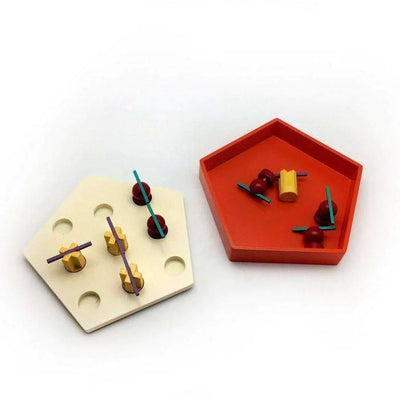
Montessori principles nurture problem-solving through hands-on, self-correcting activities. Children are encouraged to discover solutions independently, for example, by fitting shapes into a Geometric Cabinet or completing various Montessori puzzles. The built-in control of error in these materials allows them to learn from their mistakes without adult intervention, building resilience and analytical skills.
Providing open-ended play opportunities and asking 'how' and 'why' questions rather than giving immediate answers helps cultivate a child's natural curiosity and problem-solving aptitude. This prepares them not just for LKG, but for navigating life's challenges.
Language and Communication: Essential for Preschool Learning Levels
Strong language and communication skills are non-negotiable for success in LKG. This includes a robust vocabulary, comprehension of spoken instructions, and the ability to express thoughts and needs clearly. These skills directly influence a child's social interactions and their capacity to learn from teachers and peers.
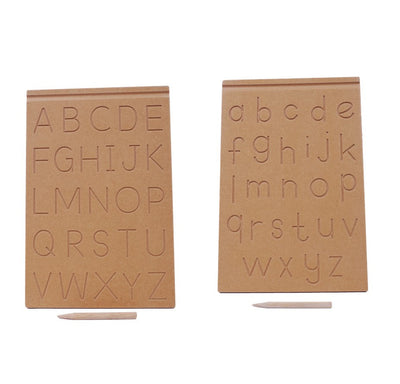
Montessori environments are rich in language, promoting communication through conversations, storytelling, and structured language activities. Materials like Sandpaper Letters introduce phonetic sounds and letter recognition, while a vast array of Montessori language materials expand vocabulary and comprehension. Children are encouraged to articulate their discoveries and collaborate with others.
Reading aloud to your child daily, engaging them in conversations about their day, and encouraging them to narrate simple stories are powerful ways to enhance their language skills. These interactions build confidence and prepare them for classroom participation.
Perception and Discrimination: Montessori Cognitive Development at Play
Perception and discrimination skills involve a child's ability to differentiate between objects based on size, shape, color, texture, sound, and weight. These seemingly basic skills are fundamental to developing mathematical understanding, literacy, and logical reasoning. This is where Montessori cognitive development truly shines.
Maria Montessori developed sensorial materials specifically to refine a child's senses and perception. Tools like Colour Tablets help children discriminate between hues, Sound Cylinders train auditory discrimination, and various geometric solids teach about shape and form. These hands-on experiences lay a concrete foundation for abstract concepts.
Child development experts consistently emphasize that these sensorial experiences are not just about learning individual attributes but about developing the neural pathways for more complex cognitive processes. Engaging with such materials at home, or even sorting household items, can significantly boost these critical skills.
Integrating Montessori Principles at Home for a Lasting Early Advantage
The beauty of Montessori is that its principles can be seamlessly integrated into Indian homes, creating a supportive environment that fosters cognitive growth. Focus on creating a 'prepared environment' where your child has access to age-appropriate, engaging materials and the freedom to explore independently. This doesn't require elaborate setups; simple dedicated spaces and materials are sufficient.
Grandparents, often central to Indian joint families, can play a vital role by engaging children in traditional storytelling, craft activities, and simple household tasks, all of which implicitly build cognitive skills. Encourage independence in daily routines, from dressing themselves to helping with chores, as these activities build executive functions and problem-solving abilities.
In India, recent reports, including those cited by ET Education, underscore the critical need for robust early childhood education programs to improve learning levels in Grade 1. By adopting these strategies, you are not just preparing your child for LKG; you are equipping them with the mental agility and self-confidence to thrive academically and beyond. Remember, the goal is to foster a joyful and meaningful learning journey, not to create undue pressure.
- Cognitive skills for LKG readiness are crucial for a child's future academic success in India.
- Attention and concentration are foundational, with Montessori methods providing effective tools for development.
- Memory and recall are strengthened through multi-sensory learning and consistent engagement, not just rote learning.
- Problem-solving and critical thinking are nurtured by allowing children to explore and self-correct with hands-on materials.
- Strong language and communication skills are vital for LKG, supported by rich verbal environments and phonetic work.
- Perception and discrimination, honed by Montessori sensorial materials, build a concrete foundation for abstract thought.
- Integrating Montessori principles at home, with family involvement, offers a lasting early learning advantage.
What is the most important cognitive skill for LKG?
Attention and concentration are paramount. The ability to focus on tasks, follow instructions, and engage with learning materials forms the bedrock for acquiring all other skills in an LKG classroom.
How can I develop my child's memory for LKG?
Encourage memory development through engaging activities like storytelling, reciting rhymes, playing 'I Spy,' and using sensorial Montessori materials. Consistent, joyful practice helps build strong recall abilities.
Are Montessori materials truly effective for cognitive development?
Yes, Montessori materials are specifically designed to foster cognitive development through hands-on exploration and self-correction. They systematically engage a child's senses, promoting focus, problem-solving, and abstract thinking from a young age.
How early should I start focusing on LKG readiness skills?
Foundational cognitive skills begin developing from infancy, but focused efforts for LKG readiness can start around 2.5 to 3 years of age. Integrating purposeful play and a prepared environment early on offers a significant advantage.
Is it normal for my child to struggle with some cognitive skills?
Yes, it is entirely normal for children to develop at their own pace and show strengths in different areas. Focus on providing a supportive, stimulating environment and celebrating small progress rather than comparing or pressuring them.