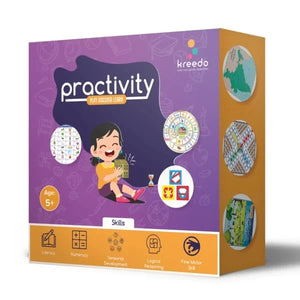
Kids Learning Toys: Developing Skills for School Readiness
As Indian parents, the thought of our children starting preschool, LKG, or UKG often brings a mix of excitement and anxiety. Research shows that engaging with quality kids learning toys from an early age is a definitive pathway to building the foundational skills essential for a smooth school transition. These carefully designed playthings, especially those rooted in Montessori principles, actively develop cognitive, fine motor, language, and social-emotional competencies, preparing children not just for academics but for life.
With recent discussions, such as Goa raising the Class 1 age to six, there's a renewed focus on what truly prepares children for formal education. While curriculum changes grab headlines, the everyday experiences within our homes, often guided by the right educational tools, are paramount. This guide provides Indian parents with a structured understanding of how Montessori learning toys foster comprehensive skill development, empowering children for a confident start to their academic journey.
What are School Readiness Skills?
School readiness skills encompass a broad range of developmental milestones that equip children for success in a formal learning environment. This includes physical development, cognitive abilities, language proficiency, and social-emotional competence. These skills matter because they determine a child's ability to learn, adapt, and thrive in a classroom setting. Indian parents can proactively support this development by creating an enriching home environment and selecting purposeful educational tools.
The Montessori Advantage: Holistic Skill Development for Indian Children
Maria Montessori's philosophy is centred on respecting the child's innate drive to learn and explore, a concept that resonates deeply within Indian family values of nurturing growth. Montessori learning toys are not merely playthings; they are purposeful tools designed to engage a child's senses, encourage independence, and foster concentration. This approach empowers children to learn at their own pace, building a robust foundation that extends beyond rote memorisation, preparing them for the structured environment of Indian schools.
Child development experts agree that a prepared environment, rich with accessible and engaging materials, is key. Whether a child is growing up in a bustling urban Bengaluru apartment or a quiet village home, the principles of purposeful play remain universal. SkilloToys.com offers a curated range of Montessori Method Learning Materials & Toys that directly align with these developmental needs, making premium educational resources accessible to Indian families.
Nurturing Essential School Readiness Skills with Montessori Kids Learning Toys
Montessori kids learning toys are meticulously crafted to target specific developmental areas, ensuring a comprehensive approach to school readiness. Each material serves a purpose, allowing children to discover concepts through hands-on engagement, mirroring the traditional Indian emphasis on experiential learning.
Fine Motor Skills: The Foundation for Writing and Self-Care
Fine motor skills involve the coordination of small muscles, particularly in the hands and fingers. These are crucial for tasks like holding a pencil, buttoning a shirt, or zipping up a backpack – everyday activities vital for independence in LKG or UKG. Montessori materials like Practical Life materials such as spooning, pouring, and tonging exercises, along with knobbed cylinders and geometric puzzles, systematically strengthen these muscles. Research shows strong fine motor skills directly correlate with early literacy success, enabling children to confidently engage with writing and drawing.
Cognitive Development: Problem-Solving and Sustained Concentration
Cognitive development encompasses a child's ability to think, reason, and solve problems. Montessori learning toys are exceptional at fostering these skills. Materials like the Pink Tower, Broad Stair, and Red Rods teach concepts of size, sequence, and proportion, while classification games enhance logical thinking. These materials are self-correcting, allowing children to learn from their mistakes independently, thereby building resilience and critical thinking. This focus on sustained concentration is a cornerstone for academic success in the Indian school system, where focus is highly valued.
Language & Communication: Building a Rich Vocabulary and Expression
Effective language and communication skills are paramount for classroom participation and understanding instructions. Montessori provides a rich environment for language acquisition through sensory experiences. Sandpaper letters allow children to trace and associate sound with symbol, while the movable alphabet empowers them to build words independently. Story cards, picture matching activities, and detailed nomenclature cards expand vocabulary and encourage articulate expression. Child development experts agree that a strong linguistic foundation supports reading comprehension and confident self-expression, preparing children for diverse academic subjects.
Social-Emotional Skills: Confidence, Empathy, and Collaboration
Beyond academics, school readiness involves a child's ability to interact positively with peers and teachers, manage emotions, and build self-confidence. Montessori fosters social-emotional growth through activities that encourage grace and courtesy, role-playing, and shared work. In an Indian joint family setting, children naturally learn sharing and collaboration. Montessori toys like building blocks or dramatic play sets can extend these lessons, promoting empathy and respectful communication. Studies indicate that strong social-emotional skills lead to better academic outcomes and overall well-being.
Sensory Exploration: Understanding the World Through the Senses
Sensory experiences are the gateways to understanding the world for young children. Montessori learning toys, often referred to as Sensorial Materials, are designed to isolate and refine each of the five senses. Fabric boxes for tactile discrimination, sound cylinders for auditory acuity, and smelling bottles for olfactory development sharpen a child's perception. This heightened sensory awareness improves observation skills, memory, and the ability to categorise information, providing a deeper foundation for scientific and mathematical concepts.
Choosing the Right Montessori Kids Learning Toys for Your Child
When selecting kids learning toys for your child, consider their age, interests, and developmental stage. The goal is not to overwhelm them with choices but to provide a few high-quality, purposeful materials that encourage engagement. For example, a two-year-old might thrive with a simple peg puzzle, while a four-year-old might be ready for more complex math materials. Remember, open-ended toys often offer more learning opportunities than highly prescriptive ones. Grandparents, with their wealth of wisdom, can also be wonderful guides in observing a child's natural inclinations and suggesting appropriate learning tools, blending traditional Indian child-rearing wisdom with modern Montessori principles.
The Role of Parents and Environment in Learning Through Play
While Montessori learning toys are powerful tools, the parent's role in creating a supportive learning environment is invaluable. Observe your child, follow their lead, and allow them uninterrupted time to engage with their chosen activities. Creating a 'prepared environment' at home doesn't require a dedicated Montessori classroom; it simply means organising toys and materials accessibly and encouraging independence. This approach aligns with the growing trend in preschool education, as seen in places like Ahmedabad, where the focus is shifting towards more child-centric and experiential learning models. Even for children in rural India, where access to formal preschools might be limited, simple, everyday activities can be transformed into powerful learning experiences, demonstrating that the spirit of 'learning through play' is universal and essential.
- Engaging with kids learning toys, particularly Montessori-inspired ones, is critical for developing school readiness skills.
- Montessori materials systematically target fine motor, cognitive, language, social-emotional, and sensory development.
- Strong fine motor skills, developed through activities like spooning and puzzles, are essential for early writing and self-care.
- Cognitive development, fostered by Montessori tools like the Pink Tower, builds problem-solving abilities and concentration.
- Language materials such as sandpaper letters and the movable alphabet significantly enhance vocabulary and communication skills.
- Social-emotional growth, supported by purposeful play, leads to confident interaction and empathy in classroom settings.
- Parents play a crucial role in observing their child and providing a supportive, prepared home environment for effective learning through play.
What are the most crucial school readiness skills?
The most crucial school readiness skills include fine motor control for writing, cognitive abilities for problem-solving, strong language skills for communication, and social-emotional competence for classroom interaction. These foundational skills ensure a smooth transition into formal education.
How do Montessori learning toys differ from regular toys?
Montessori learning toys are specifically designed with a purpose: to develop a particular skill, foster independence, and engage a child's natural curiosity. Unlike many regular toys, they are often self-correcting and encourage focused, hands-on exploration rather than passive entertainment.
At what age should I start using kids learning toys for school readiness?
Child development experts recommend starting early, even from infancy, with age-appropriate kids learning toys. While formal readiness for school begins around 3-4 years, foundational skills are built continuously through play from 18-24 months onwards, setting a strong base.
Can I integrate Montessori principles at home without expensive toys?
Absolutely. Montessori principles emphasise a prepared environment, independence, and purposeful activities. Parents can integrate this by involving children in daily chores, providing accessible materials, and encouraging self-directed play with simple, open-ended items already available in Indian homes.
How do learning toys help with social-emotional development?
Learning toys, particularly those that encourage imaginative or collaborative play, help children develop vital social-emotional skills. They learn sharing, turn-taking, empathy, and how to express emotions constructively, all crucial for positive interactions in a classroom setting and within joint family structures.