Early Learning Opportunity India: NEP 2020 Guide for Parents
Maximizing your child's early learning opportunity in India under NEP 2020's 'foundations-first' approach involves actively nurturing foundational literacy and numeracy, along with crucial socio-emotional skills, even before formal schooling begins. Research shows that a strong start in these areas significantly impacts future academic success and overall well-being, directly empowering Indian parents to lay a robust groundwork for their child's holistic development.
The discourse around India's educational landscape is rapidly evolving, with the National Education Policy (NEP) 2020 at its forefront. For parents in Bengaluru and across India, this translates into a unique moment to redefine school readiness, moving beyond rote learning towards a comprehensive 'foundations-first' approach. This guide is designed to empower you, addressing common anxieties and offering clear, actionable strategies to navigate this exciting new era in your child's education.
With headlines like 'Foundations First: How NEP 2020 is Shaping India’s Early Learning Revolution' gaining prominence, it's clear that the focus is on early childhood education (ECE) as a critical developmental stage. Understanding this shift is key to unlocking your child's full potential, ensuring they don't just attend school, but truly thrive.
Understanding NEP 2020's Foundations for Parents
The NEP 2020 'Foundations-First' approach establishes a critical emphasis on Foundational Literacy and Numeracy (FLN) for children aged 3-8, prior to rote learning. This matters because it shifts focus from early rote memorization to developing essential cognitive, social, and emotional skills. Indian parents can actively support this by providing rich, play-based learning environments at home.
This policy acknowledges that a child's formative years are crucial for developing cognitive abilities, language, and early mathematical concepts. It stresses the importance of learning through play, discovery, and exploration rather than formal instruction. For Indian families, this means moving beyond the pressure of early academic performance to cultivating curiosity and a love for learning.
Child development experts agree that children who develop strong foundational skills by the age of eight are significantly better equipped for complex learning in later years. This approach provides a solid base, making school a journey of exploration rather than a race for grades. It’s an opportunity for every child to truly enjoy their early learning experience.
The ECE Opportunity for Kids in India: More Than Just Academics
The Early Childhood Education (ECE) opportunity for kids in India, championed by NEP 2020, extends far beyond traditional academics, embracing holistic development as its cornerstone. This framework acknowledges that true school readiness encompasses social-emotional well-being, physical development, and cognitive growth, not just literacy and numeracy.
Nurturing Foundational Literacy and Numeracy (FLN)
FLN is not about memorizing the alphabet or counting to 100 prematurely; it's about understanding the concepts behind letters and numbers. For literacy, this means developing phonological awareness – the ability to hear and manipulate sounds in spoken words – and an understanding that print carries meaning. Parents can engage children with storytelling, nursery rhymes, and pointing out words in their environment, like signs at the market or names on festival decorations.
For numeracy, it involves grasping number sense, patterns, and basic problem-solving. Simple activities like counting items during daily chores, sorting toys by colour or size, and understanding sequences in games contribute immensely. Data suggests that engaging children in these hands-on activities significantly boosts their comfort and competence with mathematical concepts later on.
Building Essential Life Skills: The Montessori Way
The Montessori philosophy, pioneered by Dr. Maria Montessori, perfectly aligns with NEP 2020's emphasis on foundational life skills and self-reliance. It advocates for children learning through purposeful work and independent exploration within a prepared environment. This approach fosters concentration, coordination, independence, and a sense of order.
At home, this can translate into involving your child in age-appropriate household tasks, such as setting the dining table, watering plants, or helping put away groceries. These are not just chores; they are Practical Life activities that develop fine motor skills, self-confidence, and a sense of contribution to the family. Similarly, Montessori Language Materials like sandpaper letters or the movable alphabet allow children to explore sounds and word building at their own pace, fostering a deep, intuitive understanding of language.
Your School Readiness Guide: Actionable Steps Under NEP
As an Indian parent, preparing your child for school under NEP 2020 involves creating an enriching home environment that supports their natural curiosity and developmental milestones. This proactive approach ensures your child enters formal schooling with confidence and a strong desire to learn, rather than apprehension.
Choosing the Right Educational Toys for Early Foundations
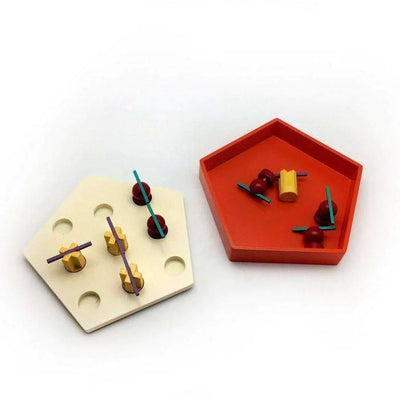
Not all toys are created equal. For early foundations, prioritize educational toys that are open-ended, encourage exploration, and allow for self-correction. SkilloToys.com offers a range of Montessori-inspired toys that are perfect for this approach. Think about materials that engage multiple senses, like Sensorial Materials such as the Pink Tower or Knobbed Cylinders, which help children understand dimensions, shapes, and colours through hands-on manipulation.
These materials are designed to isolate concepts and provide indirect preparation for academic skills. For example, building blocks foster spatial reasoning, while simple puzzles enhance problem-solving and fine motor coordination. Investing in quality, purposeful toys can make a significant difference in a child's cognitive development, setting the stage for future learning successes.
The Power of Play and Daily Routines
Play is a child's work. Unstructured free play allows children to explore their imagination, develop social skills by interacting with siblings or friends, and solve problems independently. Encourage outdoor play in parks or even in your apartment complex's common areas, fostering gross motor skills and a connection with nature.
Establishing consistent daily routines provides a sense of security and predictability for young children, helping them develop self-discipline and time management. This includes regular meal times, a dedicated play time, and a calming bedtime routine. Even simple routines, like helping grandparents with their evening puja preparations, can instill a sense of order and responsibility, preparing them for the structured environment of school.
Involving grandparents in your child's early learning journey, common in Indian joint families, also provides a rich source of storytelling, cultural traditions, and emotional security. Their wisdom and patience are invaluable assets in nurturing a child's foundational development.
The NEP 2020's 'foundations-first' approach offers a truly transformative early learning opportunity in India. By embracing this guide, you're not just preparing your child for school; you're equipping them with a lifelong love for learning, critical thinking skills, and the confidence to navigate the world. Remember, a strong foundation today means a brighter future tomorrow for your little one.
- NEP 2020 prioritizes Foundational Literacy and Numeracy (FLN) for children aged 3-8, focusing on holistic development.
- The 'foundations-first' approach shifts education from rote memorization to play-based, experiential learning.
- Research consistently demonstrates that strong foundational skills by age eight lead to higher academic achievement.
- Montessori principles, such as practical life activities and sensorial exploration, align perfectly with NEP 2020's goals.
- Choosing open-ended, purposeful educational toys is crucial for fostering cognitive and socio-emotional development.
- Consistent daily routines and ample unstructured play are essential for building self-regulation and problem-solving skills in children.
What is the 'foundations-first' approach in NEP 2020?
The 'foundations-first' approach under NEP 2020 prioritizes Foundational Literacy and Numeracy (FLN) and holistic development for children aged 3-8, before formal academic pressures. It aims to build a strong base of cognitive, social, and emotional skills through play and experiential learning.
How can I implement Montessori principles at home for early learning?
Implementing Montessori at home involves creating an organized, child-centric environment with age-appropriate, hands-on materials that encourage independent exploration. Focus on practical life skills, sensorial activities, and open-ended play that nurtures concentration and problem-solving.
What are the best educational toys for a child aged 3-6 years under NEP 2020?
The best educational toys for this age group are open-ended, allow for self-correction, and foster specific developmental skills outlined by NEP 2020. Examples include building blocks, puzzles, sensorial materials, language manipulatives like sandpaper letters, and practical life tools.
How does play contribute to a child's school readiness?
Play is crucial for school readiness as it develops critical cognitive skills like problem-solving, creativity, and memory, alongside essential social and emotional competencies such as cooperation, empathy, and self-regulation. It is the natural way children learn and process their world.
Can grandparents play a role in my child's early learning journey?
Absolutely, grandparents play an invaluable role in a child's early learning journey, especially in India's joint family setups. They can share stories, teach traditional values, engage in simple games that build foundational skills, and provide emotional support, enriching the child's development significantly.