Exploring the Tiny World: How Housefly Nomenclature Cards Spark Curiosity
As parents, we're always looking for ways to spark our children's natural curiosity and lay a strong foundation for learning. Sometimes, the most fascinating lessons come from the smallest things around us – even a housefly! But how do you make early science and vocabulary building both engaging and effective?
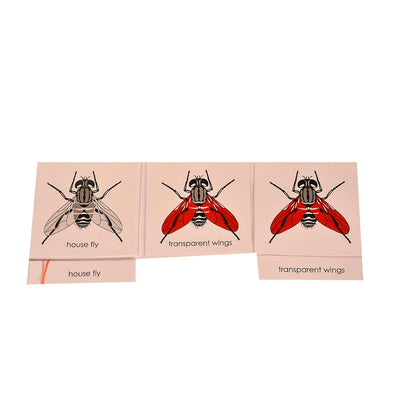
Enter the world of Montessori education, where hands-on learning makes complex topics accessible. One fantastic tool for this is the Montessori Nomenclature Learning Cards - Housefly. These unique flashcards are designed to introduce children to the intricate parts of a common housefly, building vocabulary and fostering keen observation skills in a way that truly sticks.
Why These Housefly Cards Are a Buzz-Worthy Educational Tool for Kids
In a world full of distractions, providing focused, educational toys for kids is paramount. These nomenclature cards align perfectly with Montessori principles, offering a structured yet flexible approach to learning that's highly beneficial for early development skills.
Boosting Language and Vocabulary
Learning the proper names for parts like the 'thorax', 'abdomen', or 'antennae' might seem advanced for young children, but these cards simplify it. By associating clear pictures with corresponding names, children build a rich and precise vocabulary. This is crucial for cognitive development and enhances their ability to describe the world around them.
Sharpening Observational Skills
Each card highlights a specific part of the housefly, drawing the child's attention to details they might otherwise miss. This focused observation helps develop analytical skills and encourages a deeper understanding of biological structures. It's an excellent way to introduce children to scientific classification and the importance of paying attention to specifics.
Encouraging Independent Learning
Montessori learning toys, like these flashcards, empower children to learn at their own pace. The three-part card system (picture and name, name only, picture only) allows for self-correction and reinforces memory without constant adult intervention. This fosters confidence and a love for self-directed exploration, which are invaluable life skills.
Bringing the Housefly Cards to Life: Fun Ways to Learn
These aren't just cards; they're gateways to discovery. Here are a few ways parents in India can integrate these educational wooden toys into their daily routine:
The Classic Three-Part Lesson
This is the core Montessori method. First, introduce the complete picture-and-name card ("This is the head."). Second, ask the child to identify ("Show me the wing."). Third, ask for recall ("What is this?"). This method is incredibly effective for building foundational knowledge and is a hallmark of good Montessori learning toys.
Matching and Sorting Games
Lay out the picture-only cards and ask your child to match them with the name-only cards. As they progress, challenge them to match all three parts – the full picture, the picture-only, and the name-only – to reinforce their understanding. This is a fantastic activity for fine motor skills and logical reasoning.
Storytelling and Discovery
Use the cards as prompts for imaginative play. "Imagine this housefly is flying! Which part helps it fly?" Encourage children to draw their own houseflies and label the parts using the cards as a reference. This turns learning into a creative adventure and helps solidify concepts learned from these best toys for toddlers and early learners.
Common Questions About Montessori Nomenclature Cards
What are Montessori Nomenclature Cards?
Montessori Nomenclature Cards are educational flashcards designed to help children learn the names of parts of an object, animal, or concept. They typically come in sets of three: a control card with the image and name, a picture-only card, and a name-only label card, allowing for matching and independent learning.
How do these housefly cards benefit my child's learning?
These specific cards help children develop a precise scientific vocabulary related to insects, enhance their observation skills by isolating different parts, and promote cognitive development through matching and classification. They make abstract biological concepts concrete and understandable for young minds.
What age group is suitable for these learning cards?
The Montessori Nomenclature Learning Cards - Housefly are ideal for children aged 3 to 10 years. Younger children can focus on matching and basic vocabulary, while older children can delve deeper into understanding the function of each part and even researching other insects.
Can these cards be used for homeschooling?
Absolutely! These nomenclature cards are an excellent resource for homeschooling parents. They provide a structured, self-correcting activity that can be integrated into science or language lessons, making complex topics engaging and accessible without needing specialized equipment.
How do I introduce these cards to my child?
Start by introducing a few cards at a time, using the classic Montessori three-part lesson. Begin with the complete control card (picture + name), then introduce the picture-only and name-only cards for matching. Keep the sessions short, fun, and child-led, allowing your child to explore at their own pace.
Exploring the world, even down to the smallest creatures, can be an incredible journey of discovery for your child. These Montessori flashcards provide a solid, engaging foundation for scientific literacy and language development.
At SkilloToys, we believe in nurturing curious minds with the best educational resources. Explore our curated collection of Montessori learning toys and other engaging products designed to inspire discovery and foster development in children across India. Visit SkilloToys.com today!