Musical Toys for Kids: Nurturing Talent, India Buying Guide
The recent news of a child santoor prodigy from West Bengal's Nadia district, setting an India Book of Records mark, has sparked a wave of inspiration among Indian parents. Many are now actively seeking the best musical toys for kids to nurture their own children's latent talents. Choosing educational musical instruments for Indian kids involves selecting age-appropriate, open-ended toys that encourage exploration over performance, focusing on sensory development, rhythm, and auditory discrimination. Look for durable, safe materials that allow children to experiment with sound naturally, fostering a genuine love for music in a culturally resonant way.
Educational musical instruments are designed not just for making noise, but to stimulate a child's sensory and cognitive development through sound, rhythm, and tactile exploration. This matters profoundly because early musical engagement builds critical neural pathways, enhancing skills vital for overall learning. Indian parents can effectively integrate these instruments into daily play, turning everyday moments into opportunities for creative expression and growth.
The Profound Benefits of Musical Toys for Development
Research consistently shows that early exposure to music and musical toys profoundly impacts a child's holistic development. Child development experts agree that engaging with rhythm and melody boosts cognitive skills, language acquisition, and emotional regulation. For instance, the American Academy of Pediatrics highlights how music fosters phonological awareness, a critical precursor to reading success. Furthermore, studies indicate that children engaged in regular musical activities demonstrate enhanced memory and spatial-temporal reasoning, according to findings from the Harvard Center on the Developing Child.
Beyond academic benefits, musical play enhances fine motor skills as little hands grasp mallets or pluck strings, and improves hand-eye coordination as they aim for specific keys. Consider young Rohan, a 2-year-old in Bengaluru, whose initial frustrated attempts at hitting a xylophone eventually led to precise, rhythmic taps, a testament to growing control and patience. These are not just benefits for future musicians, but for every child's overall growth, helping them develop focus and self-expression away from the screen time concerns prevalent in urban Indian homes.
Choosing the Right Educational Musical Instruments for Indian Kids
Selecting the perfect educational musical instruments for kids in India requires thoughtful consideration of age, developmental stage, and the type of learning experience you wish to provide. The goal is to offer tools for discovery, not pressure for performance. This approach respects a child's natural pace of learning, whether they are a toddler exploring sounds or an older child experimenting with melodies.
Montessori Musical Instruments: Nurturing Natural Curiosity
The Montessori philosophy, championed by Maria Montessori, posits that children learn best through self-directed exploration with carefully prepared materials. Montessori musical instruments are typically simple, made from natural materials like wood, and designed to isolate specific sound qualities. They encourage children to understand pitch, rhythm, and timbre through sensory experience rather than formal instruction. This hands-on approach allows children to develop auditory discrimination and a natural rhythmic sense, foundational skills that are invaluable. For example, a simple wooden percussion set from SkilloToys can offer a tactile and auditory delight, providing a multi-sensory experience that builds concentration and coordination.
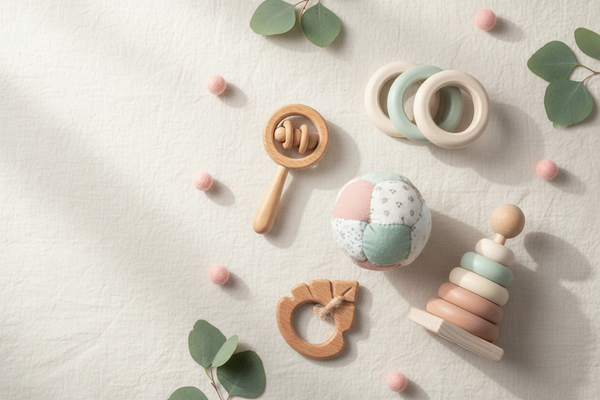
For infants aged 0-1 year, soft rattles, gentle shakers, and wrist bells introduce cause and effect and basic sound differentiation. As they grow into 1-3 years, wooden xylophones with large, easy-to-grip mallets, simple hand drums, and tambourines become ideal. These items allow toddlers to explore different sounds and rhythms, fostering their gross motor skills and providing a creative outlet. You can explore a range of our delightful wooden toys that cater to these early developmental stages.
As children approach 3 years and beyond, they might be ready for more complex instruments like simple keyboards with clear, distinct tones or larger percussion sets that allow for group play. The key is to keep it open-ended, allowing them to improvise and create their own tunes rather than follow strict instructions. This builds confidence and fosters intrinsic motivation, echoing how young prodigies, like the santoor master, often begin with uninhibited exploration before formal training.
Beyond the Toy Box: Integrating Music into Indian Family Life
In many Indian homes, music is already a part of the cultural fabric, from devotional bhajans to festive celebrations. Integrating musical toys naturally within this context can amplify their impact. Imagine a grandparent singing a lullaby while a child gently shakes a maraca, or a family creating rhythms during Diwali festivities with hand drums. These moments build strong emotional bonds and make music an integral, joyful part of daily life.
Consider the recent discussion about children potentially talking less to parents due to AI interaction; musical play offers a powerful counter-narrative. It's an inherently social activity that encourages interaction, shared joy, and non-verbal communication within the family. Instead of merely consuming content, children become active creators of sound and rhythm, strengthening their connection with family members. This active engagement contrasts sharply with passive screen time, promoting real-world interaction and expression.
When parents worry about school pressure, a simple set of Montessori learning materials that include musical elements can offer a much-needed break. It's not another subject to master, but a realm for pure, uninhibited self-expression. Parents often find that engaging with musical instruments helps children release energy, improve focus, and even manage emotions after a demanding school day. For gifting occasions, exploring our return gifts section might reveal perfect small musical instruments suitable for different age groups.
Nurturing the Budding Musician: Practical Tips for Indian Parents
- Start Simple: Don't overwhelm your child with complex instruments. Begin with simple percussion like shakers, bells, or small drums. The focus is on sound exploration.
- Lead by Example: Sing, hum, and dance with your child. Your enthusiasm is contagious and encourages their own musicality.
- Create a Musical Corner: Designate a small, accessible space where musical instruments are readily available for spontaneous play. This encourages self-directed learning, a core Montessori principle.
- Listen Actively: Pay attention to the sounds your child creates. Appreciate their efforts and ask open-ended questions like, "What sound does that make?" or "How does that tune feel?"
- Connect to Culture: Introduce Indian folk music, classical ragas, or devotional songs. Help them understand the cultural richness associated with different instruments and melodies.
Ultimately, providing musical toys for kids is about more than finding the next prodigy; it's about enriching their childhood with joy, creativity, and vital developmental skills. As you introduce these wonderful tools, remember that every tap, every strum, every hum is a step in their unique journey of self-discovery and expression.