Homeschooling Curriculum India: Montessori & Educational Toys Guide
Choosing to homeschool your child in India opens up a world of possibilities, but also the crucial question of selecting the right homeschooling curriculum India. Research shows that a Montessori approach, supported by carefully chosen educational toys, provides a highly effective and enriching framework for home learning, empowering children from Bengaluru to Mumbai to become independent thinkers.
What is Montessori Homeschooling?
Montessori homeschooling is an educational philosophy where parents guide their child's learning using specially designed materials in a prepared environment, respecting their unique pace and interests. This matters because it fosters intrinsic motivation and deep understanding, rather than rote memorization. Indian parents can implement this by creating inviting, child-centric learning spaces at home.
Why Montessori is Ideal for Indian Homeschooling Families
In the vibrant, often bustling, environment of an Indian home, where joint families are common and academic pressure can loom large, Montessori principles offer a refreshing alternative. This approach celebrates a child's natural curiosity and independence, starkly contrasting with traditional, more rigid learning models. Studies indicate that children in self-directed learning environments develop stronger problem-solving skills and a greater love for learning.
For parents navigating the challenges of balancing household responsibilities with education, Montessori offers flexibility. It's not about replicating a classroom; it's about making learning an integral, joyful part of daily life, whether it's helping with Diwali preparations or understanding mathematical concepts through everyday objects.
Creating a Prepared Environment with Educational Toys
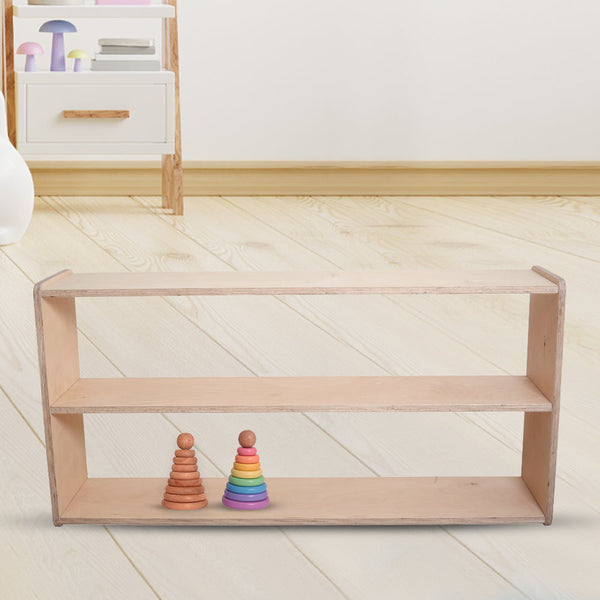
The cornerstone of montessori for homeschooling India is the 'prepared environment' – a space that is orderly, aesthetically pleasing, and equipped with materials that invite exploration. This doesn't mean transforming your entire home, but rather designating specific, accessible areas for learning, much like a cozy corner in a Bangalore apartment.
Child development experts agree that hands-on, multi-sensory materials are vital for robust cognitive growth. For instance, a 3-year-old Aarya in a joint family in Bengaluru might be drawn to a tray with various seeds and scoops, practicing practical life skills while building fine motor coordination. The satisfying feel of different textures, the clink of objects, and the visual order all contribute to deep engagement.
Essential Educational Toys for Homeschooling
For children aged 1-3 years, focus on sensory exploration and gross motor development. Think of simple wooden rattles, soft blocks, and stacking rings. As they grow into 3-6 years, the classic Montessori materials come into play. Sandpaper letters introduce phonics tactilely, while the Pink Tower helps develop visual discrimination of size. These aren't just toys; they are tools designed to teach specific concepts.
For cognitive development and problem-solving, a range of puzzles, from simple shape sorters to more complex multi-piece challenges, are invaluable. They require focus, patience, and spatial reasoning. Meanwhile, activity kits can be adapted for thematic learning, perhaps exploring the flora and fauna of India or the intricacies of traditional Indian festivals.
Integrating Indian Culture and Curriculum with Learning Toys
A true learning toys India curriculum embraces the rich cultural tapestry of our nation. Montessori doesn't mean abandoning Indian heritage; it means enriching it. Use sorting activities with different types of Indian spices, learn about colours through traditional textiles, or practice counting with local fruits like mangoes and guavas. The NCERT's 2019 framework for early childhood education highlights the importance of contextually relevant learning experiences, which Montessori materials can wonderfully facilitate.
For instance, when teaching about geometry, instead of abstract shapes, introduce mandalas or Rangoli patterns. For language development, focus on phonetic sounds of Hindi, Kannada, or your regional language, using sandpaper letters adapted to local scripts if available, or simply drawing letters in sand or on slates. This makes learning deeply meaningful and relevant to a child's everyday life in India.
The Role of Grandparents and Family in Montessori Homeschooling
One of the most beautiful aspects of homeschooling in India, particularly within a joint family, is the invaluable contribution of grandparents. Their wisdom and practical skills are a treasure trove for Montessori learning. Dadi teaching a child to knead dough for rotis isn't just a chore; it's a practical life activity that refines fine motor skills, teaches sequence, and connects generations. This kind of multi-generational learning is a unique advantage for homeschooling resources India offers.
From storytelling sessions that build language and cultural understanding to helping in the garden, grandparents often naturally provide the 'prepared environment' for practical life that Maria Montessori championed. This collaboration alleviates parental pressure and enriches the child's learning experience immensely.
Nurturing the Child's Inner Teacher
At its heart, Montessori homeschooling is about trusting the child. It's about observing their interests and providing the tools, rather than dictating the path. This fosters an intrinsic motivation to learn, making education a joyful exploration rather than a chore. As one parent who WhatsApps me at 11pm about her toddler's speech delay discovered, sometimes the simplest, most engaging materials, like a sorting tray of different coloured buttons, can unlock surprising progress when the child is given the freedom to explore at their own pace.
By thoughtfully choosing Montessori educational materials, you're not just buying toys; you're investing in a philosophy that empowers your child to become a confident, capable learner, ready to thrive in the world, one self-directed discovery at a time.