
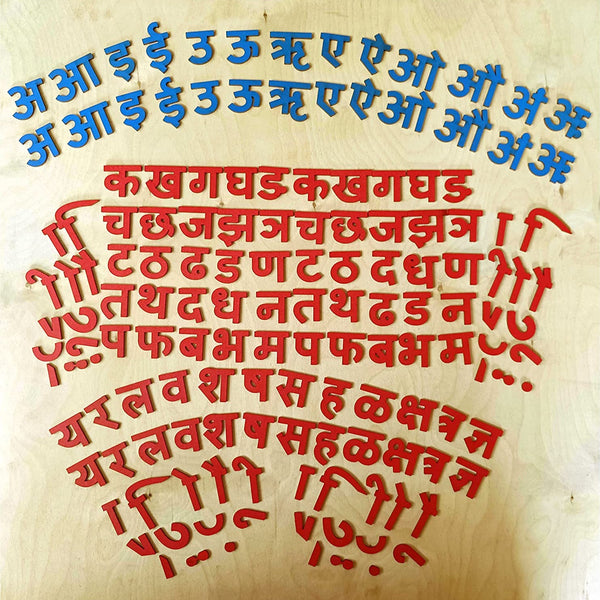
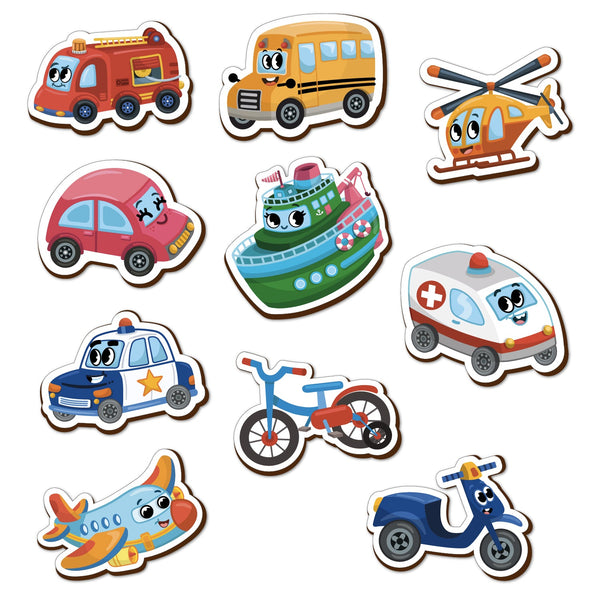
Buying guide
1 - 3 Years Age Toys
Parent's buying guide
How to choose toys for a toddler between 12 and 36 months, written for Indian families.
Match the toy to the leap, not the birthday
- A toy that delighted your child last month may bore them next month. Toddlerhood moves fast.
- The 12 to 36 month window covers more developmental change than any other three years of childhood.
- Watch the toddler. If they have mastered a toy, retire it for two weeks then reintroduce, or pass it down.
Safety for movers
- Anything that can be picked up will be carried, dropped, climbed on, and possibly thrown. Build quality matters.
- Avoid small magnetic parts that can be swallowed. The dangerous size is anything under three centimetres across.
- Cord lengths on pull-toys should be under thirty centimetres for the youngest toddlers.
- Cooked or oiled wood finishes are safer than chemical varnish for a toddler who still mouths things.
Encourage independence
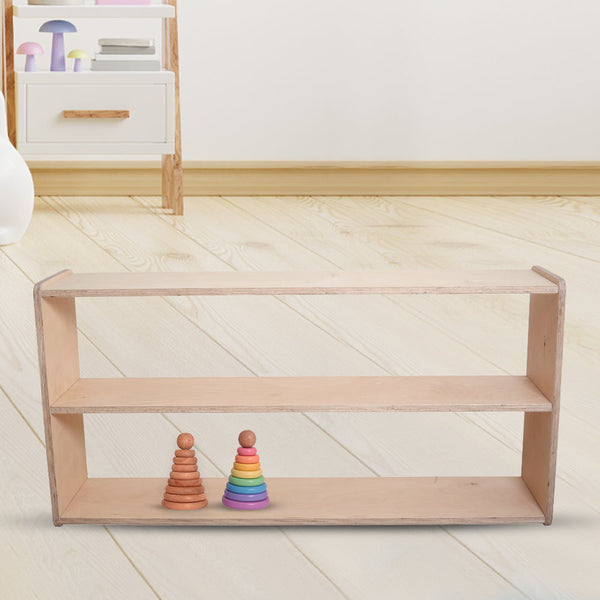
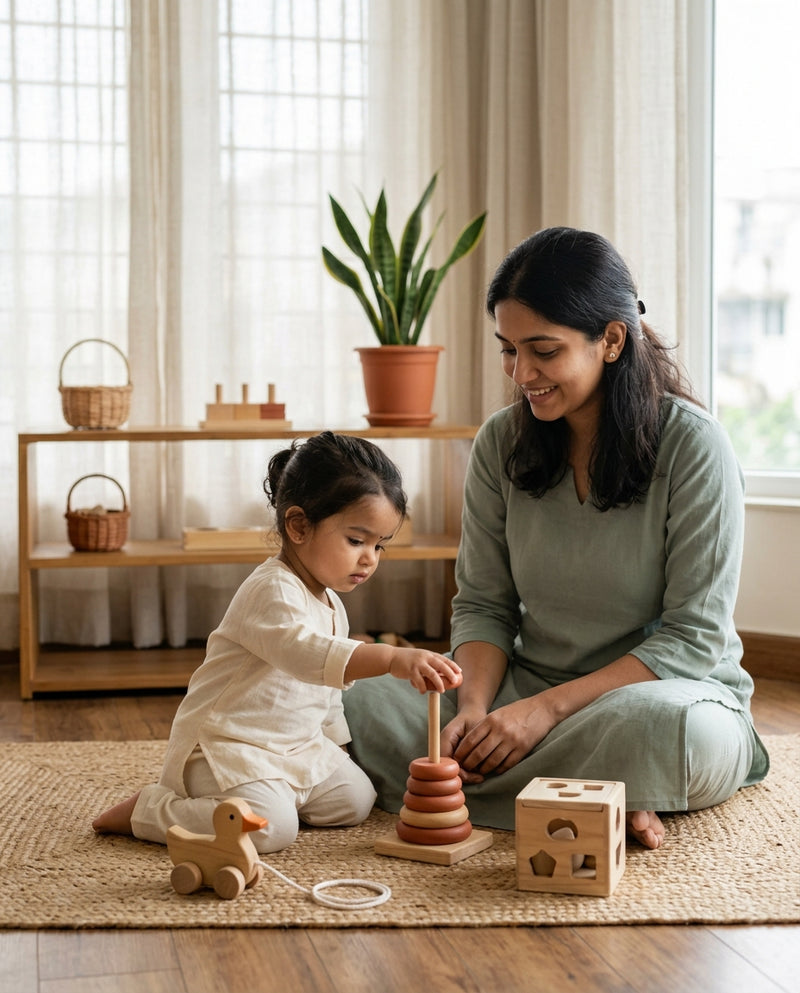
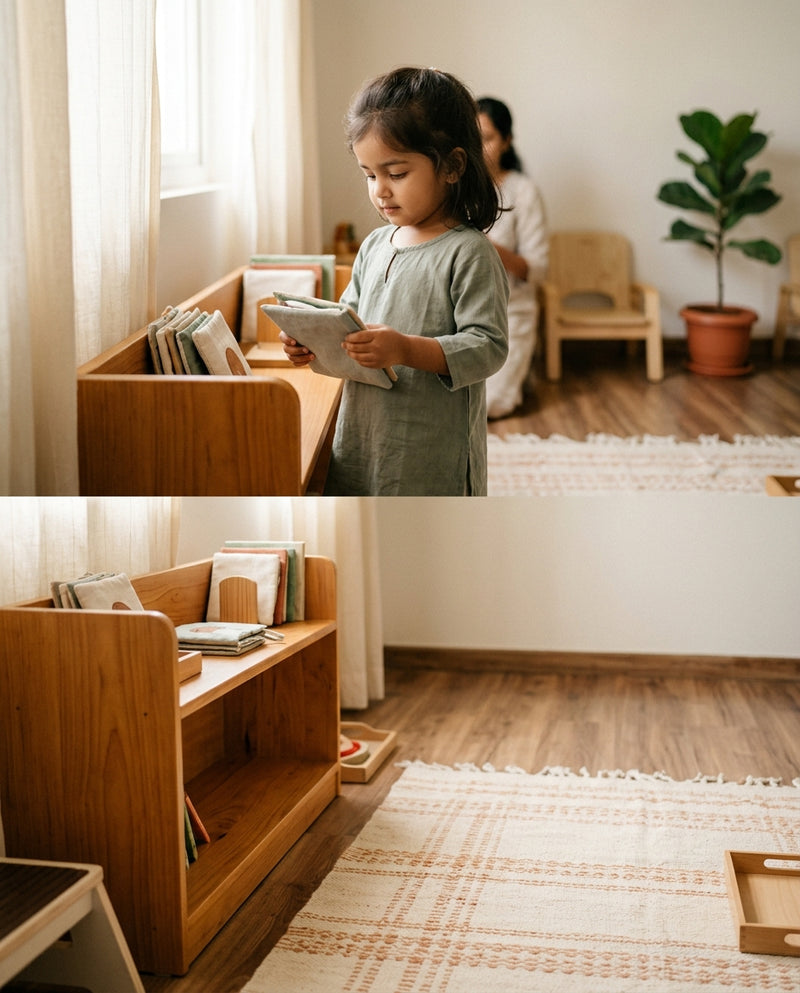
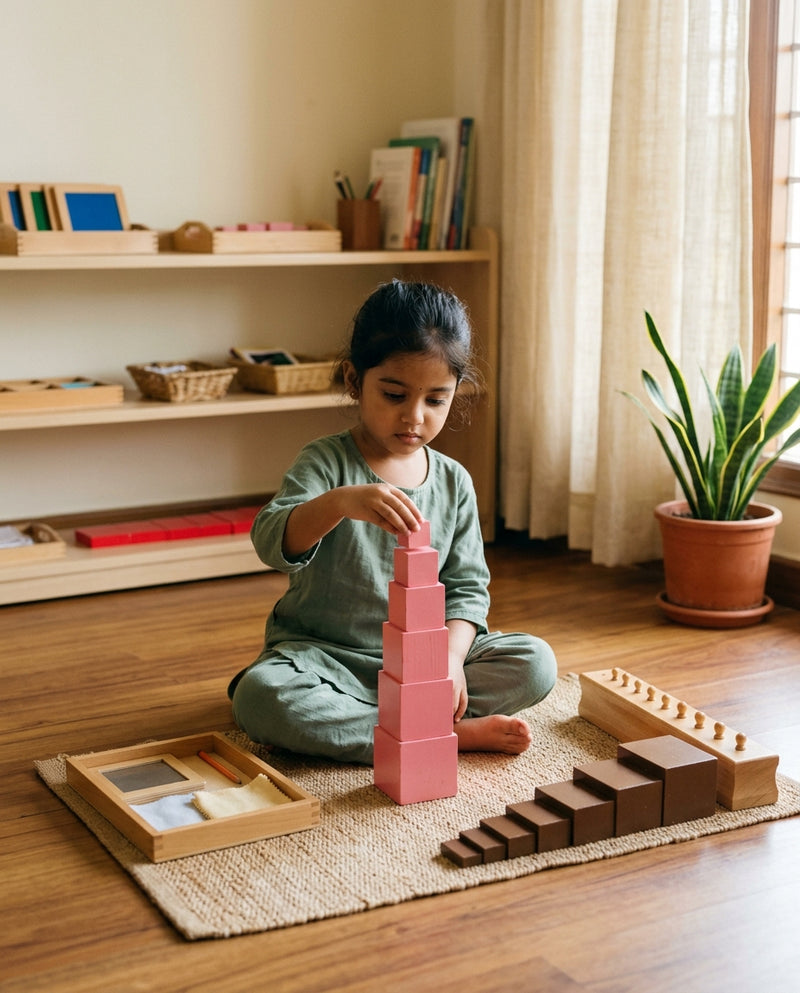
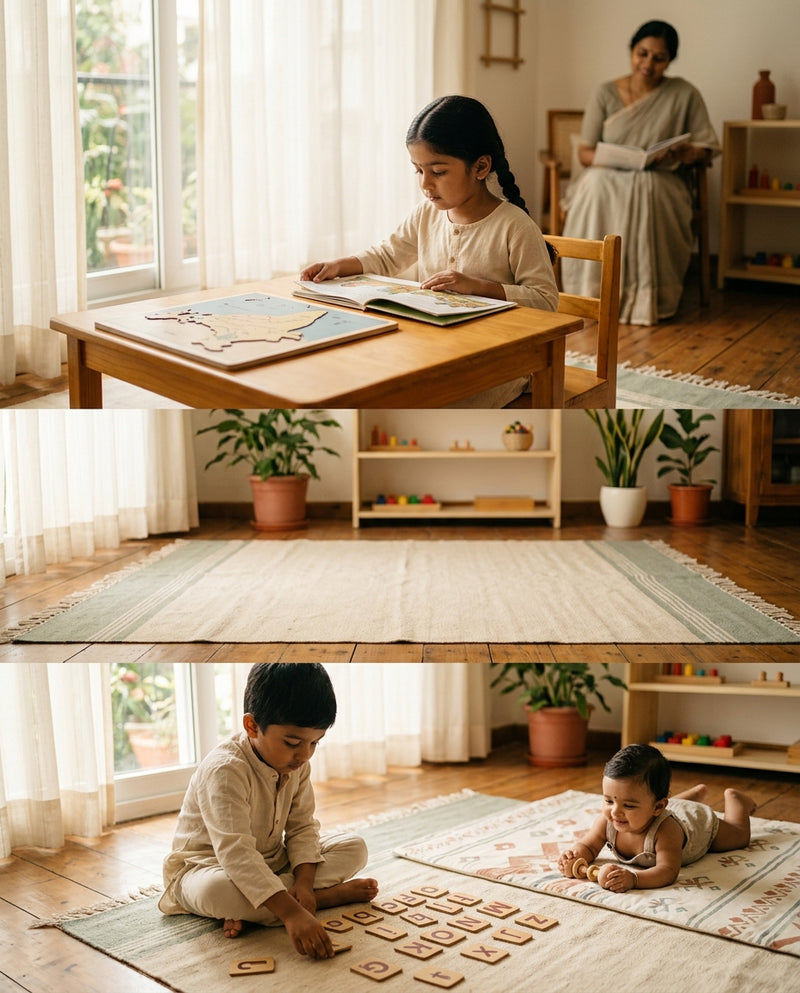
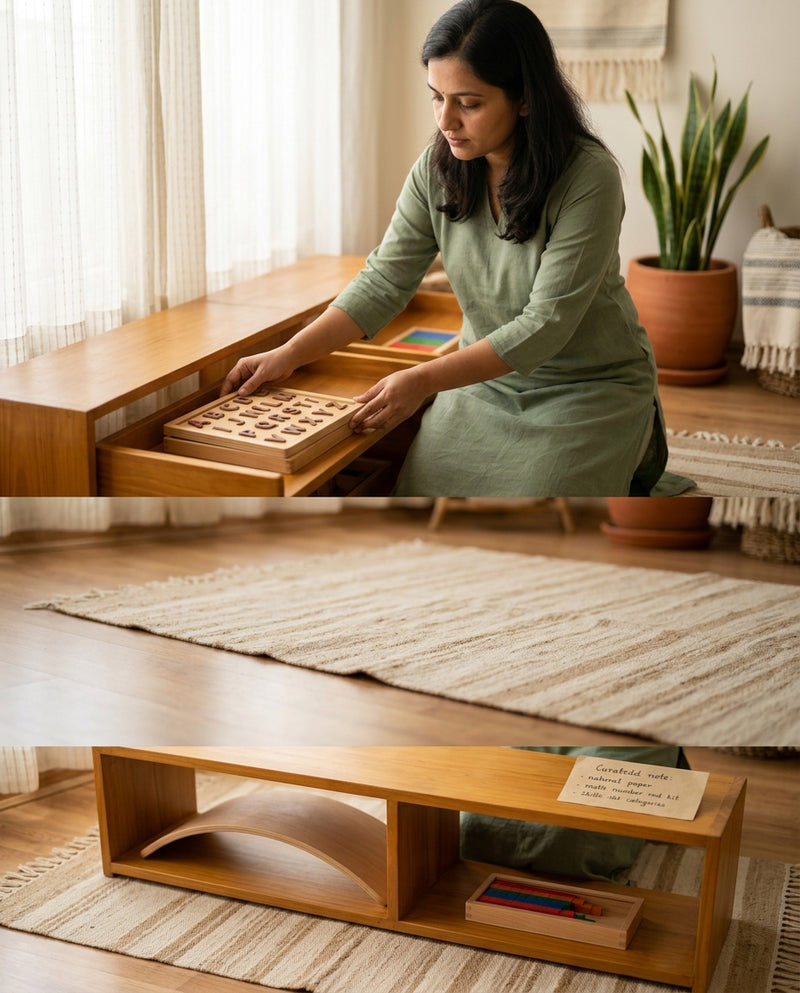
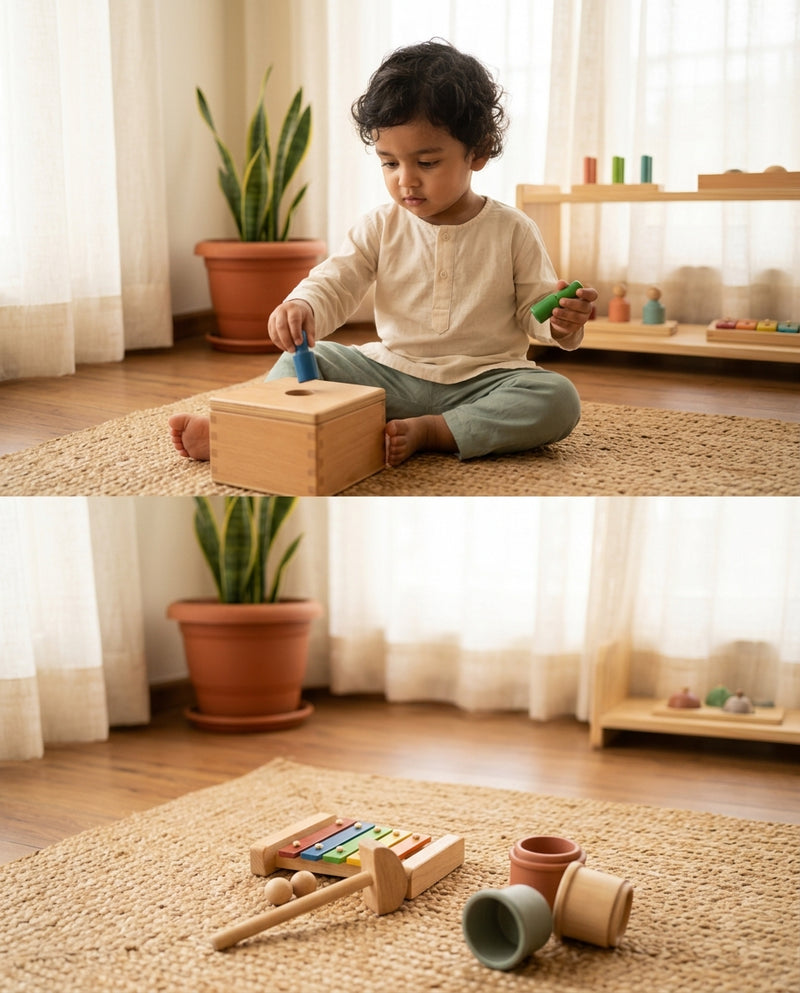
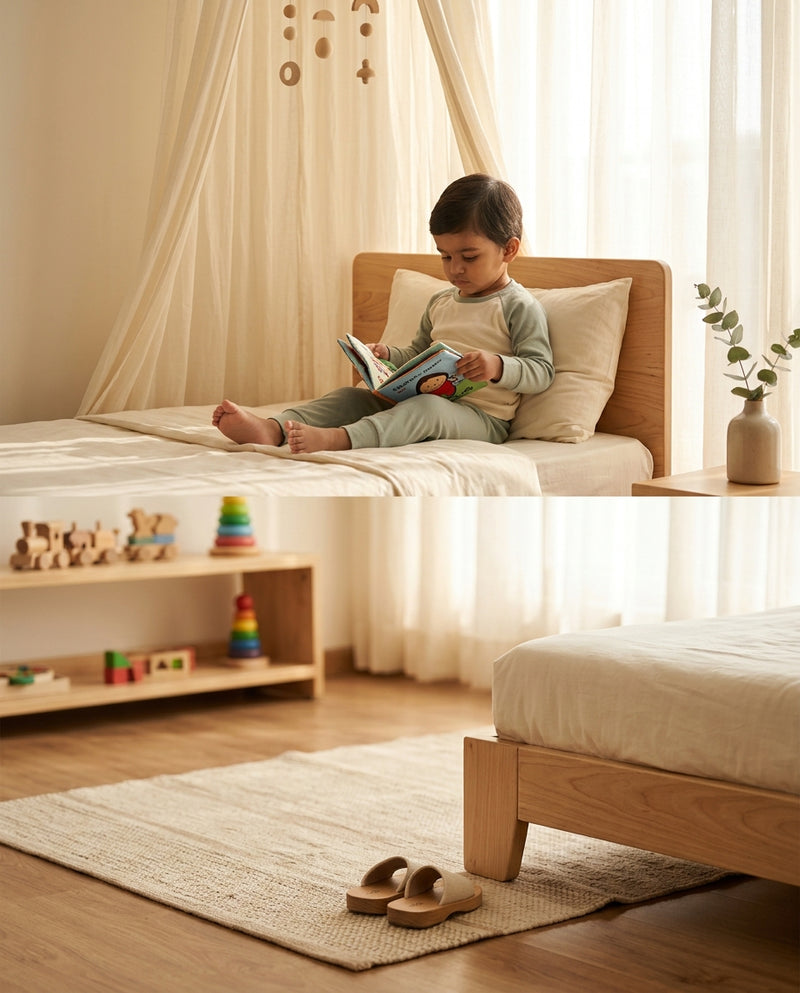
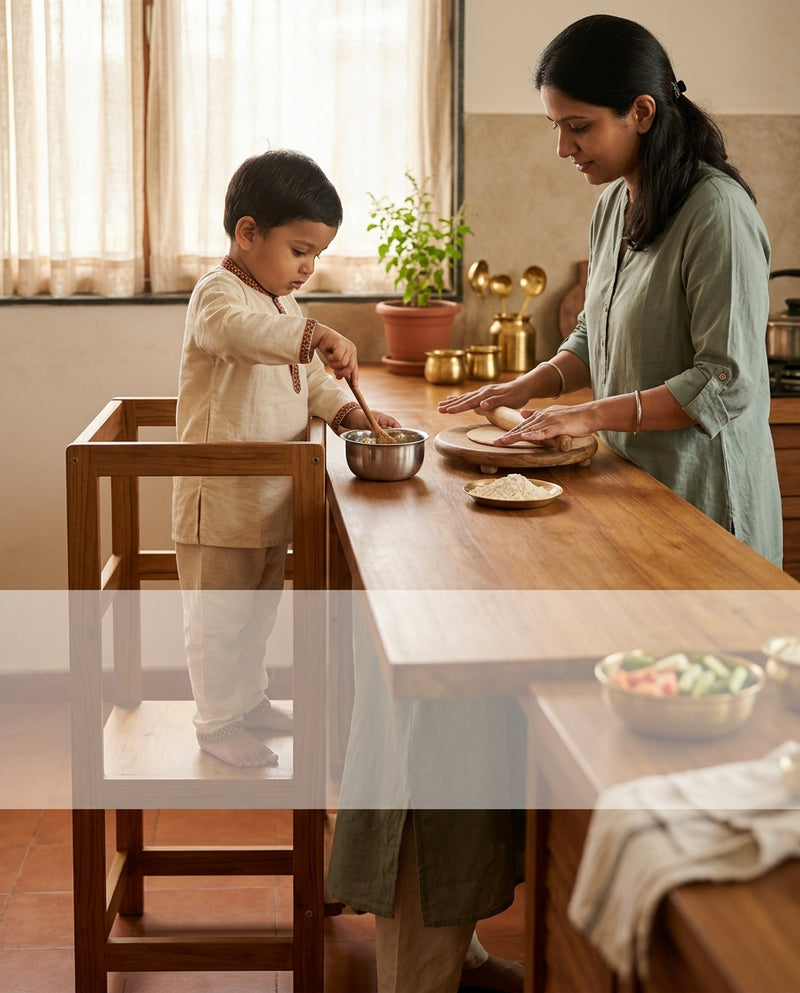
- Choose toys the toddler can fetch, open and put away themselves. A low shelf works better than a toy box.
- Rotate four to six toys at a time. More choice often means less play.
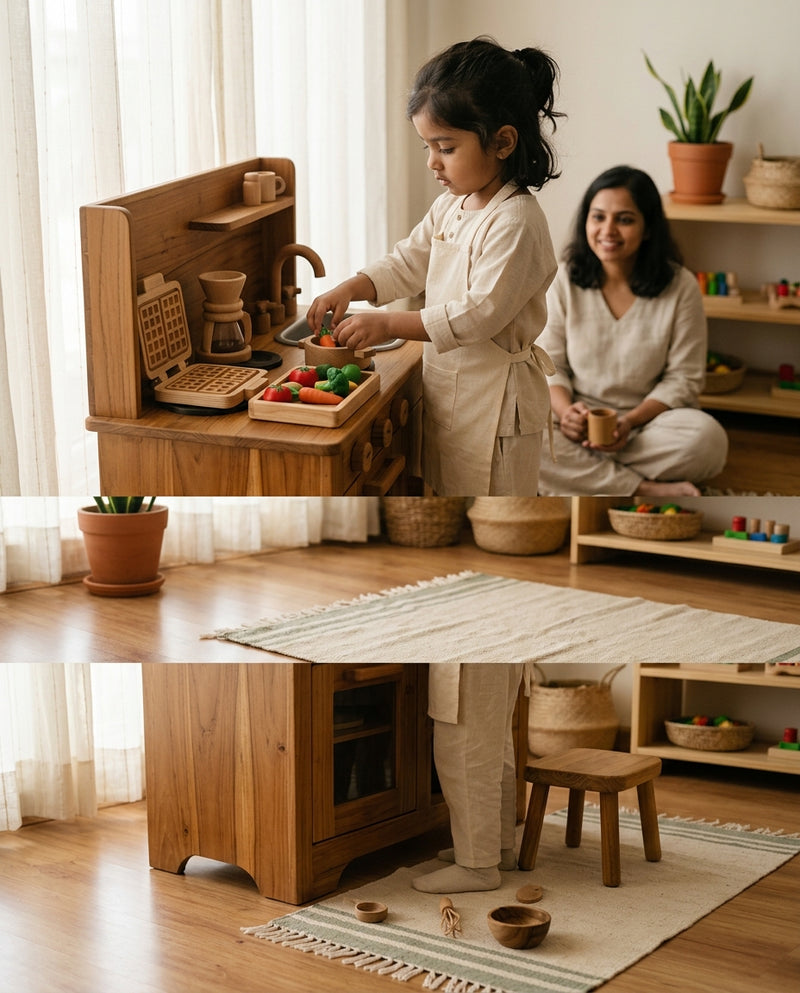
- Practical-life materials (water pouring, simple cleaning toys) build self-confidence as much as any educational toy.
Open-ended over electronic
- Toys that do one thing are usually less developmental than toys that do nothing on their own.
- A wooden block can be a car, a phone, a piece of cake. An electronic block is just a block that beeps.
- The WHO recommendation for under-two screen time is zero. Under-five is one hour. Toys are the alternative.
Budget per stage
- 12 to 18 months: 4 to 6 sturdy toys, Rs. 300 to Rs. 1,000 each.
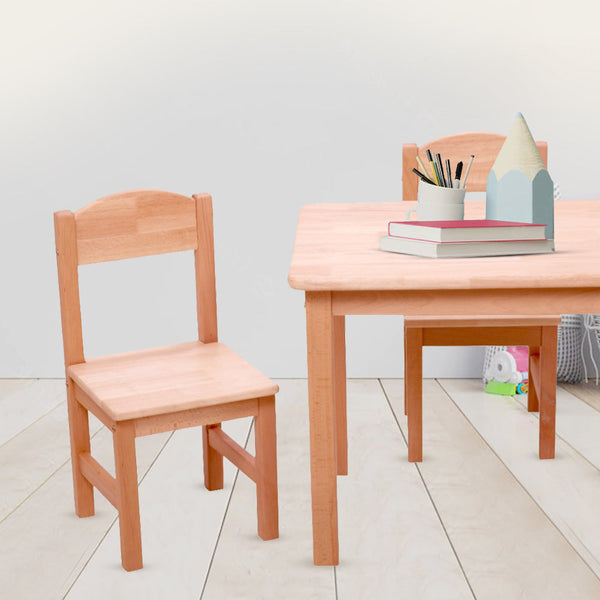
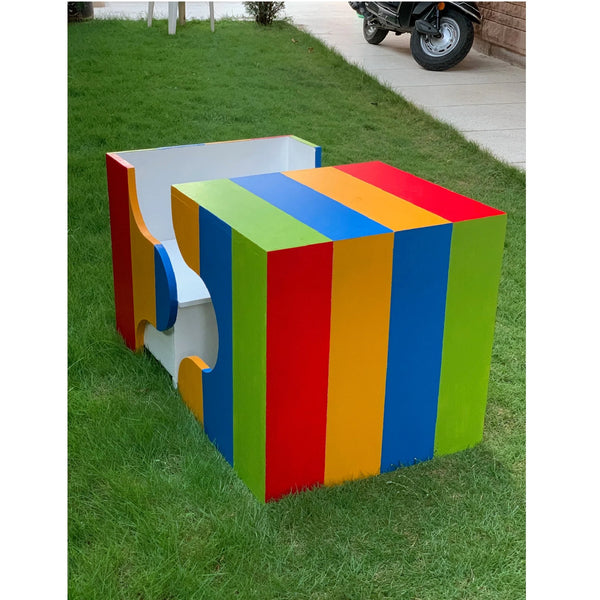
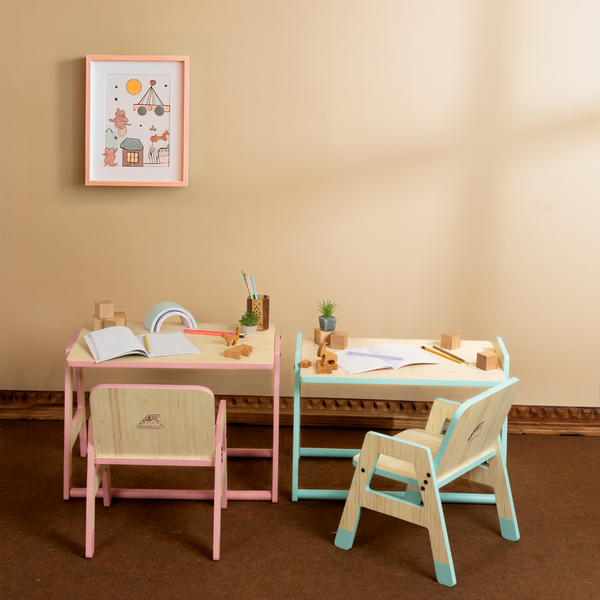
- 18 to 24 months: investment in one or two larger items (push-cart, low table, small pretend-kitchen), Rs. 1,500 to Rs. 4,000.
- 24 to 36 months: add specific-skill toys (puzzles, threading, art), Rs. 300 to Rs. 1,000 each.
- Realistic budget for the full two-year window: Rs. 6,000 to Rs. 12,000.
What to skip in the toddler years
- Battery-powered toys that do the work for the child (singing, moving, lighting up on their own).
- Toys with tiny removable parts. Wait until your child consistently stops mouthing.
- Educational branded toys with no clear skill claim.
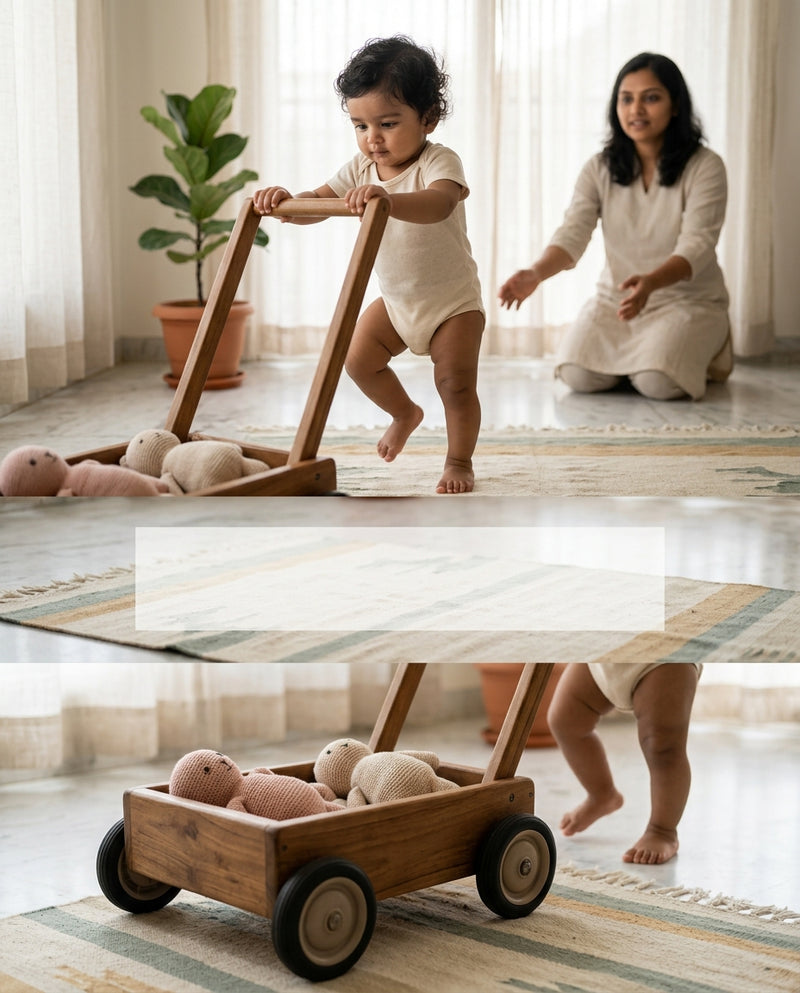
- Walkers on wheels (paediatricians warn they delay walking).
Special note for Indian homes
- Joint-family rotation: toys may circulate between cousins; build quality matters more than ever.
- Climate and storage: humid months are hard on unsealed wood. Store in dry cupboard.
- Cultural play: nesting bowls, wooden ladle and katori, palak-stem stamps are toddler-appropriate kitchen toys at zero cost.
Skills this shelf builds
What does a curated 1 to 3 year toy collection actually build? Between twelve and thirty-six months, every system is in transformation. The brain is wiring at speed; the body is learning to run; language is exploding. Toys at this age are the tools the toddler uses to practice every new skill at full intensity.
Gross motor
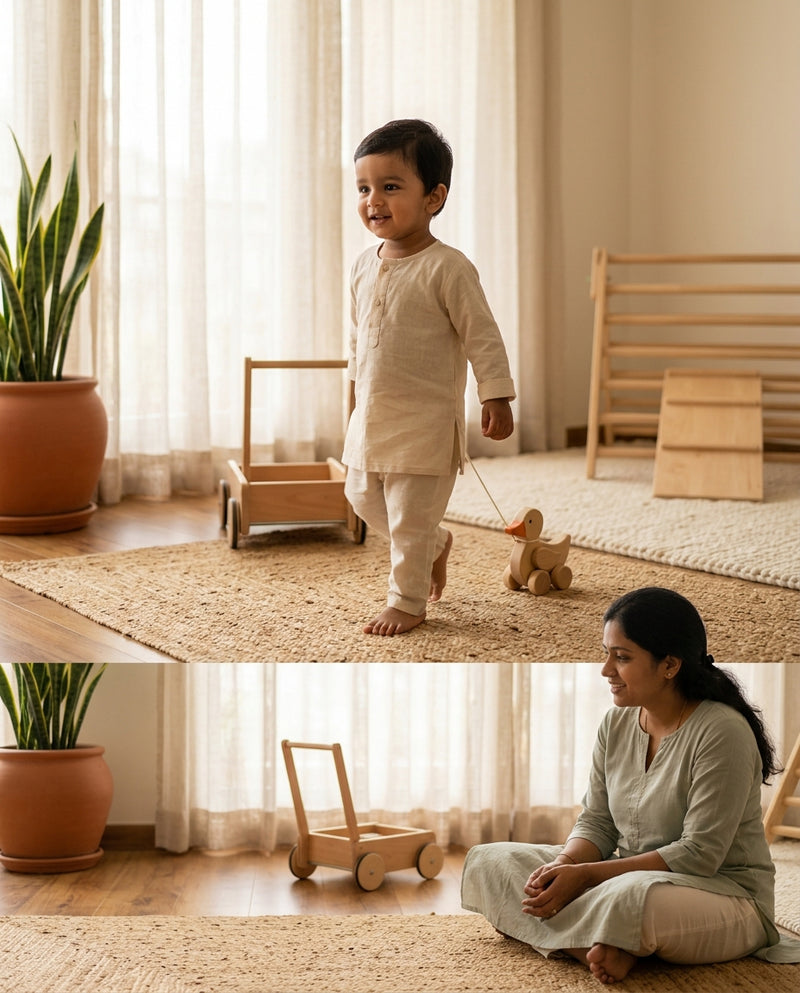
- Confident walking (12 to 18 months): pull-toys and push-toys give a destination.
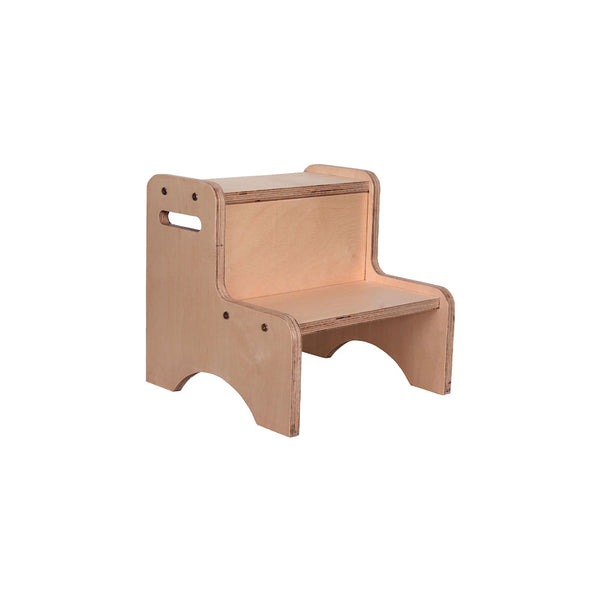
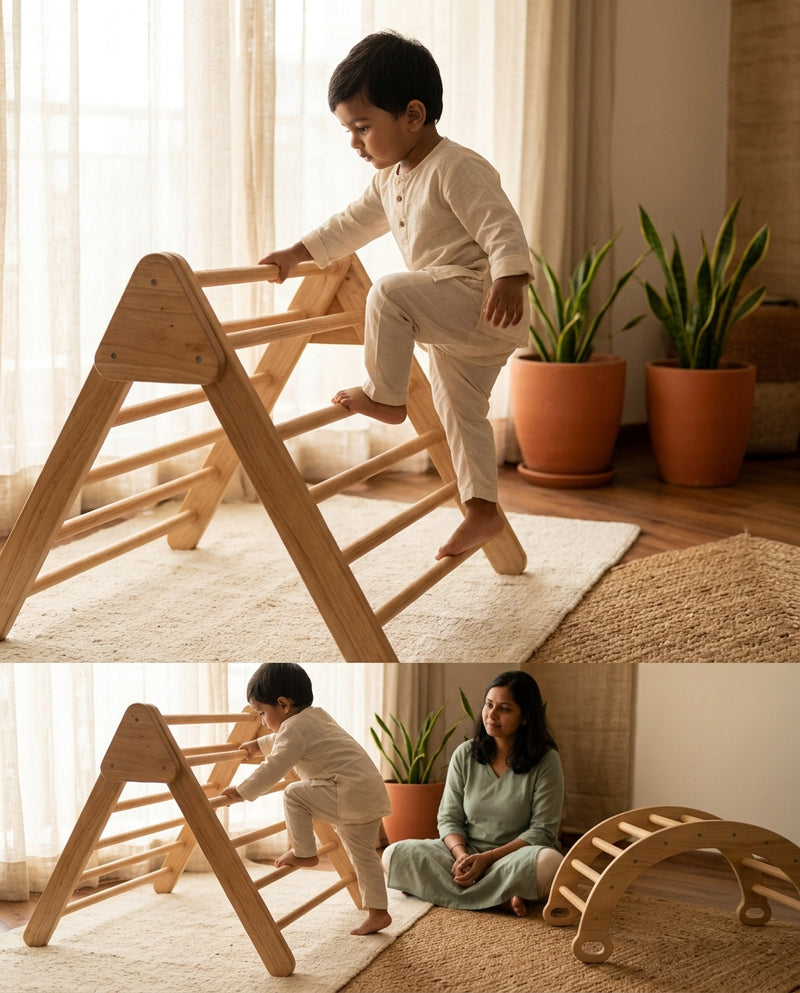
- Climbing (15 to 24 months): low arches, ramps and step-stools build courage and core strength.
- Running and jumping (18 to 30 months): open floor space matters more than any toy.
- Throwing and catching (24 to 36 months): soft balls, bean bags, bowling pins.
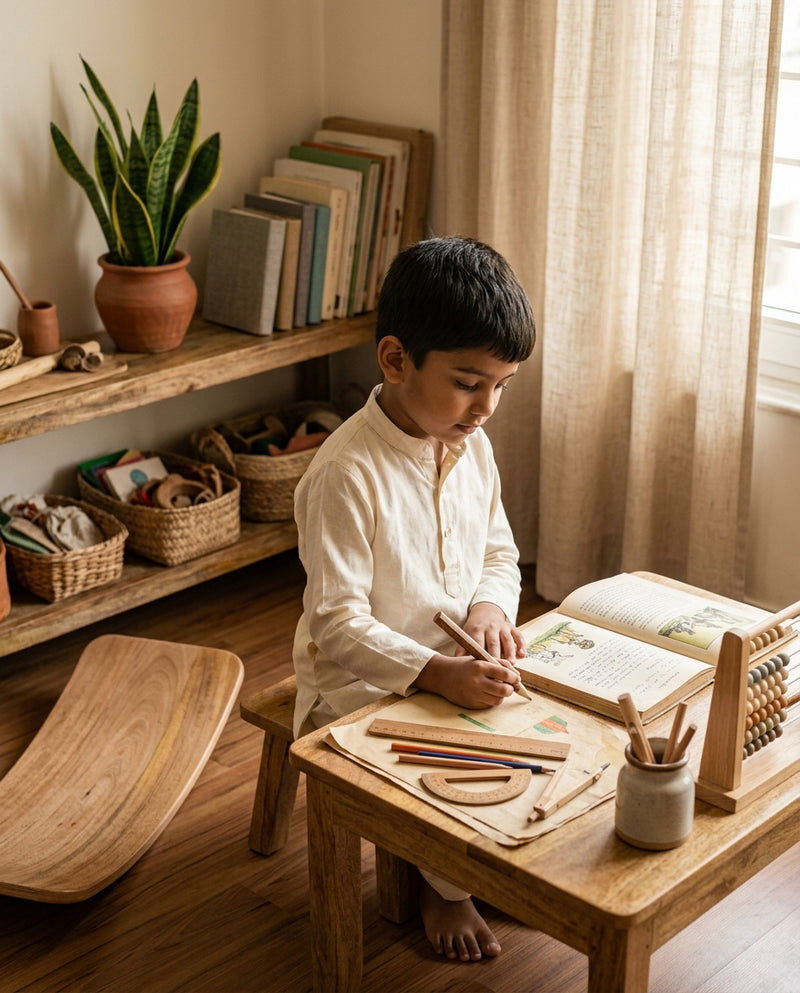
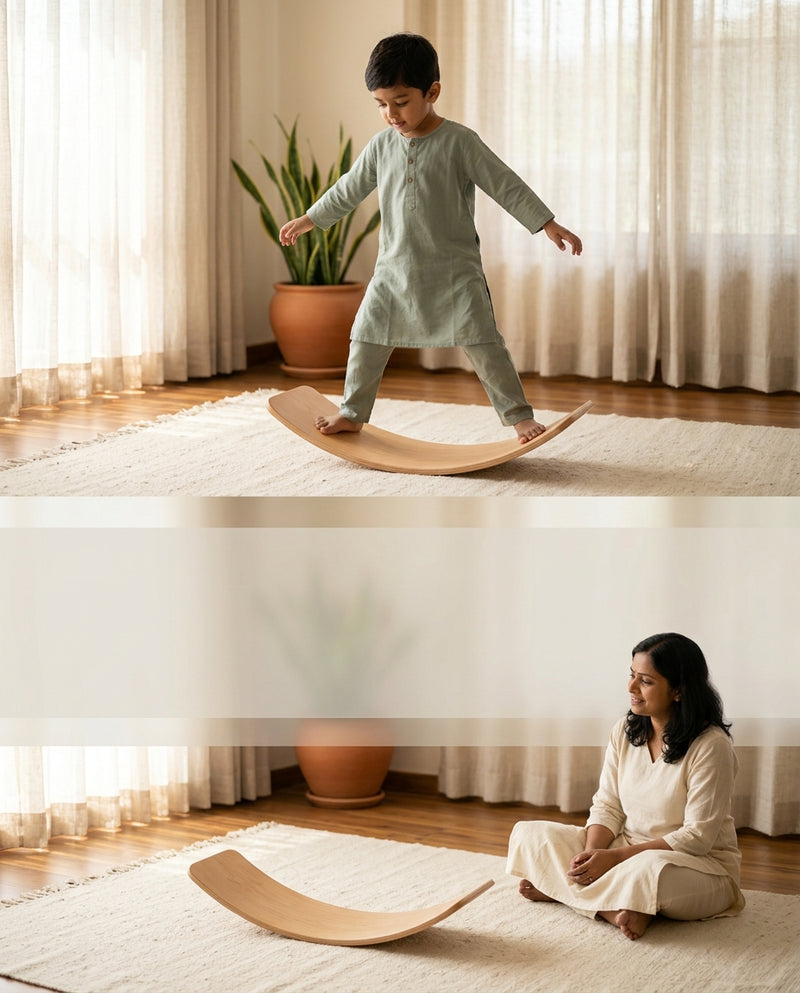
- Balance (24 to 36 months): wobble boards and balance beams.
Fine motor
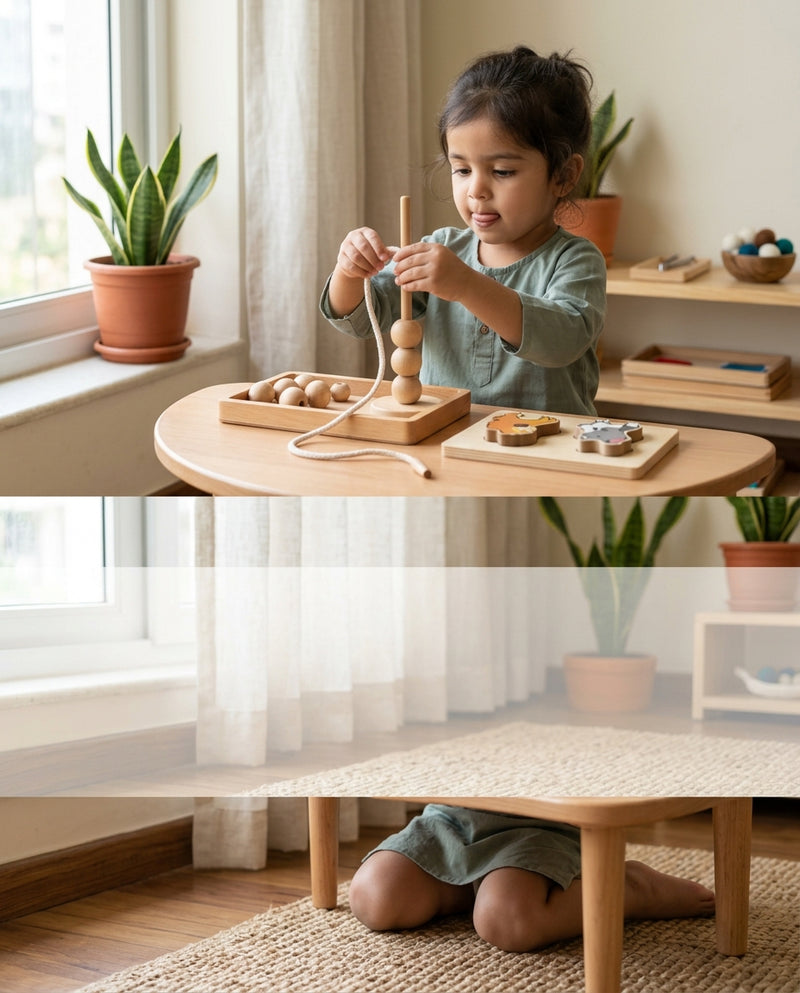
- Pincer grip refinement (12 to 18 months): threading large beads, stacking discs.
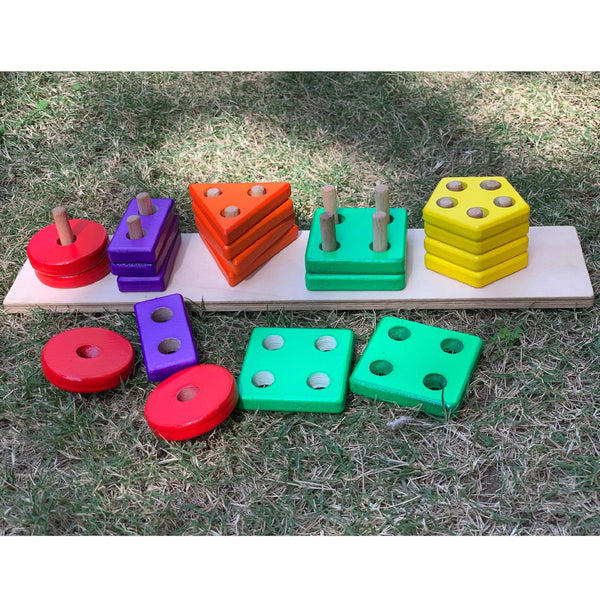
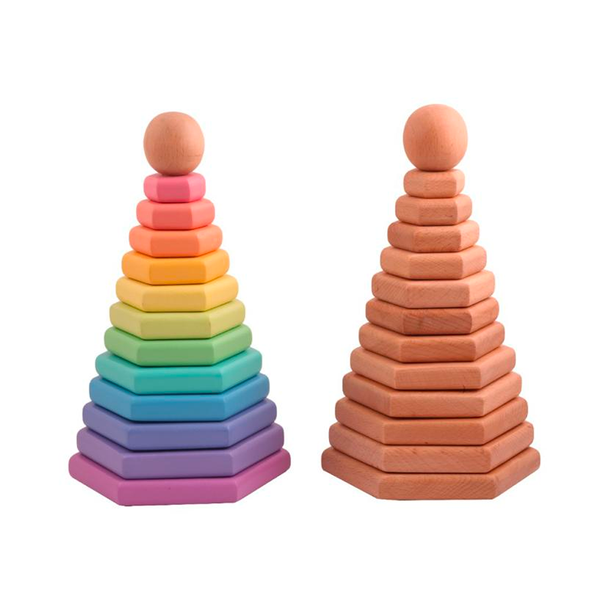
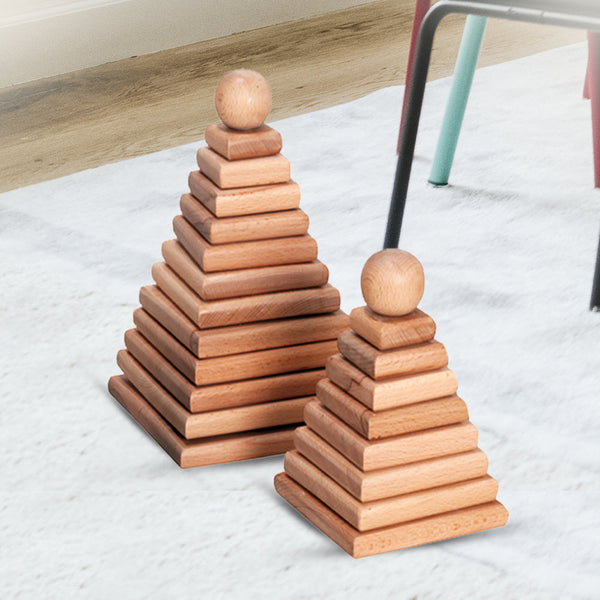
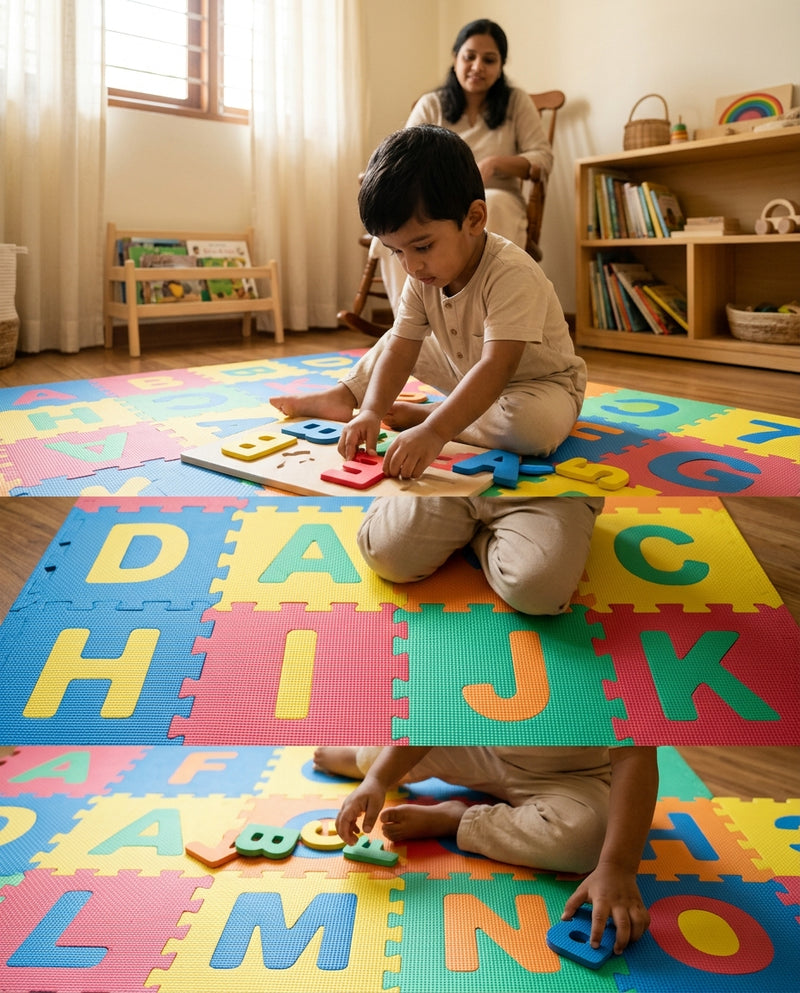
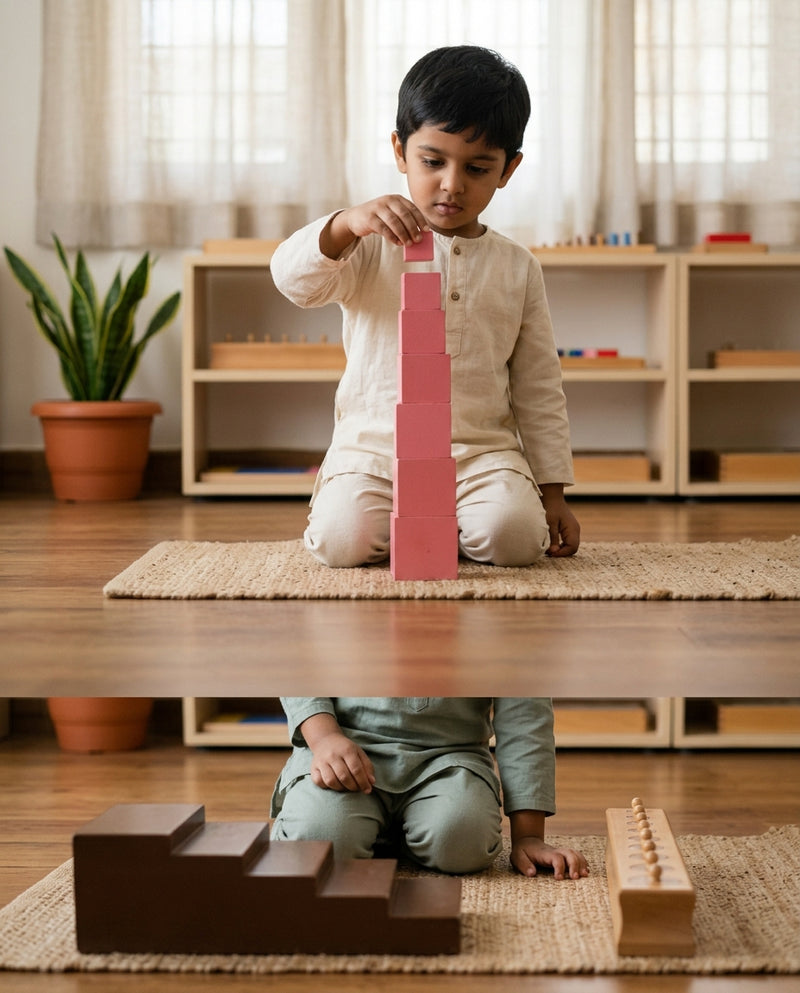
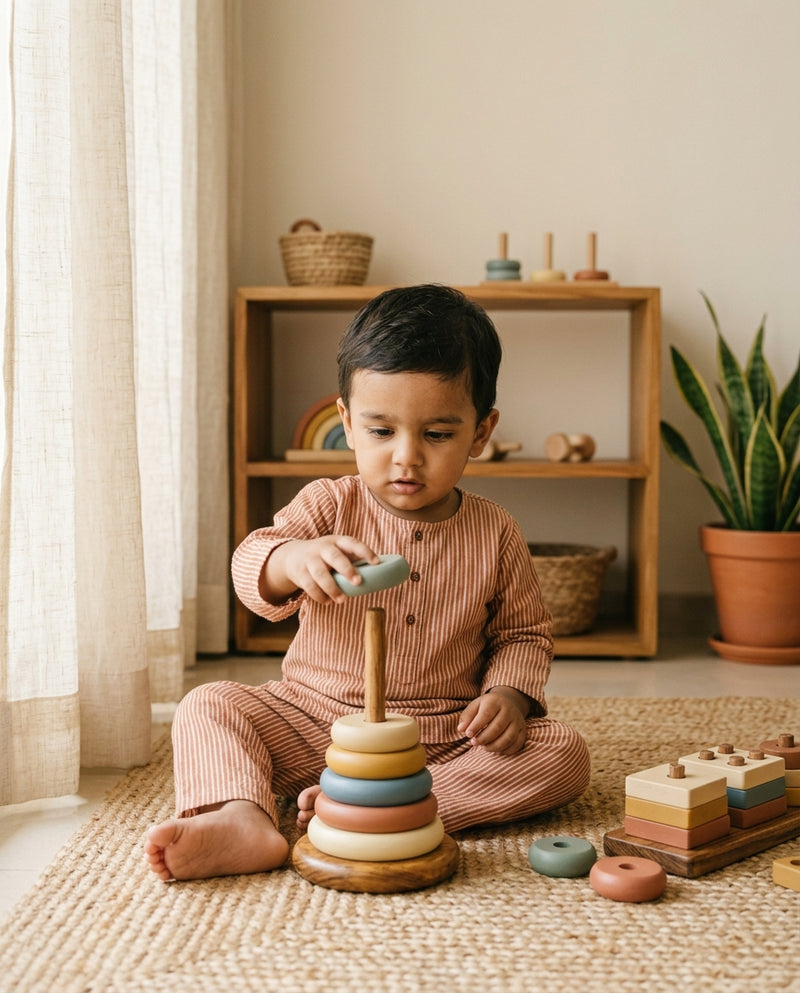
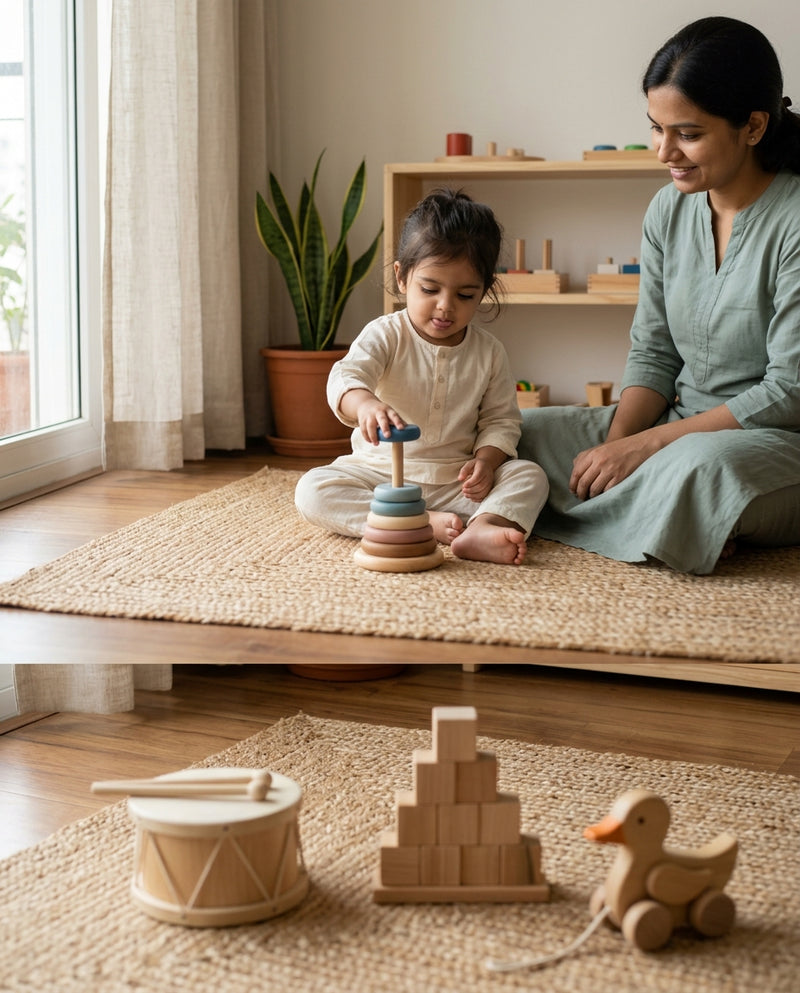
- Building and stacking (15 to 24 months): blocks, ring stackers, nesting cups.
- Pouring and scooping (18 to 30 months): practical-life trays and water play.
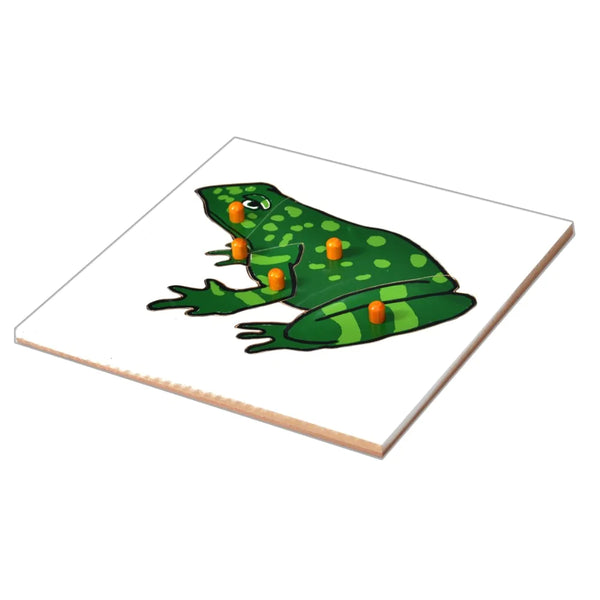
- Twisting and turning (24 to 36 months): nuts and bolts, screw-on lids, knobbed puzzles.
- Drawing (24 to 36 months): chunky crayons, chalkboards, finger paint.
Cognitive
- Cause and effect (12 to 24 months): hammer-and-bench, sound puzzles, posting boxes.
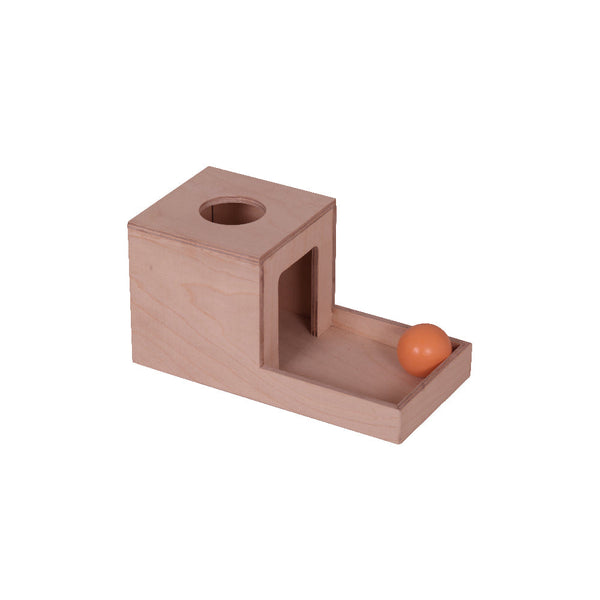
- Object permanence games (12 to 18 months): peekaboo toys, hidden-treasure boxes.
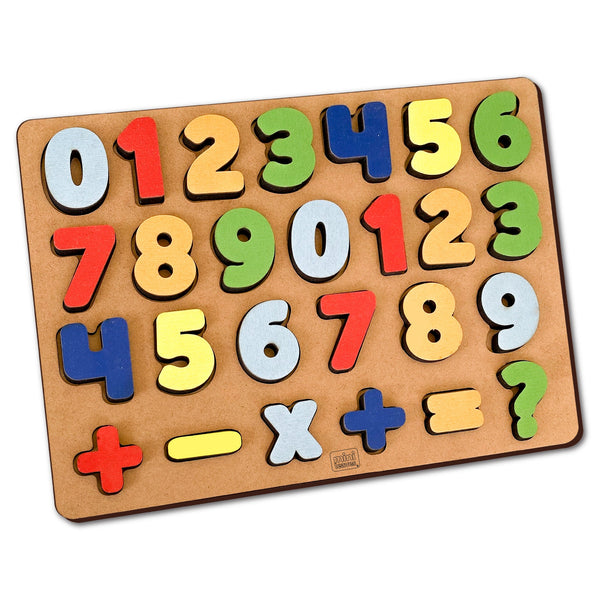
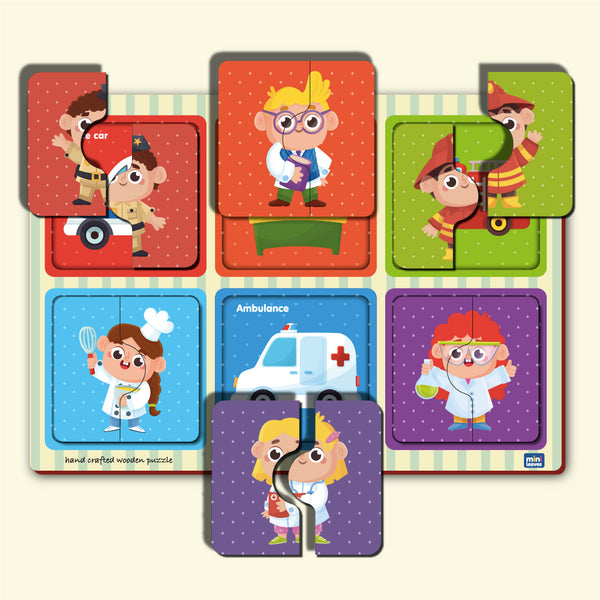
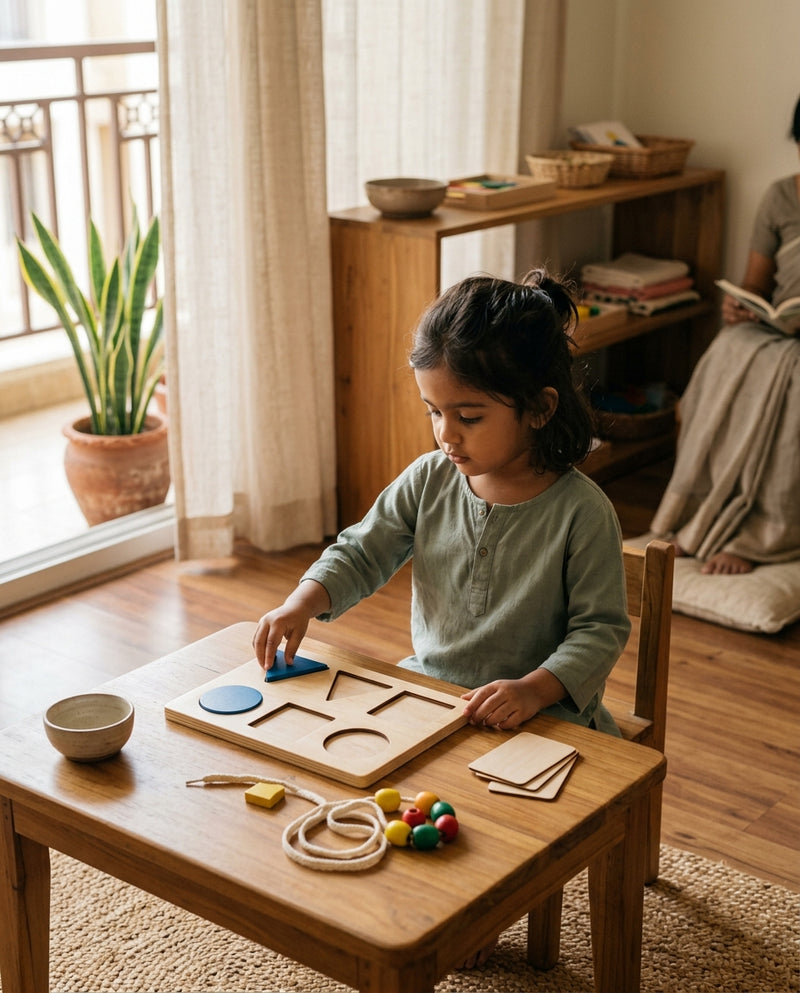
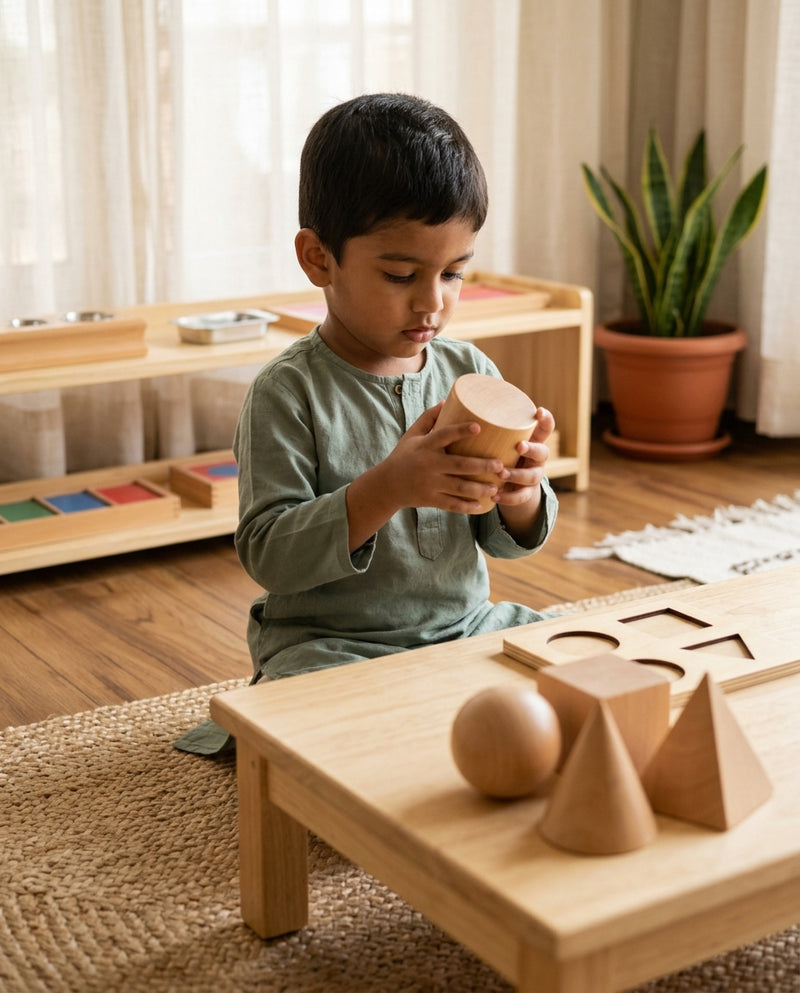
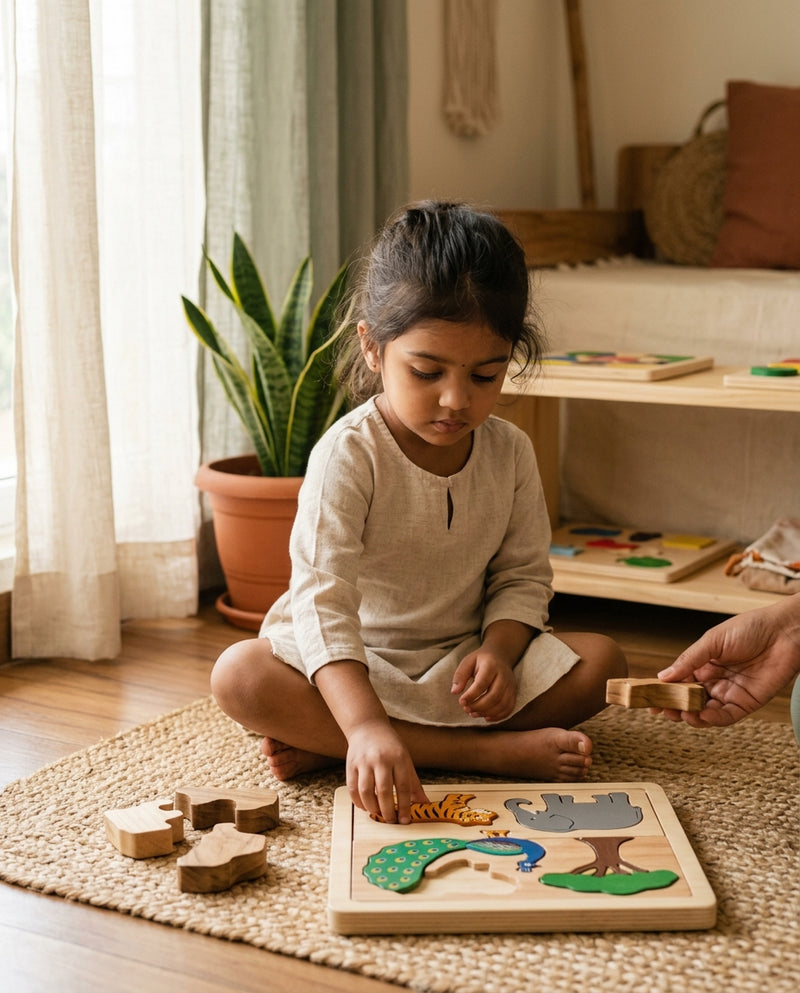
- Sorting and matching (18 to 30 months): shape sorters, colour matching, simple jigsaws.
- Pretend play emerges (18 to 30 months): a wooden phone, a pretend kitchen, a doctor kit.
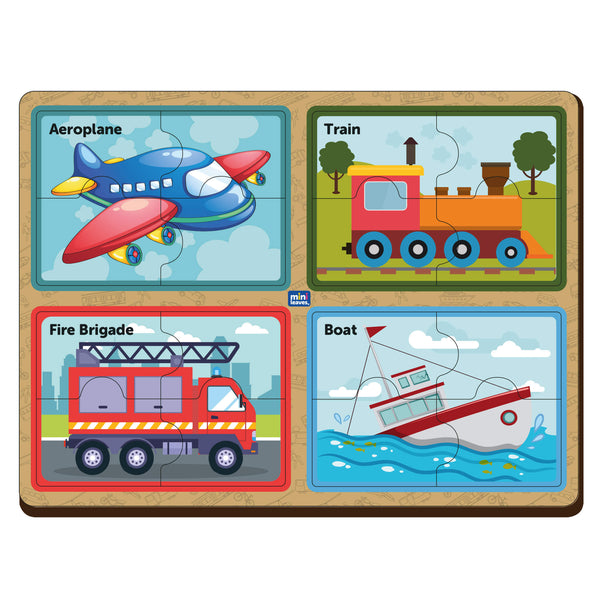
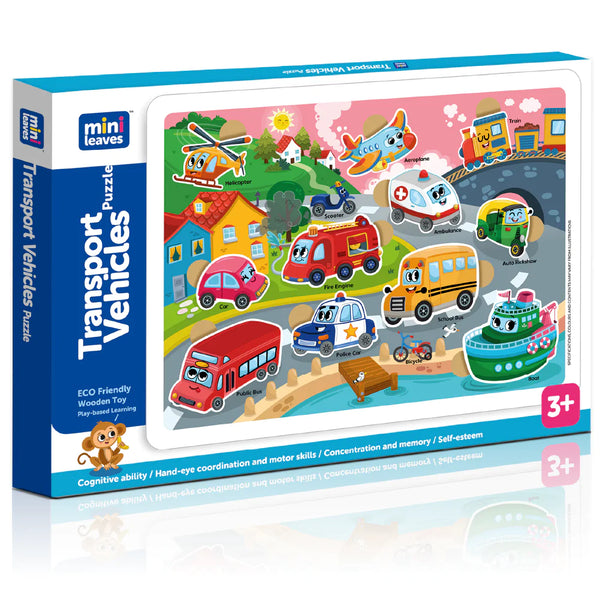
- First problem solving (24 to 36 months): simple puzzles with two to four pieces.
Language
- First words to first sentences (12 to 36 months): every named object is vocabulary.
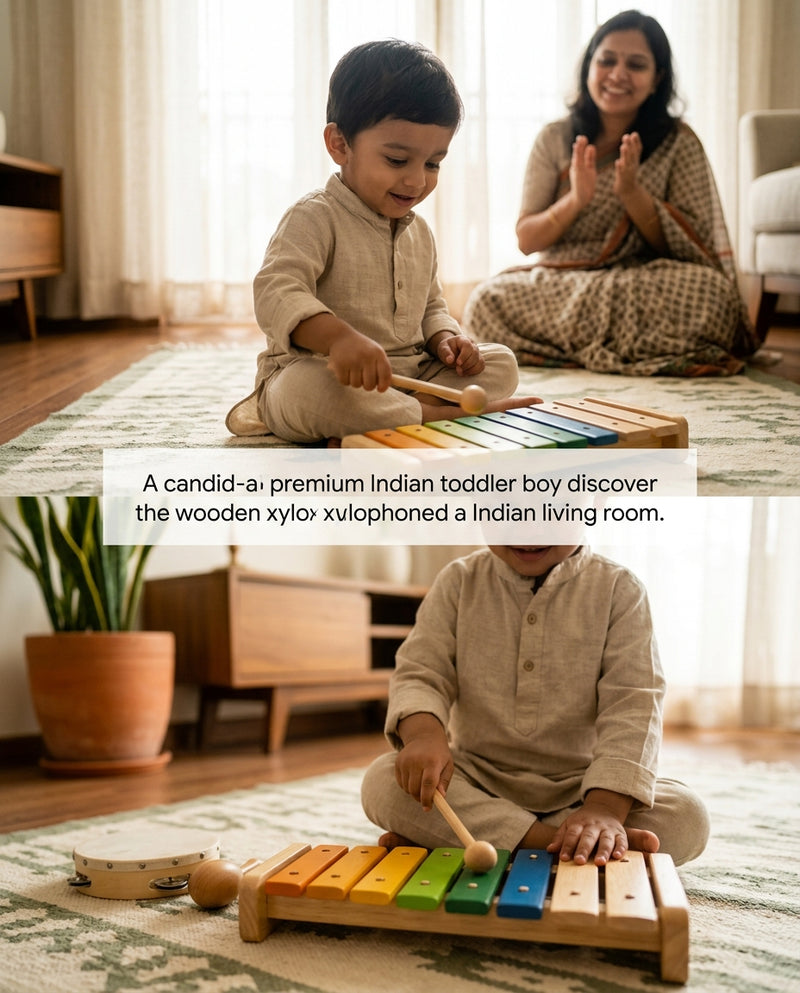
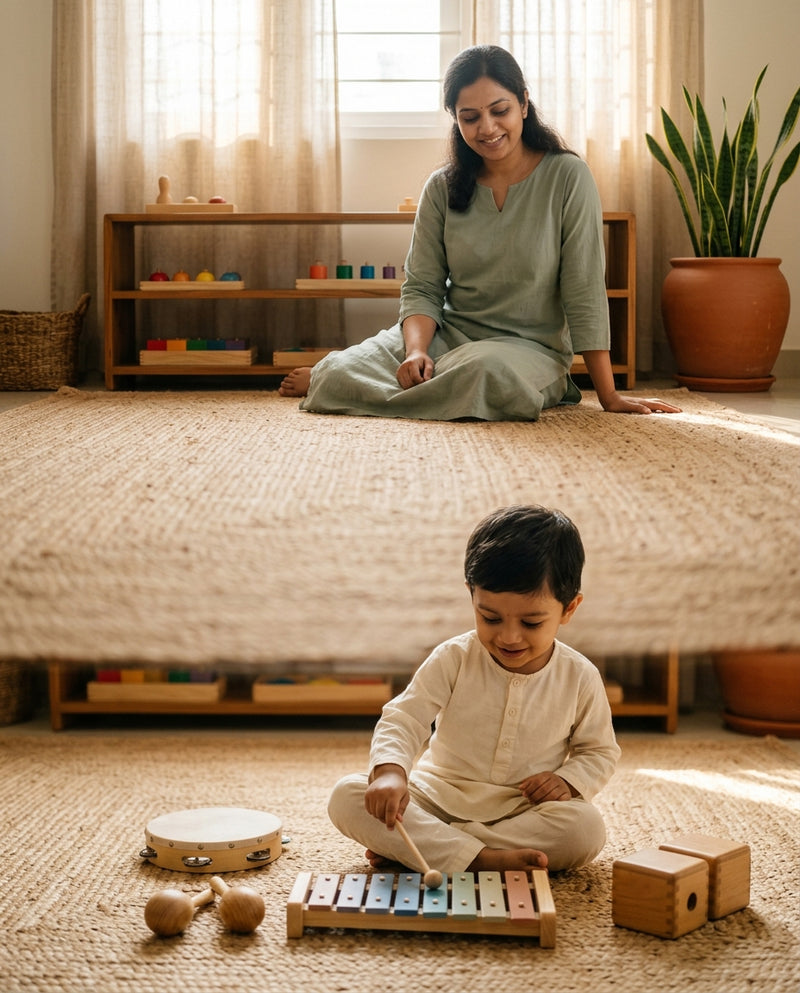
- Sound recognition (12 to 24 months): musical instruments, rattles, animal sound toys.
- Listening to stories (18 to 36 months): board books with simple repeated phrases.
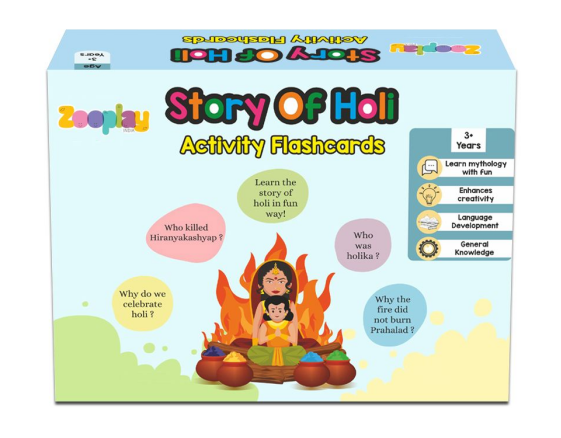
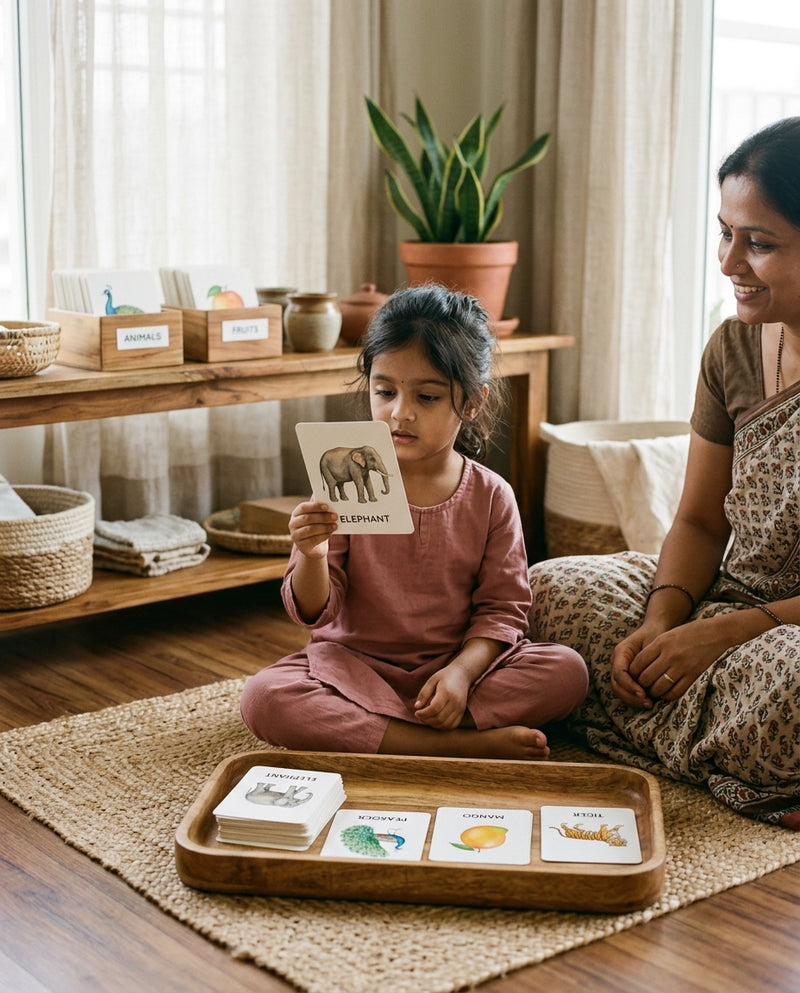
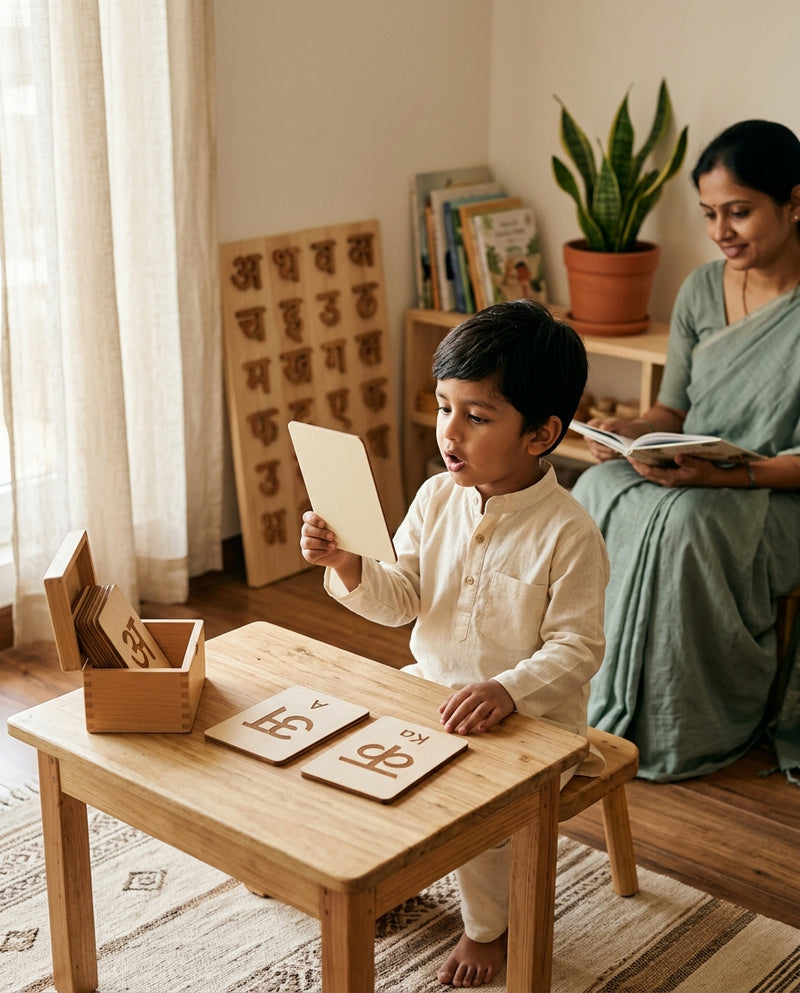
- Naming routine (24 to 36 months): flashcards, picture lotto.
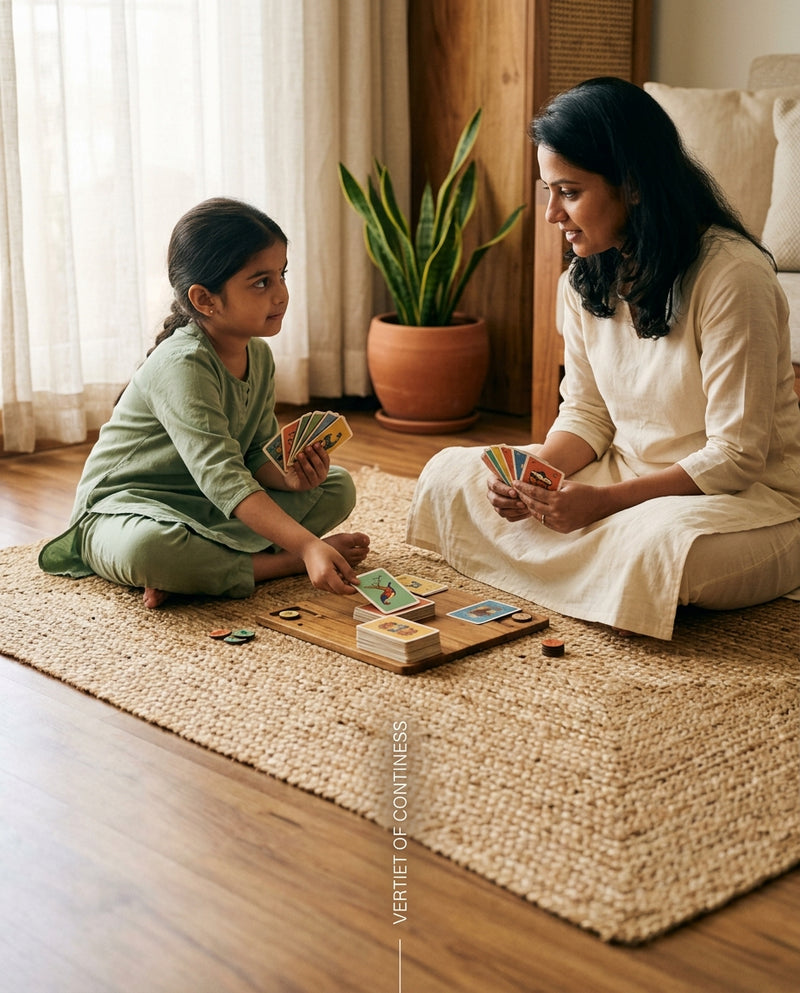
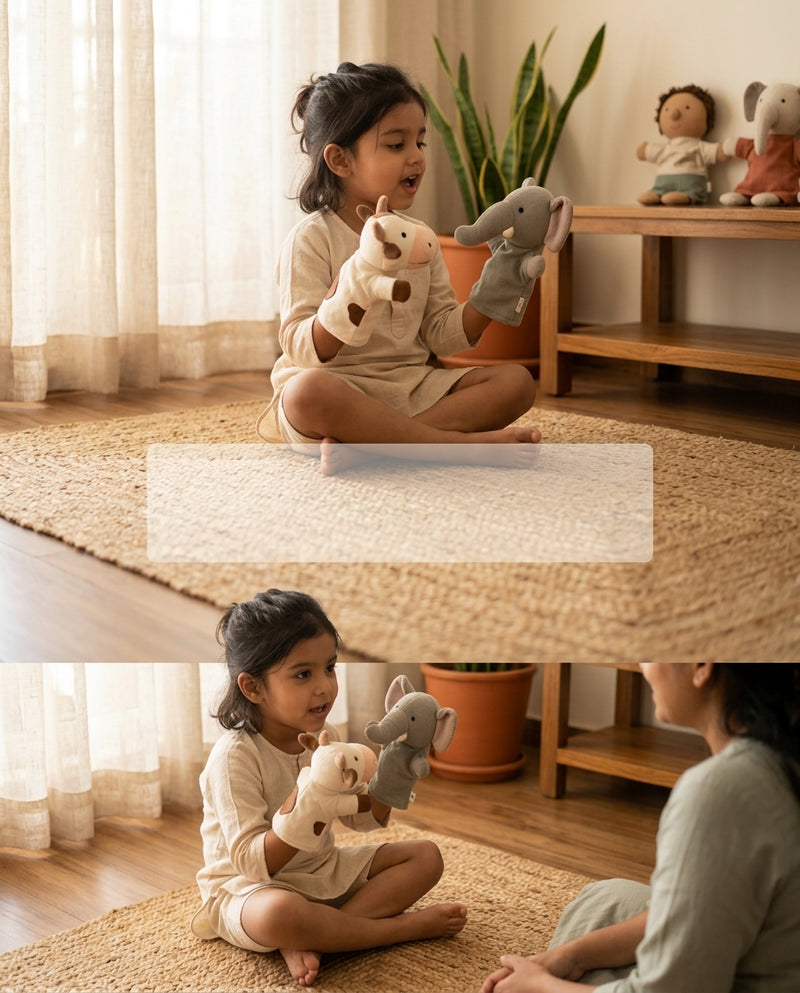
- Conversational turn-taking (30 to 36 months): puppet play, simple board games.
Social and emotional
- Parallel play (15 to 24 months): toddlers play next to each other, not yet with each other.
- First sharing (24 to 30 months): a shared bowl of crayons, a shared puzzle.
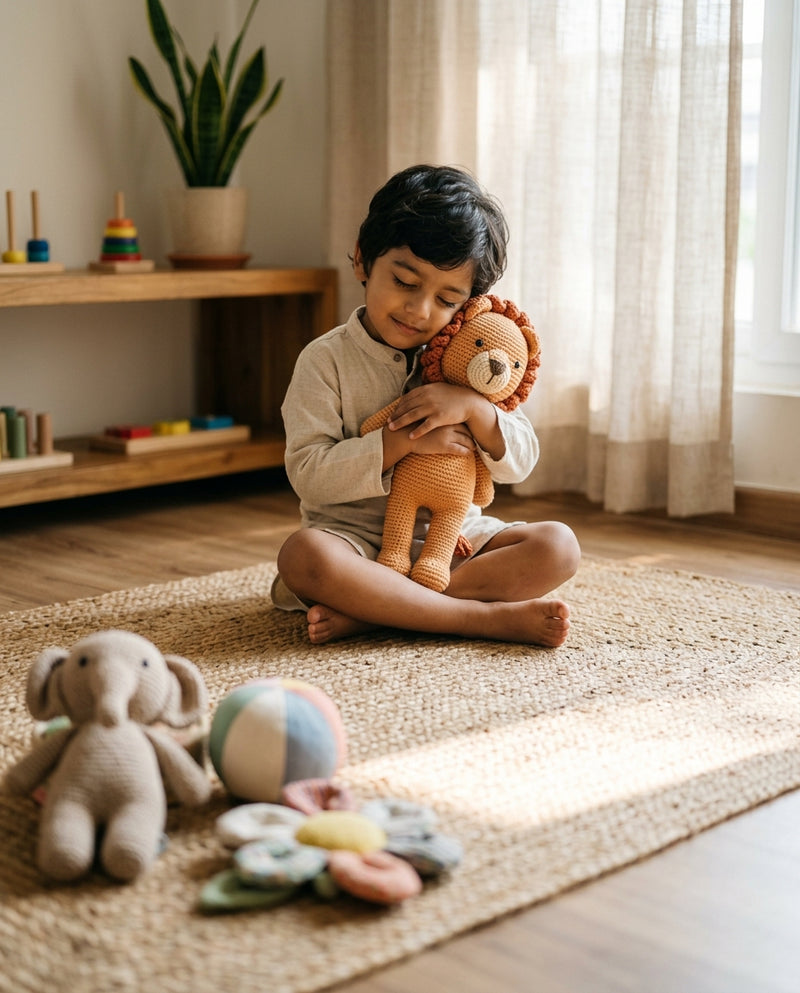
- Pretend caring (24 to 36 months): doll feeding, soft toy nurturing.
- Independence (24 to 36 months): putting on socks, choosing the next toy, packing up.
- Naming feelings (30 to 36 months): emotion flashcards and storybooks help.