Science of Play-Based Learning: Crucial for Baby Development
The science of play-based learning baby development confirms it is as fundamental as nutrition for healthy growth during the critical 0-12 month period. Research definitively shows that engaging in purposeful play builds essential neural connections, fosters cognitive abilities, and lays the groundwork for lifelong learning, making it an indispensable part of your infant's daily routine. Just as we carefully choose what our little ones eat, we must thoughtfully consider how they play.
As a recent India Today article highlighted, play-based learning deserves equal footing with nutrition in child development, underscoring its profound impact on a baby's well-being. For anxious new parents in Bengaluru and across India, understanding this scientific imperative can transform everyday interactions into powerful developmental opportunities, reducing stress about 'teaching' and focusing on natural discovery.
What is Play-Based Learning for Babies?
Play-based learning for babies is the intentional provision of environments and opportunities where infants explore, interact, and discover through self-directed play. This approach is crucial because it allows babies to actively construct their understanding of the world. Indian parents can implement this by offering age-appropriate, stimulating materials and allowing freedom within safe boundaries.
Baby Brain Development Play: Fueling Neural Pathways
The first year of life is a period of explosive brain growth, unmatched at any other stage. By the age of one, a baby's brain has doubled in size, forming over a million new neural connections every single second. This incredible process, called synaptogenesis, is directly stimulated by a baby's interactions with their environment, with play serving as the primary catalyst.
When a baby reaches for a rattle, tracks a colourful object, or hears a parent's voice during play, their brain is actively building and strengthening neural pathways. These experiences are not merely entertaining; they are literally wiring the brain for future learning, memory, and emotional regulation. Offering a variety of grasping toys and sensory experiences is vital for this rapid development.
The Importance of Play for Infant Development: Beyond Just Fun
Child development experts universally agree that play is the work of a child, especially during infancy. It is the mechanism through which babies develop physically, cognitively, emotionally, and socially. For Indian families, where babies often interact with multiple generations, every giggle during a game of peek-a-boo or stretch during tummy time contributes significantly to their holistic growth.
Play helps infants develop gross motor skills like rolling and crawling, and fine motor skills such as grasping and manipulating objects. Cognitively, it teaches cause-and-effect, object permanence, and problem-solving. Emotionally, it fosters attachment and security through joyful interactions with caregivers. This multi-faceted impact solidifies play's status as a foundational requirement, akin to balanced nutrition.
Early Childhood Development Science India: A National Priority
The significance of early childhood development is increasingly recognised as a national priority in India, as highlighted by reports like 'Early investment in children, the key to India’s future' in The Hindu. Investing in high-quality early learning environments, including promoting purposeful play, is understood to be crucial for building a strong foundation for a child's future academic success and overall well-being. This societal focus empowers parents to prioritise play without feeling it's a luxury.
SkilloToys.com is committed to supporting this national vision by providing scientifically backed, Montessori-inspired resources that empower Indian parents. Incorporating traditional songs, stories, and gentle movements from our rich cultural heritage into play routines can further enhance a baby's development, blending modern science with time-honoured wisdom.
Montessori Play Benefits Scientific: A Proven Approach
The Montessori method, pioneered by Dr. Maria Montessori, is inherently play-based, viewing children's self-directed activity as purposeful work. Scientific studies on Montessori environments consistently demonstrate benefits in concentration, independence, problem-solving, and intrinsic motivation. For infants, this means providing a prepared environment with specific, age-appropriate materials designed to stimulate natural exploration and discovery.
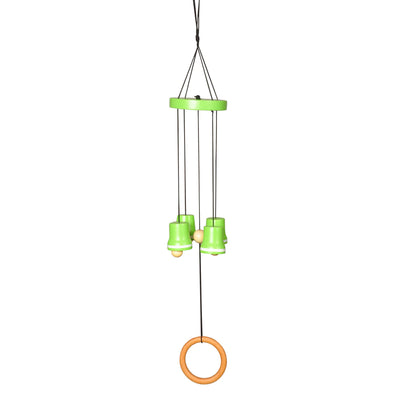
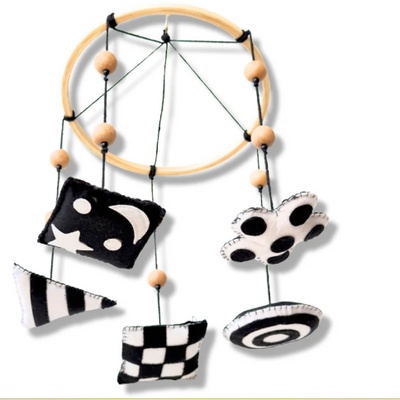
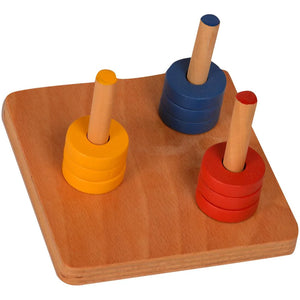
Montessori infant materials, such as mobiles, grasping objects, and activity gyms, are not just toys; they are tools meticulously designed to engage a baby's senses and developing skills. For instance, a simple wooden rattle or a set of interlocking discs provides specific sensory input and fine motor challenges, promoting focused engagement and skill mastery. This approach fosters a love for learning from the very beginning.
- The science of play-based learning is as vital as nutrition for a baby's development (0-12 months).
- Play actively stimulates rapid brain growth and the formation of essential neural connections in infants.
- Purposeful play supports holistic infant development: cognitive, physical, emotional, and social.
- Early childhood development, including play, is a recognised national priority in India for future societal well-being.
- Montessori principles offer a scientifically proven framework for enriching infant play and fostering independence.
- Providing a curated, age-appropriate play environment is crucial for optimal infant brain development and learning.
How much play does a baby (0-12 months) need daily?
Infants benefit from several short periods of supervised, interactive play throughout the day, totalling at least 30-60 minutes of active floor time. This should be interspersed with quiet time, feeding, and sleep, adapting to their cues and energy levels.
What kind of play is best for a baby's brain development?
Open-ended, sensory-rich play that encourages exploration and problem-solving is ideal for brain development. Activities like tummy time, reaching for objects, exploring textures, and interacting with parents through sounds and facial expressions are highly beneficial.
Can too many toys overwhelm a baby during play-based learning?
Yes, too many toys can indeed overwhelm a baby, making it difficult for them to focus and engage deeply with any single item. Child development experts recommend a curated selection of 3-5 age-appropriate toys rotated regularly, promoting deeper concentration and purposeful play.
How do grandparents contribute to play-based learning in Indian families?
Grandparents play an invaluable role in play-based learning within Indian families by sharing stories, singing traditional lullabies, engaging in gentle physical play, and fostering cultural connections. Their calm presence and wisdom provide emotional security and enrich a child's early experiences profoundly.
Is screen time considered beneficial play-based learning for infants?
No, leading child development organisations like the American Academy of Pediatrics recommend avoiding screen time for children under 18-24 months, except for video-chatting. Real-world, hands-on interaction and play with caregivers are crucial for optimal infant brain development, which screens cannot replicate.