Educational Toys: Decoding True Developmental Value
Truly educational toys aren't just labelled 'smart' or 'learning'; they are designed to foster active, child-led engagement, encouraging problem-solving and skill mastery. Research shows that genuine educational toys align with a child's specific developmental stage, allowing them to construct knowledge through hands-on exploration, rather than passively receiving information. For Indian parents, understanding this distinction is key to nurturing the 'seven-point IQ opportunity' that our children possess.
Educational toys are tools that facilitate a child's natural drive to learn and explore, promoting skill development in areas like cognition, motor skills, and social-emotional intelligence. This matters because well-chosen toys can significantly impact brain development and foundational learning. Indian parents can empower their children by selecting toys that truly engage and challenge, rather than merely entertain.
The Myth: More Features Equal More Learning
In Bengaluru's bustling markets and online stores, parents are often bombarded with toys boasting flashing lights, catchy tunes, and complex functionalities, all promising accelerated learning. The common misconception is that a toy packed with features offers more educational value. However, child development experts agree that often, the opposite is true.
When a toy does too much, the child becomes a passive observer, merely reacting to stimuli rather than actively engaging. Consider a fancy electronic tablet versus a set of simple wooden blocks. The tablet dictates the interaction, offering pre-programmed responses. The blocks, however, demand the child's imagination to build, balance, and create, fostering deeper cognitive connections.
Why ‘Simple’ Often Means ‘Smarter’ Play
The real magic of play often lies in simplicity. Toys that are open-ended, meaning they can be used in multiple ways, empower a child to be the architect of their own learning. Maria Montessori famously understood this principle, designing materials like the Montessori Pink Tower or Geometric Solids that appear deceptively simple but offer profound learning opportunities.
When 3-year-old Aarya in a joint family in Mumbai stacks wooden blocks, she's not just playing; she's grappling with concepts of balance, gravity, spatial reasoning, and even early physics. Her mind is actively solving problems, inventing scenarios, and building narratives. This active engagement is precisely what builds the robust neural pathways critical for the 'seven-point IQ opportunity' in Indian children, as highlighted by The Hindu. The American Academy of Pediatrics recommends toys that promote hands-on engagement and creativity, emphasizing that children learn best through play that requires their active participation.
Decoding Developmental Value: Beyond Age Labels
Many toys come with age recommendations, but true developmental value goes beyond these labels. A toy's educational potential isn't just about the age printed on the box; it's about whether it aligns with your child's unique sensitive periods and emerging skills. For instance, a toy designed for fine motor skill development will only be truly educational when your child is in a sensitive period for refining hand movements.
The key is observation. Does your toddler show an intense interest in putting things into containers? Then a Montessori object permanence box, despite its simple appearance, is immensely valuable for understanding that objects continue to exist even when out of sight. This deep engagement facilitates skill mastery in a way that generic toys cannot.
The Montessori Blueprint: Purposeful Learning, Not Just Play
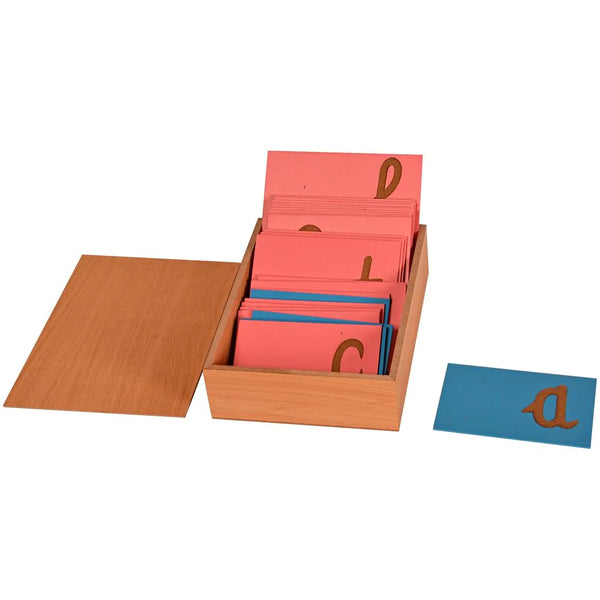
Montessori educational toys stand as a testament to scientific child development. They are designed with specific developmental objectives in mind, often isolating a single concept to prevent overstimulation and allow for focused learning. For example, the Montessori Sandpaper Letters help a child learn letter shapes and sounds through tactile and auditory senses, preparing them for reading in a concrete, engaging way.
A critical feature of these materials is self-correction. If a puzzle piece doesn't fit, the child immediately understands their mistake and can try again without adult intervention or judgment. This fosters resilience, problem-solving, and an intrinsic joy in discovery, cultivating an independent learner – a valuable trait for any Indian child navigating the academic pressures of school life.
The Surprising Power of Play for Indian Children's Brains
Active, purposeful play is not just fun; it's a hidden superpower for your child's brain development. The Economic Times recently highlighted how laughter, a natural byproduct of joyful, engaging play, is incredibly powerful for a child's brain. This emotional release, combined with the cognitive stimulation from truly educational toys, creates an optimal environment for growth.
In Indian homes, grandparents often play a pivotal role in a child's early years. Encouraging them to engage in traditional games or simple activities with these well-chosen toys can further amplify the developmental benefits. Their calm, consistent presence provides the emotional security necessary for a child to explore and learn without inhibition. This synergy between purposeful play and a supportive family environment is instrumental in maximizing a child's inherent potential, fostering robust brain development beyond just academic skills.
How to Critically Choose Educational Toys for Your Child
As a research-oriented parent, you have the power to look beyond the marketing hype and choose truly beneficial items. Here's a science-backed approach to choosing educational toys:
- Observe Your Child: What are their current interests and emerging skills? A toy should meet them where they are developmentally, offering a 'just-right' challenge.
- Look for Open-Endedness: Can the toy be used in multiple ways? Does it invite creativity and imagination, rather than dictating play?
- Prioritise Active Engagement: Does the toy require your child to do the thinking, building, or problem-solving? Or does it primarily entertain passively?
- Consider Durability and Safety: Toys should be well-made from safe, non-toxic materials. The satisfying clunk of one wooden block landing on another signals quality that lasts.
- Does it Isolate a Concept? Especially for younger children, toys that focus on one skill at a time (like a specific puzzle for shape sorting) help prevent overstimulation and foster deeper understanding.
- Promotes Repetition and Mastery: Does the toy allow your child to practice a skill repeatedly until mastered, building confidence and competence?
Making informed choices about educational toys isn't about spending more, but about investing wisely in tools that truly nurture your child's incredible developmental journey. By focusing on active, child-led learning, you provide the foundational experiences that empower them to thrive.